
Short answer: A rugged second phone should do something your main phone cannot: survive a harsher task, provide a separate work line, stay mounted for navigation or remain ready as an emergency backup. Prioritize compact size, correct regional bands, simple charging and a clear SIM/app plan over maximum specifications.
Commercial disclosure: Phonemax publishes this guide and sells the R4 mini. The article does not claim that a second phone is necessary for every buyer.
What job will the second phone own?
Choose one primary role:
- Worksite or workshop device
- Outdoor navigation device
- Emergency and travel backup
- Separate business number
- Vehicle-mounted device
- Device for dirty, wet or high-risk tasks
If the answer is “the same as my main phone,” the second device may add cost and maintenance without resilience.
Should the second phone share a number?
Options include moving one physical SIM, using a separate prepaid SIM, carrier multi-SIM service, call forwarding or app-based communication. Availability varies by carrier and country. Confirm that the exact phone variant supports the required bands and that the carrier supports the planned voice and data features.
The FCC’s cell-phone unlocking guidance explains that unlocked devices still need compatible networks. This matters more for a second phone because it may be activated only during a failure or trip, when troubleshooting is least convenient.
Why does compactness matter more for a second device?
A phone that is always left at home is not a backup. Weight, pocket fit and charging friction determine whether it stays available.
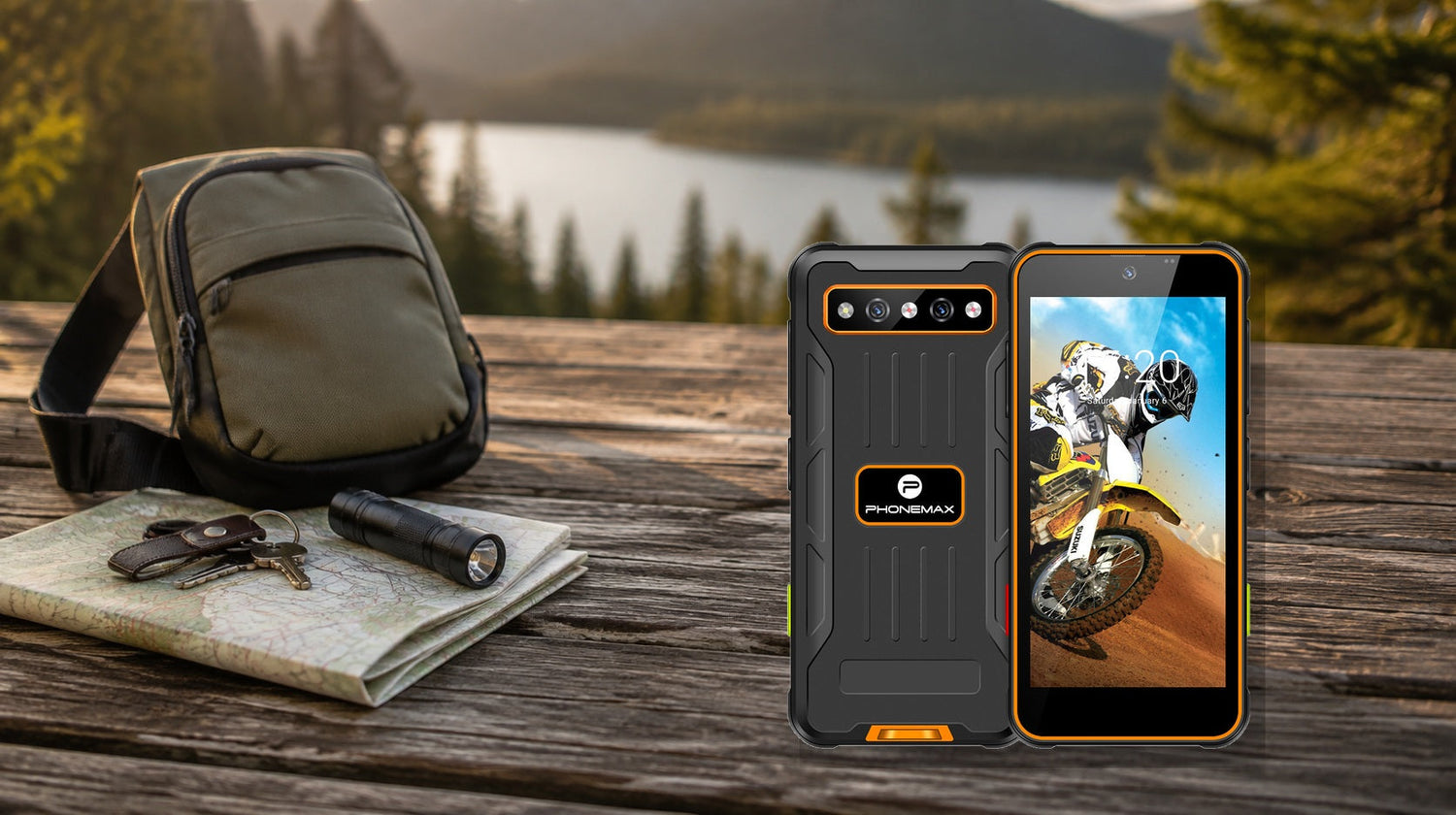
The Phonemax R4 mini is a relevant example because the current listing describes a compact Android 14 rugged phone measuring 121 × 59.5 × 15.5 mm and weighing 150 g. Separate Europe/Asia and US/Americas variants are listed, so the regional version must be checked before purchase.
Its compact body can be attractive for a tool pouch, motorcycle kit or vehicle console. The trade-off is that a small screen may be less comfortable for long reading, detailed maps or frequent typing.
How do you keep a backup phone ready?
Create a monthly readiness routine:
- Charge the device and inspect the battery for swelling or damage.
- Install system and app updates.
- Place one test call and test mobile data.
- Open offline maps and essential documents.
- Confirm passwords, authentication and emergency contacts.
- Inspect port covers, case, cable and mount.
Google’s Android update guide shows where to view Android, security and Google Play system update status. A backup phone that has been off for months may need time and Wi-Fi before it is truly ready.
What data should live on a second phone?
Keep only what the role requires. A work or travel backup may need contacts, offline maps, booking details, authentication recovery and selected documents. Avoid copying sensitive data without a protection plan.
For company use, apply the same access, encryption, update and disposal rules as the main device. NIST’s mobile-device security guidance treats security across the full deployment, use and disposal lifecycle.
Second-phone decision table
| Question | Good answer | Warning sign |
|---|---|---|
| Unique role? | One defined task or failure mode | “Just in case” with no plan |
| Network ready? | Tested SIM and bands | Assumed compatibility |
| Easy to carry? | Fits the actual kit | Too bulky to bring |
| Maintained? | Monthly check owner | Left uncharged for months |
| Data controlled? | Minimum required data | Full copy with no security plan |
Final recommendation
Use a second rugged phone to create redundancy, not duplication. A compact model such as R4 mini is a logical Phonemax candidate when portability and rugged separation are more important than a large display. Test the exact regional version, create a maintenance calendar and give the device one clear job.
FAQ
Does a second phone need its own SIM?
Not always, but a separate active SIM may be more dependable in an emergency. Carrier options vary.
How often should I charge a backup phone?
Follow the manufacturer’s storage guidance and inspect it regularly. A monthly readiness check is a practical operational routine, not a universal battery rule.
Can I use a small rugged phone for navigation?
Yes if the screen, mount, GNSS performance and offline-map workflow meet your needs. Test them together.
Is a second phone better than a power bank?
They solve different failures. A power bank addresses energy; a second phone can also address device damage, app separation or number redundancy.
Editorial method: Redundancy checklist covering role, network, maintenance and data exposure. No runtime or network field testing was performed.

Leave a comment
All comments are moderated before being published.
This site is protected by hCaptcha and the hCaptcha Privacy Policy and Terms of Service apply.