
Last reviewed: August 7, 2026 · Editorial disclosure: This article is published by Phonemax, a rugged-device manufacturer. Phonemax models are used as first-party examples and are not presented as independent recommendations.
Quick answer
If your main risk is an occasional drop, a conventional smartphone with a high-quality protective case is often the more practical solution. A rugged phone becomes more compelling when harsh exposure is routine: repeated drops, dust, mud, rain, vibration, gloves, long hours away from power or specialist field functions.
The simplest distinction
A protective case mainly adds protection around an existing phone. A purpose-built rugged phone can be designed around protection, ports, buttons, battery, grip, charging, mounting and field usability as one system.
That does not make every rugged phone better. It means the two solutions address different risk levels.
When a protective case is probably enough
- Your phone spends most of its time indoors.
- Drops are occasional rather than part of the job.
- You strongly prefer a thin, light device.
- Flagship camera or gaming performance is a top priority.
- You replace your phone frequently.
- You are rarely away from charging for a full day.
- You do not need glove use, physical shortcut keys or specialist sensors.
- Dust, mud, vibration and repeated water exposure are unusual.
In this situation, a case can reduce impact risk without forcing you to carry a purpose-built rugged form factor every day.
When a rugged phone starts to make more sense
Construction and field work
Dust, concrete, tools, rain, gloves and repeated handling create a pattern of exposure rather than one accident. Ports, buttons, grip and screen-edge protection can matter alongside impact resistance.
Delivery, warehouse and logistics
A phone may function as a scanner, navigator, camera, communication tool and work terminal for an entire shift. Uptime, battery and ergonomics can matter more than minimum thickness.
Motorcycle and overland navigation
Continuous vibration, mounting, charging, rain, sunlight readability and GPS use create requirements a normal protective case may not address.
Industrial and maintenance work
Some users also benefit from programmable controls, thermal imaging, night vision, NFC or PTT. Those are device-level capabilities rather than benefits a case can add.
Rugged phone vs normal phone + case
| Question | Normal phone + quality case | Purpose-built rugged phone |
|---|---|---|
| Occasional drops | Often sufficient | Usually designed for impact risk |
| Repeated harsh exposure | Limited by the phone underneath | Can be designed around the environment |
| Weight / thickness | Usually lower | Often higher, but varies by model |
| Camera-first use | Often stronger options | Varies; may prioritize specialist cameras instead |
| Large battery | Often requires a power bank | More common |
| Gloves / physical controls | Usually limited | Often a design priority |
| Dusty / dirty environments | Depends on both phone and case | Can be addressed at device level |
| Vehicle mounting / accessories | Large third-party ecosystem | Model-specific ecosystem may be better or worse |
| Specialist sensors | Rare | Thermal / night vision / PTT more common |
A case does not change the phone’s original certification
Ingress protection is a property of the tested enclosure, not a generic claim a case automatically adds. IEC 60529 defines IP-code enclosure protection. If a case maker claims additional water or dust protection, evaluate that claim on its own evidence and test basis.
Similarly, a case can help absorb impact but it does not automatically change the phone’s internal vibration tolerance, charging-port design, software-support period or battery capacity.
The cost question: think beyond purchase price
A mainstream phone plus a case may be cheaper if it survives your normal use for several years. A rugged phone may be cheaper if harsh work repeatedly causes screen, port, water or battery-related failures and those failures create downtime.
For business use, calculate the cost of interruption as well as hardware replacement: lost navigation, missed proof-of-service photos, delayed scanning, device setup time and repair logistics can all matter.
Two Phonemax examples of different design priorities
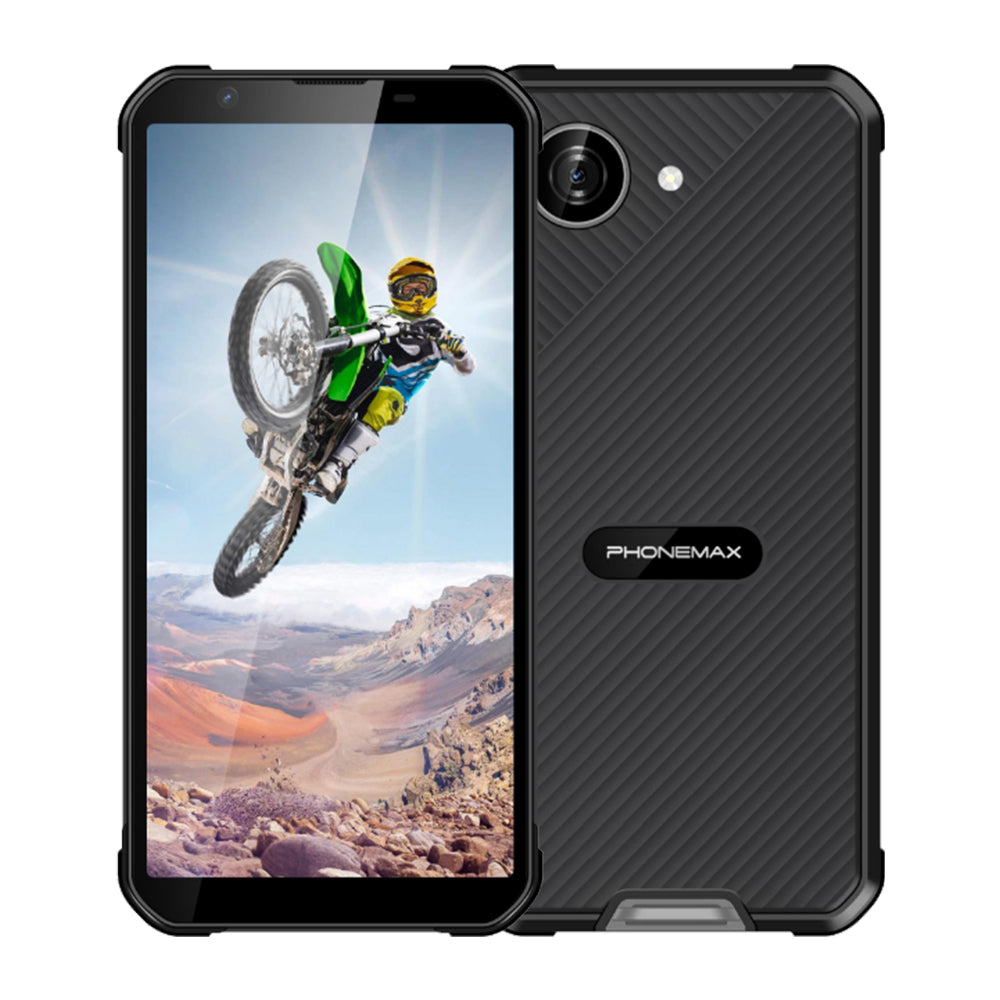
Our Phonemax X5 is currently listed as a compact rugged smartphone at about 238 g, illustrating that rugged design does not always mean an extremely heavy body.
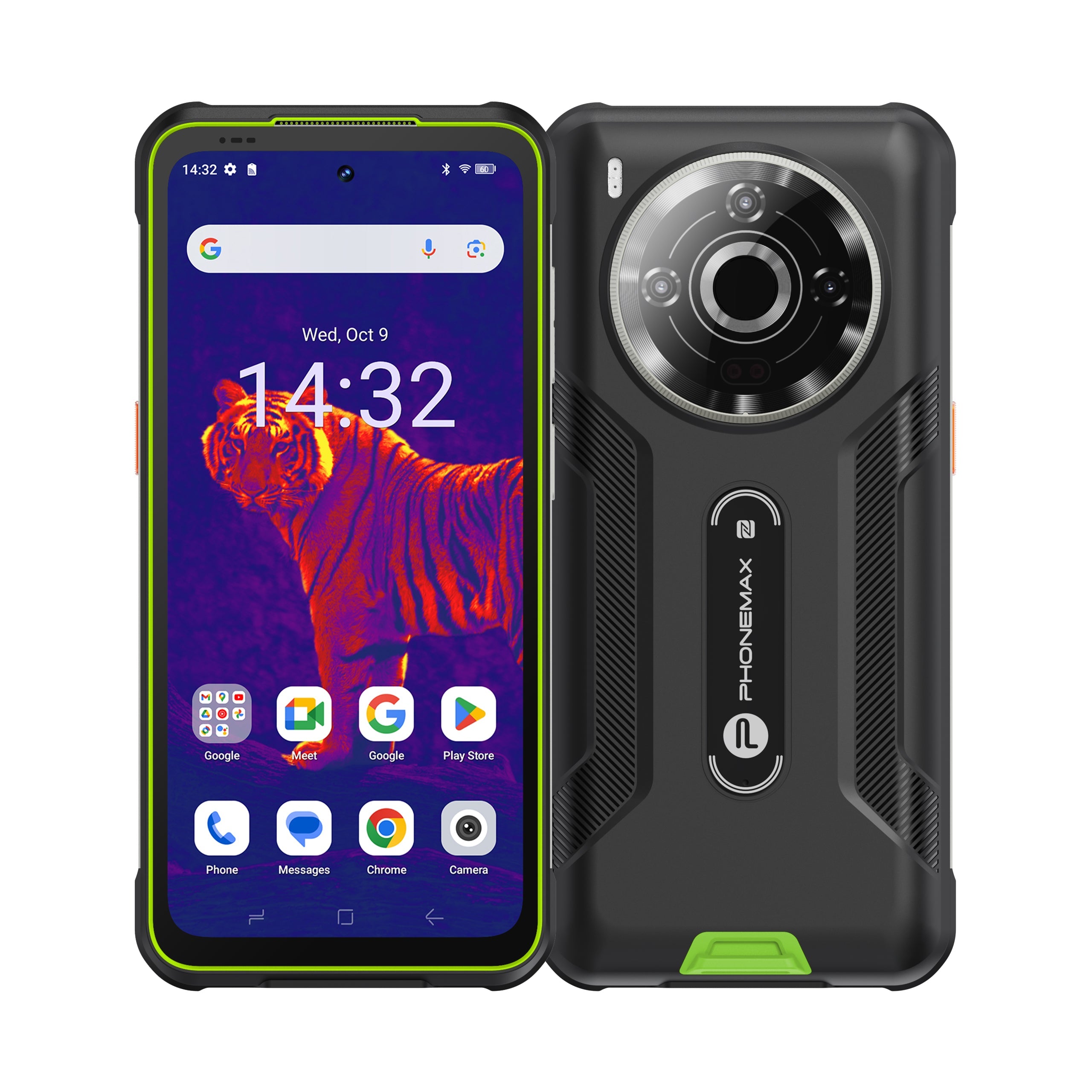
At the other end of the need spectrum, the Phonemax P20 Pro is listed at about 394 g and integrates thermal imaging. That added specialist capability makes sense only when the user values the function enough to accept the larger form factor.
These are our products and therefore first-party examples. The lesson is not that either one is universally better; it is that the required environment should determine the form factor.
A five-question decision test
- Does my phone face dust, rain, mud, vibration or rough surfaces every week?
- Would a device failure interrupt work, navigation or communication?
- Do I regularly need more battery than a conventional phone provides?
- Do I need gloves, physical controls, PTT, thermal imaging, night vision or other field functions?
- Am I willing to accept additional size or weight for those benefits?
If you answer yes to several of these, a rugged phone deserves serious consideration. If the main concern is simply “I sometimes drop my phone,” start with a good case.
What to verify before buying either solution
For a rugged phone, verify exact durability tests, network bands, software support, weight, battery, charging, screen visibility, camera performance and accessories. For a case, verify corner and screen-edge protection, grip, port access, camera protection, charging compatibility and any independently documented protection claim.
Limitations
A case can perform very differently depending on the phone and case design. Rugged phones also vary widely. No article can replace testing the exact combination you plan to use, particularly for work-critical or regulated environments.
Bottom line
A protective case is a rational choice for many normal smartphone users. A rugged phone earns its extra hardware when the environment repeatedly works against the device or when field-specific functions are required. Choose the solution that matches the actual risk rather than the one that looks toughest.
FAQ
Is a rugged phone always more durable than a normal phone with a case?
Not in every possible test, but a purpose-built rugged phone can address more of the device system than an external case. Compare model-specific evidence rather than the category label alone.
Is an IP68 phone with a case the same as a rugged phone?
No. IP ratings address specific enclosure-protection tests and do not automatically describe drop resistance, vibration, battery, glove use or field ergonomics.
Are rugged phones always too heavy for daily use?
No. Weight varies considerably. Check the exact model rather than assuming every rugged phone is large.
Should I buy a rugged phone as a backup device?
It can make sense for travel, outdoor trips or emergency kits when battery, durability and offline navigation matter more than minimum weight or premium camera performance.
Sources and verification
- IEC 60529 — Degrees of protection provided by enclosures (IP Code)
- ISO 20653:2023 — enclosure protection for road-vehicle electrical equipment
Next step: compare the cost and inconvenience of your real past phone failures with the everyday size, weight and price of the rugged solution you are considering.

Leave a comment
All comments are moderated before being published.
This site is protected by hCaptcha and the hCaptcha Privacy Policy and Terms of Service apply.