
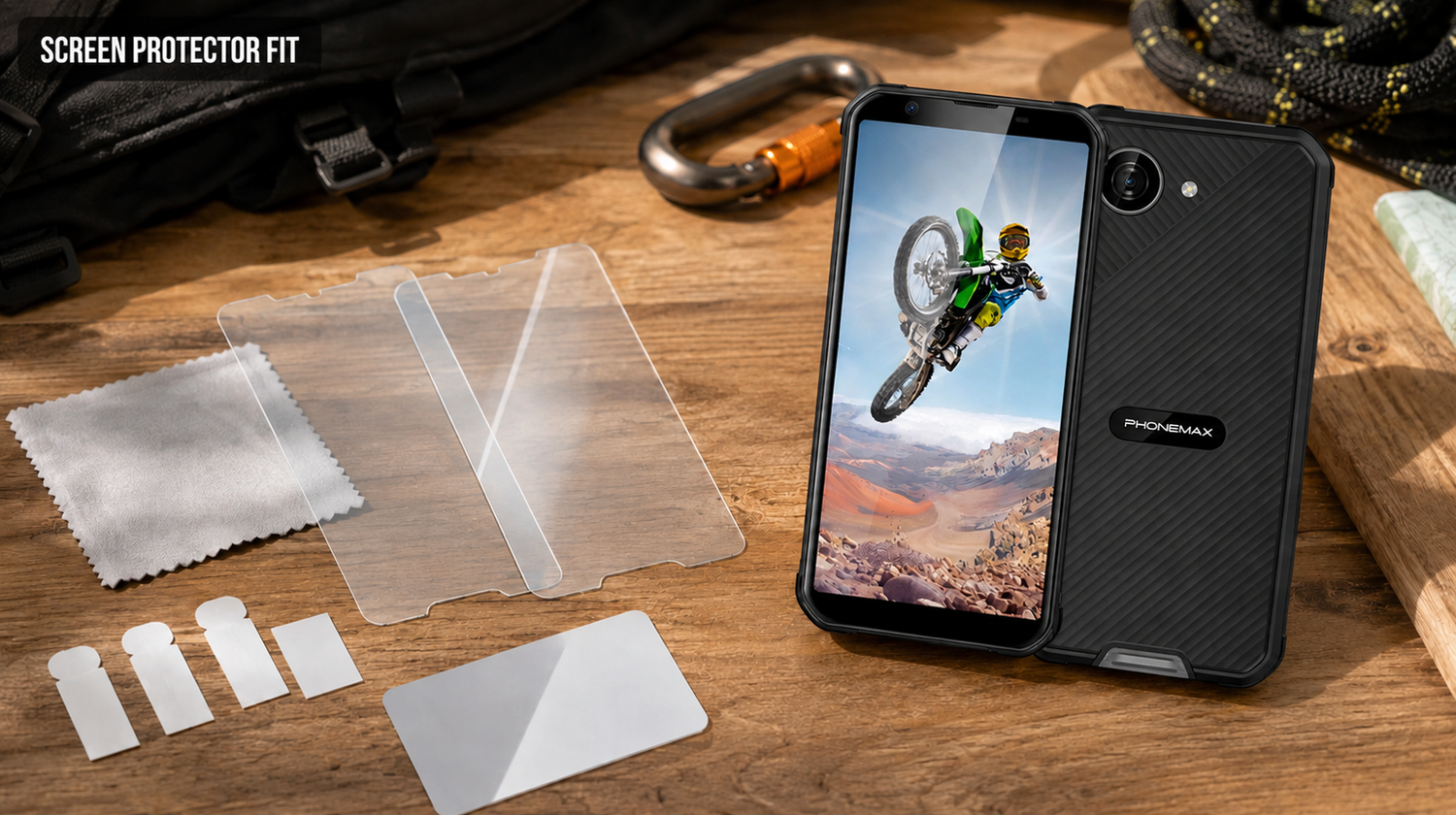
A screen protector is worth using on a rugged phone only when it fits the exposed glass, clears the raised frame and preserves reliable touch response. Do not choose by hardness labels alone. Install one sample, test every edge and gesture, then repeat the test with the gloves, moisture and mounting setup used in real work.
What must a rugged-phone protector actually do?
The useful job is narrow: absorb scratches and some direct surface damage without creating a new failure point. A protector cannot make a phone waterproof, raise its IP rating or prove drop resistance. On a rugged device, the frame may already sit above the glass, so an oversized sheet can bridge the edge, lift under a case or interfere with swipes.
| Check | Pass condition | Reject when |
|---|---|---|
| Physical fit | Even clearance around the frame, camera and speaker | Any edge rides on the bezel or case |
| Adhesion | No bubbles, dust pockets or lifting after 24 hours | Corners lift after pocketing or temperature change |
| Touch | Taps, typing, drag and edge swipes work consistently | Missed taps, ghost touches or delayed swipes |
| Visibility | Readable at working brightness and viewing angle | Glare, haze or rainbow patterns obscure content |
| Field use | Works with required gloves and mount | Touch fails in the actual task |
Run this five-minute fit and touch test
- Clean and dry the display; photograph the unprotected screen for comparison.
- Dry-fit the protector before removing its liner. Confirm speaker, camera, sensor and frame clearance.
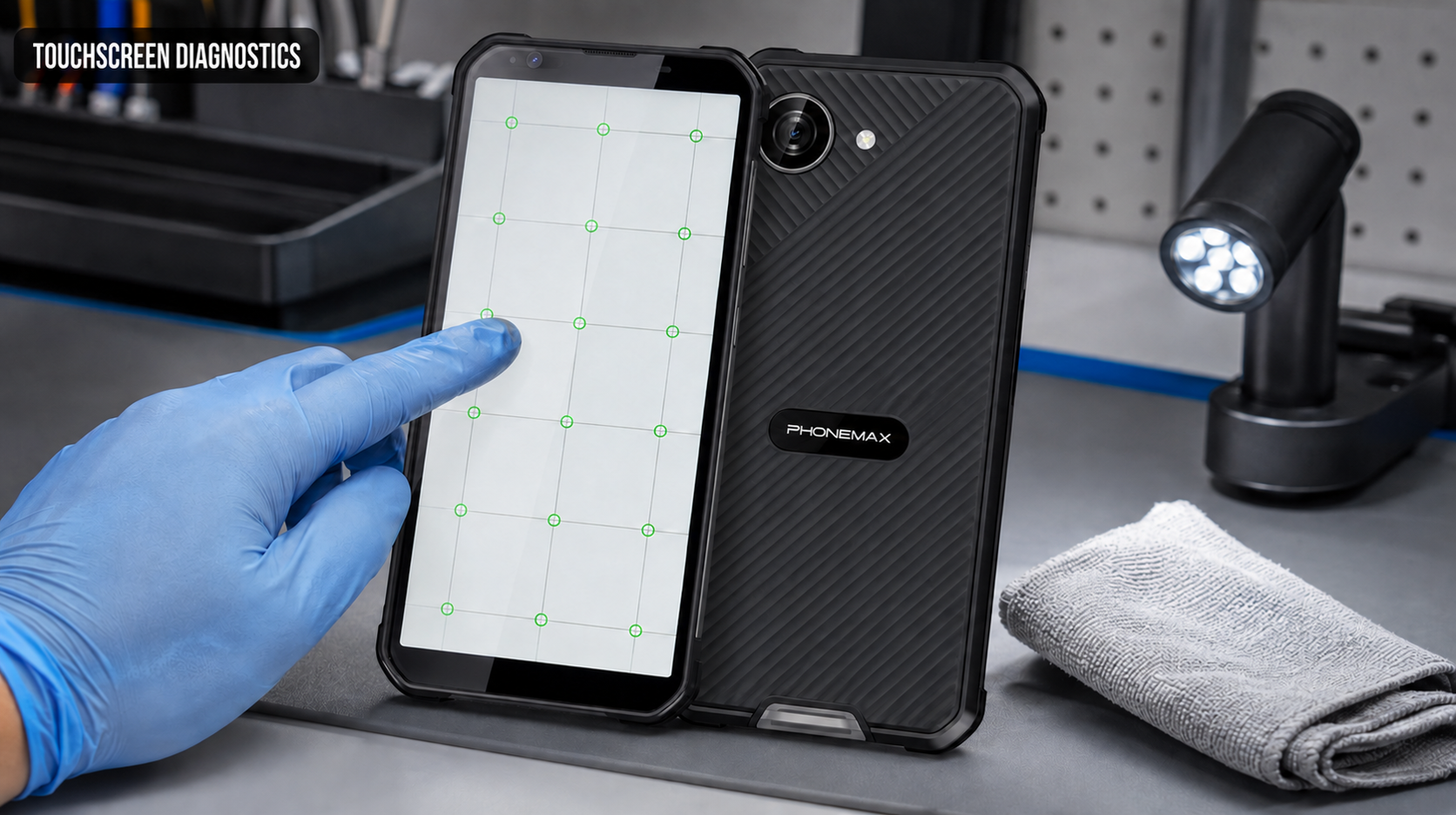
- Install it, then draw slow horizontal and vertical lines across a touch-test grid. Gaps show missed input.
- Type a fixed 30-word note, pinch-zoom a map and swipe from all four edges.
- Repeat with your normal work gloves and a lightly damp—not flooded—finger. Stop if the protector produces false input.
Google’s Android troubleshooting guidance recommends removing cases or screen protectors when isolating touch problems. That makes the protector an important controlled variable, not an automatic upgrade.
How the Phonemax X5 should be evaluated
The current Phonemax X5 page lists a 5.3-inch display and a compact 140.5 × 67.7 × 15.4 mm body. It does not specify a protector material, thickness tolerance or glove-mode guarantee. Ask the accessory seller for an X5-specific cut, then perform the test above. Do not treat a generic “5.3-inch” protector as proof of fit because aspect ratio, corner radius and sensor openings vary.
Stop conditions before deployment
Reject the protector if it covers a speaker or sensor, lifts under the case, creates repeated dead zones, reduces required outdoor readability or prevents emergency navigation gestures. For fleet purchases, approve one exact protector SKU and record the supplier and revision so replacements remain consistent.
Frequently asked questions
Does every rugged phone need a screen protector?
No. A protector is an additional sacrificial layer; it does not replace the phone’s enclosure, raised edges or careful handling. Buy one only if it fits without impairing touch, sensors or case clearance.
Is tempered glass always better than film?
No. Glass can improve scratch and impact sacrificial protection, while film is thinner and may conform better to curved or recessed surfaces. Fit and touch performance matter more than the label.
Can a protector change wet-hand or glove response?
Yes. Added thickness, adhesive gaps and moisture can change touch behavior. Test the exact protector with the exact gloves and field conditions you use.
Should bubbles near the edge be ignored?
No. Lifting edges collect dirt and moisture and can cause false touches. Reinstall or reject the protector if the edge does not remain fully bonded.
Sources and verification links
Editorial method
Prepared by the Phonemax Editorial Team on 22 August 2026. We checked the current product listing, separated published specifications from field-test requirements, and linked primary sources beside the claims they support. To request a correction, contact Phonemax through the official website.

Leave a comment
All comments are moderated before being published.
This site is protected by hCaptcha and the hCaptcha Privacy Policy and Terms of Service apply.