
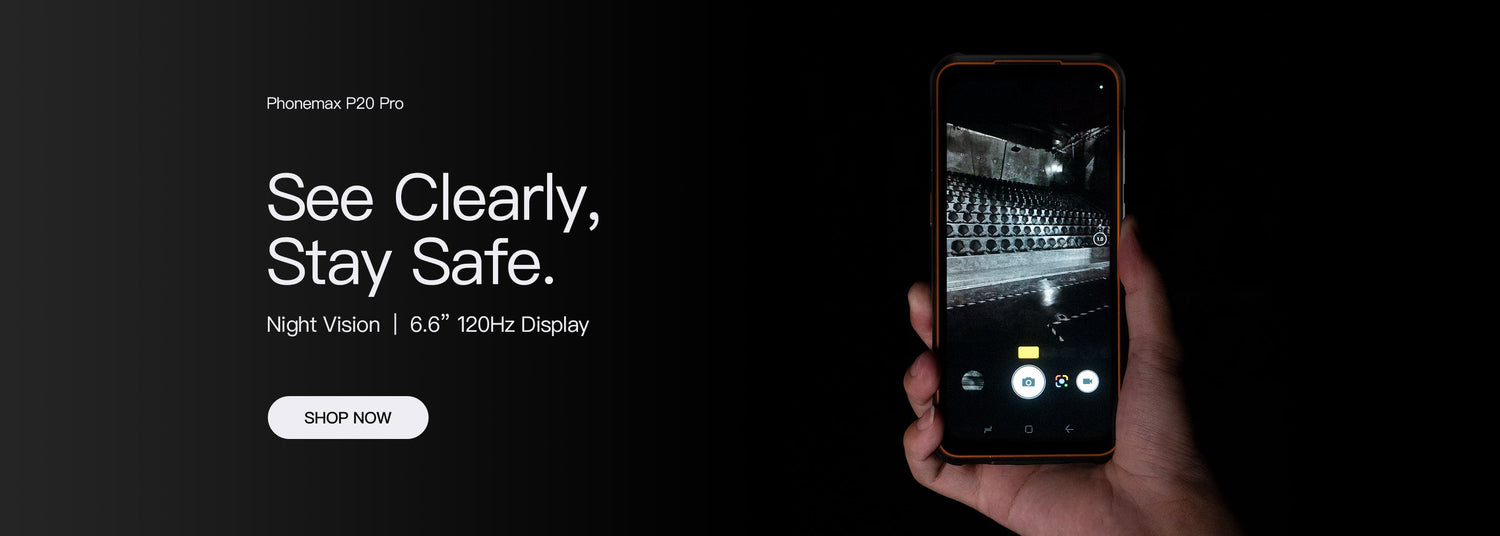
An 8000mAh battery mobile phone offers a larger energy reserve than many conventional smartphones, which can be useful for long work shifts, travel, navigation, outdoor activities and situations where charging is not always available. But an 8000mAh number alone does not tell you how long a phone will actually last. Real battery life depends on the processor, display, network conditions, GPS use, temperature, background apps, charging habits and the overall efficiency of the device.
For rugged-phone buyers, the question is not simply “Is 8000mAh a big battery?” The more useful question is whether the phone can deliver enough runtime for the actual workload without becoming too large or heavy for the way it will be carried and used.
What does an 8000mAh battery mean in a mobile phone?
mAh, or milliamp-hours, is a measure commonly used to describe battery capacity. A higher capacity generally means the battery stores more charge, but it does not translate directly into a fixed number of hours or days. Two 8000mAh battery phones can have very different real-world endurance because their screens, chipsets, radios and software use power differently.
An 8000mAh battery is especially attractive for users who spend long periods away from mains power. Common examples include delivery drivers, construction workers, field technicians, travelers, hikers and users who rely on their phone for continuous navigation.
How long can an 8000mAh battery phone last?
There is no universal answer. Light use—such as calls, messaging and occasional browsing—consumes much less energy than continuous GPS, gaming, video recording, hotspot use or weak-signal mobile data. A realistic battery estimate should therefore be based on the intended workload rather than a generic standby claim.
For example, a phone used for several hours of navigation with high screen brightness can drain much faster than the same phone left mostly in a pocket. Similarly, a device in an area with weak cellular coverage may use additional power while searching for and maintaining a connection.
Main factors that affect battery life
- Screen brightness and size: a large, bright display is useful outdoors but can be one of the biggest power consumers.
- 4G and 5G signal: weak or unstable coverage can make the modem work harder.
- GPS: continuous navigation and location tracking add sustained power demand.
- Processor efficiency: newer or better-optimized chipsets may achieve more work from the same battery capacity.
- Hotspot use: mobile data and Wi-Fi transmission operate together, increasing consumption.
- Camera and video: imaging, processing and screen use can create a heavy combined load.
- Temperature: cold conditions can temporarily reduce battery performance, while excessive heat can accelerate aging.
- Background apps: synchronization, cloud backup, messaging and tracking services can consume power continuously.
8000mAh vs 5000mAh, 6000mAh and 7000mAh
A larger battery provides more potential energy reserve, but capacity should be considered together with device efficiency and physical size. Moving from a 5000mAh battery to 8000mAh does not automatically produce exactly 60% more runtime because the phones being compared may have different displays, processors, radios and software.
| Battery capacity | Typical buying consideration |
|---|---|
| Around 5000mAh | Common balance of everyday runtime, size and weight. |
| Around 6000mAh | More reserve for users who value endurance but still want manageable dimensions. |
| Around 7000mAh | Useful for heavier daily workloads and longer periods away from charging. |
| Around 8000mAh | Prioritizes endurance and can suit navigation-heavy, field or outdoor use, usually with a size/weight trade-off. |
The best battery size is therefore not always the largest one. A compact user may prefer a lighter phone, while a field worker may accept extra thickness in exchange for longer runtime.
Why 8000mAh phones are common in rugged-phone use cases
Rugged smartphones are often used in conditions where access to charging is less predictable. A construction worker may spend a full shift outdoors; a delivery driver may run navigation continuously; a field technician may use data, photos and work apps throughout the day. In these situations, extra battery reserve can be more valuable than extreme thinness.
However, rugged construction already adds protective material and structural reinforcement. Combining that with an 8000mAh battery can make the phone noticeably thicker and heavier. Buyers should always check the exact dimensions and weight rather than choosing by battery capacity alone.
8000mAh battery mobile phone for GPS and navigation
Navigation is one of the clearest use cases for a large-battery mobile phone. Continuous GPS, a bright screen and mobile data can run simultaneously for hours, creating a sustained load. Drivers, motorcycle riders, hikers and field teams should consider how long the screen and GPS will actually remain active during a normal day.
Offline maps can reduce dependence on mobile data in areas with poor coverage, although GPS itself will still consume power. For vehicle use, also check charging, mounting, vibration and heat exposure rather than looking at battery capacity alone.
Does 5G use more battery?
5G power consumption varies with the modem, network conditions and data activity. A stable connection may behave differently from a phone repeatedly switching between 4G and 5G or searching for a weak signal. If long battery life is important, network compatibility and signal quality matter as much as the 8000mAh capacity.
Before buying an imported or international rugged smartphone, verify the exact supported bands for the intended carrier. A large battery cannot solve poor network compatibility.
How long does an 8000mAh battery take to charge?
Charging time depends on the phone's supported charging power, charger compatibility, thermal management and current battery level. The battery capacity alone cannot determine charging time, and using a charger with a high printed wattage does not mean the phone will accept that full power.
For a large-battery phone, charging convenience can be as important as capacity. Check the supported charging standard, included accessories and whether the charging port is easy to access when the phone is mounted or protected by a port cover.
Size and weight trade-offs
An 8000mAh battery occupies physical space. In a rugged phone, the battery sits alongside a reinforced frame, seals and impact-protection structures. This can result in a device that is significantly larger than a slim consumer smartphone.
Consider how the phone will actually be carried. A heavy device may be acceptable in a tool bag, vehicle mount or work jacket, but less comfortable for everyday pocket carry. Users looking for a secondary or backup phone may prioritize compact dimensions instead of maximum capacity.
Battery health and long-term capacity
Like other lithium-based smartphone batteries, an 8000mAh battery gradually loses usable capacity as it ages. Heat is an important factor. Leaving a phone in a hot vehicle, charging it while it is already very warm or exposing it repeatedly to high temperatures can accelerate degradation.
Cold weather can temporarily reduce available performance. Field users operating in very low temperatures should leave additional battery margin rather than assuming the rated capacity will always be fully available.
Practical battery-care habits
- Avoid unnecessary prolonged heat exposure.
- Use compatible charging equipment.
- Do not block heat dissipation during heavy use and charging.
- Keep software and power-management settings appropriately configured.
- For long-term fleet deployments, consider replacement and warranty options as part of total cost.
What else should you check besides 8000mAh?
A large battery is only one part of a useful smartphone. When comparing an 8000mAh rugged phone, also check:
- exact dimensions and weight;
- display brightness and outdoor readability;
- supported 4G/5G bands;
- GPS and navigation capability;
- charging specification;
- water, dust and drop-resistance claims and their test conditions;
- Android version and app compatibility;
- NFC, fingerprint, programmable keys or other required functions;
- camera requirements;
- accessories, mounts and after-sales support.
How to choose an 8000mAh battery smartphone
Start with the real use case. The best device for a delivery driver may be different from the best device for an outdoor traveler or warehouse worker. A simple workload checklist can make the comparison more meaningful.
- Estimate daily screen-on time.
- Estimate hours of GPS or navigation use.
- Identify whether the phone will often operate in weak-signal areas.
- List heavy apps such as camera, scanning, hotspot or video tools.
- Check whether charging is available during the workday.
- Decide what size and weight is comfortable for the intended carry or mount.
- Confirm network bands and software compatibility.
- If purchasing for a fleet, test a sample under the real workflow before ordering in volume.
Is an 8000mAh battery mobile phone right for travel?
It can be useful for travel when navigation, translation, messaging and photography are used heavily, especially when access to charging is uncertain. The trade-off is greater size and weight. International travelers should also verify carrier bands and consider whether a smaller phone plus a power bank would be more convenient for their specific trip.
Is an 8000mAh rugged phone suitable as a work phone?
For many field applications, yes—provided the rest of the specification matches the job. Battery capacity is especially valuable when the phone is a tool used for navigation, communication, photos, work orders or data collection for long periods. Durability, software, connectivity and ergonomics remain equally important.
Questions to ask before buying
- What are the exact dimensions and weight?
- How does the phone perform during continuous GPS use?
- Which network bands are supported?
- What charging power and standard are supported?
- What rugged or IP test conditions apply to this specific model?
- What Android version and software support are provided?
- What warranty and after-sales support are available?
- Can the device be tested under the intended workload before a bulk purchase?
FAQ about 8000mAh battery phones
Is 8000mAh a good battery capacity for a mobile phone?
It is a large smartphone battery capacity and can be useful for people who prioritize endurance. Whether it is the right choice depends on the phone's efficiency, dimensions, weight and intended workload.
How many hours can an 8000mAh battery mobile last?
There is no fixed number. Runtime changes significantly with screen use, signal strength, GPS, 5G, hotspot use, temperature and application load.
Is an 8000mAh battery phone better than a 5000mAh phone?
It can provide more energy reserve, but it may also be larger and heavier. Device efficiency and the user's priorities determine which is better.
Can an 8000mAh smartphone replace a power bank?
For some users, the extra built-in capacity reduces the need to recharge during the day. It does not necessarily replace a power bank for multi-day travel or extremely heavy use.
Does an 8000mAh battery make a rugged phone waterproof?
No. Battery capacity has no relationship to water resistance. Check the specific IP rating and manufacturer's test conditions for the phone.
What should a business verify before ordering 8000mAh rugged phones?
Verify the exact hardware configuration, network bands, battery and charging specifications, required certifications, software configuration, durability requirements, accessories, warranty terms and sample performance before placing a bulk order.
Conclusion
An 8000mAh battery mobile phone can be an effective choice when long runtime matters more than minimum size and weight. The capacity is especially relevant for navigation, field work, outdoor use and long shifts, but the best buying decision comes from evaluating the entire device. Compare real workload, network conditions, display use, charging access, dimensions, durability and software—not the battery number alone.

Leave a comment
All comments are moderated before being published.
This site is protected by hCaptcha and the hCaptcha Privacy Policy and Terms of Service apply.