
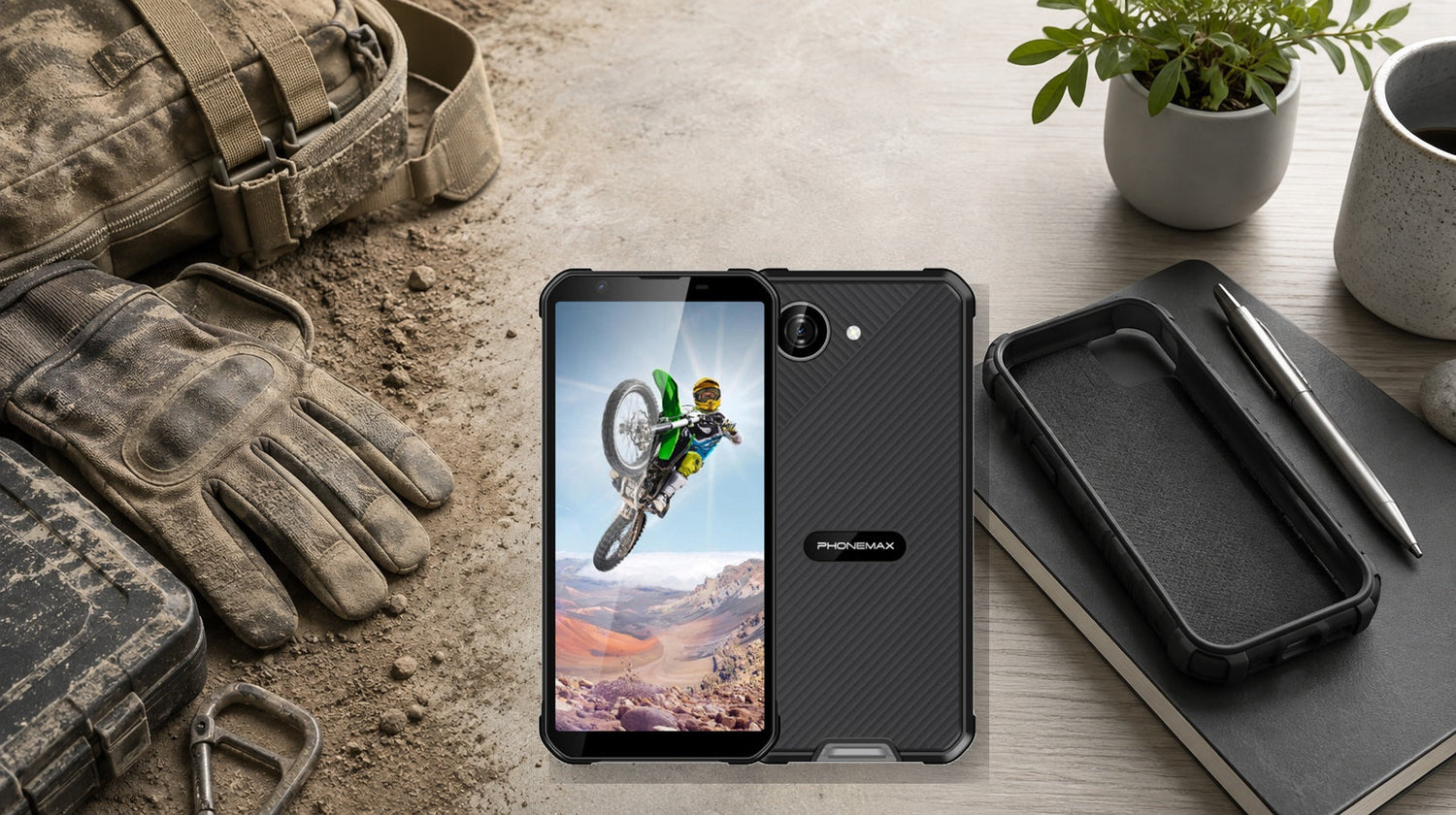
Choose a purpose-built rugged phone when drops, dust, rain and rough handling are routine parts of the job, ports and controls must remain usable in the field, and device downtime costs more than carrying extra weight. Choose a regular phone plus a protective case when exposure is occasional and mainstream cameras, slimness, accessories or long software support matter more.
For the closest comparison, see What Would the Perfect Rugged Phone Look Like in 2026?.
Compare systems, not marketing labels
The real comparison is not bare phone versus rugged phone. It is the complete deployed system: phone, case, screen protector, charging method, mounts, warranty, spares, mobile-device management, apps and user behavior. A strong case can improve impact protection, but it cannot automatically change the phone’s original ingress rating, internal connector design or operating-temperature limits.
Conversely, a rugged phone is not automatically the best smartphone. It may be thicker, heavier, slower, harder to repair locally or less competitive in cameras and update policy. The right choice follows the dominant failure mode.
Four buyer profiles
Repeated field exposure
Construction inspectors, maintenance technicians and outdoor crews often face repeated dirt, drops and wet handling. Integrated protection reduces dependence on a removable case staying perfectly seated.
Occasional weekend exposure
A person who works indoors and hikes monthly may get better overall value from a mainstream phone, certified protective case and separate emergency power source.
Camera-first creator
If low-light image quality, stabilized video or a mature editing ecosystem drives revenue, a mainstream flagship with a case may be the stronger tool—provided its environmental limits fit the assignment.
Fleet operator
A business should model three-year cost: acquisition, accessories, breakage, repair turnaround, lost shifts, spares, setup labor and residual value. The cheapest handset can be the expensive deployment.
Reproducible exposure audit
For ten working days, record every event that could damage or interrupt a phone: drop, rain, dust, glove removal, port contamination, overheating, depleted battery, unreadable screen, broken case, app incompatibility and network failure. Give each event a severity score from 1 to 5 and record downtime minutes.
At the end, calculate:
Exposure burden = event count × average severity × average downtime minutes
This is not an industry standard; it is a transparent internal comparison. If the burden is driven mainly by repeated physical exposure, rugged hardware gains value. If the burden is driven by app support, camera quality or connectivity, a rugged enclosure alone will not solve it.
Decision matrix
| Priority | Rugged phone | Regular phone + case |
|---|---|---|
| Frequent wet/dust exposure | Usually stronger candidate; verify exact rating | Case does not rewrite phone rating |
| Slim pocket carry | Often weaker | Usually stronger |
| Mainstream camera quality | Model-dependent | Often stronger at premium tiers |
| Integrated port covers/reinforced body | Common, but verify | Depends on case design |
| Easy local repair/accessories | Varies by brand | Often broader ecosystem |
| Fleet downtime reduction | Potential advantage | Works if spares/repair are excellent |
| Occasional adventure | May be excessive | Often adequate with preparation |
Phonemax X5 as a first-party example
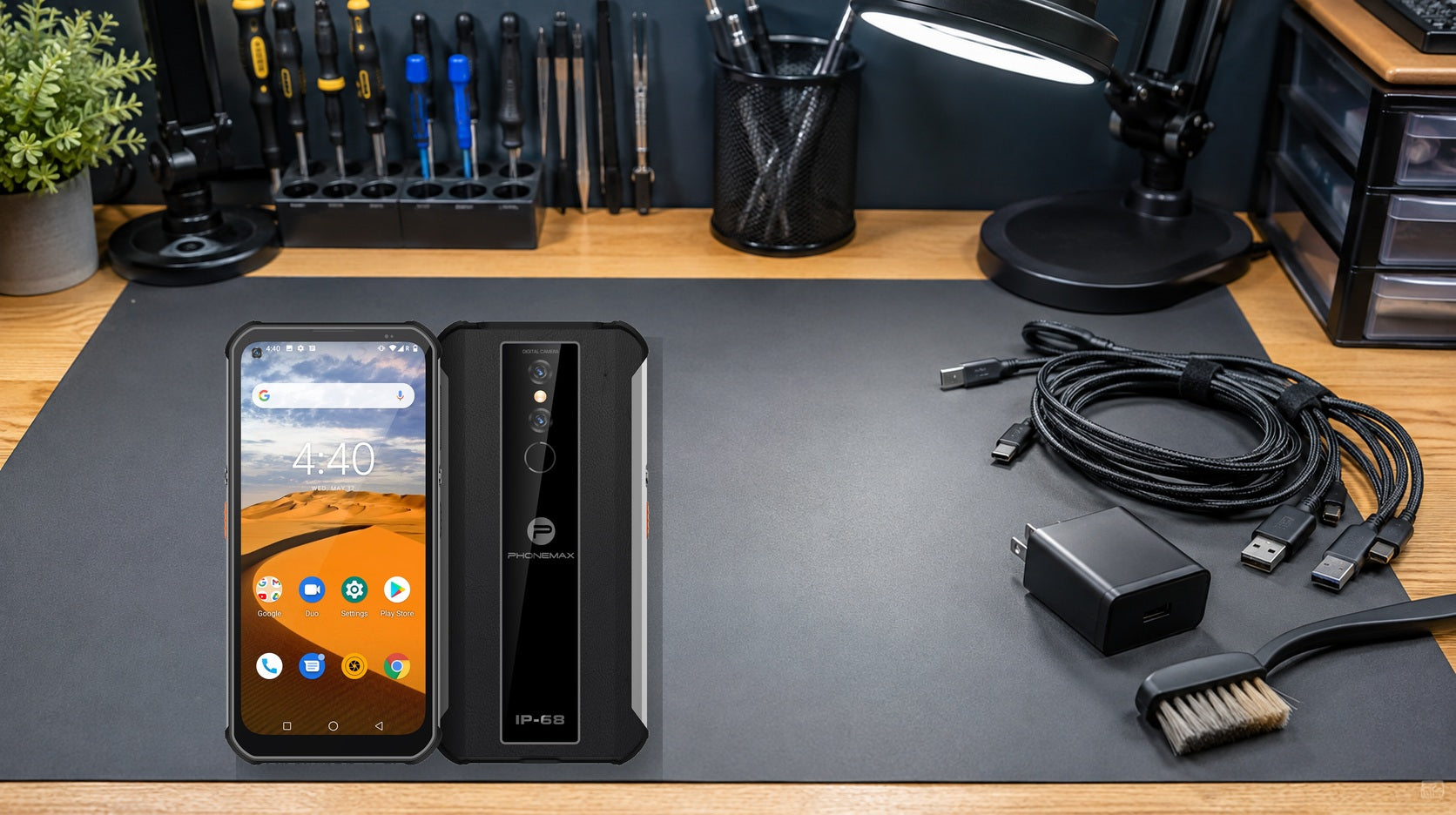
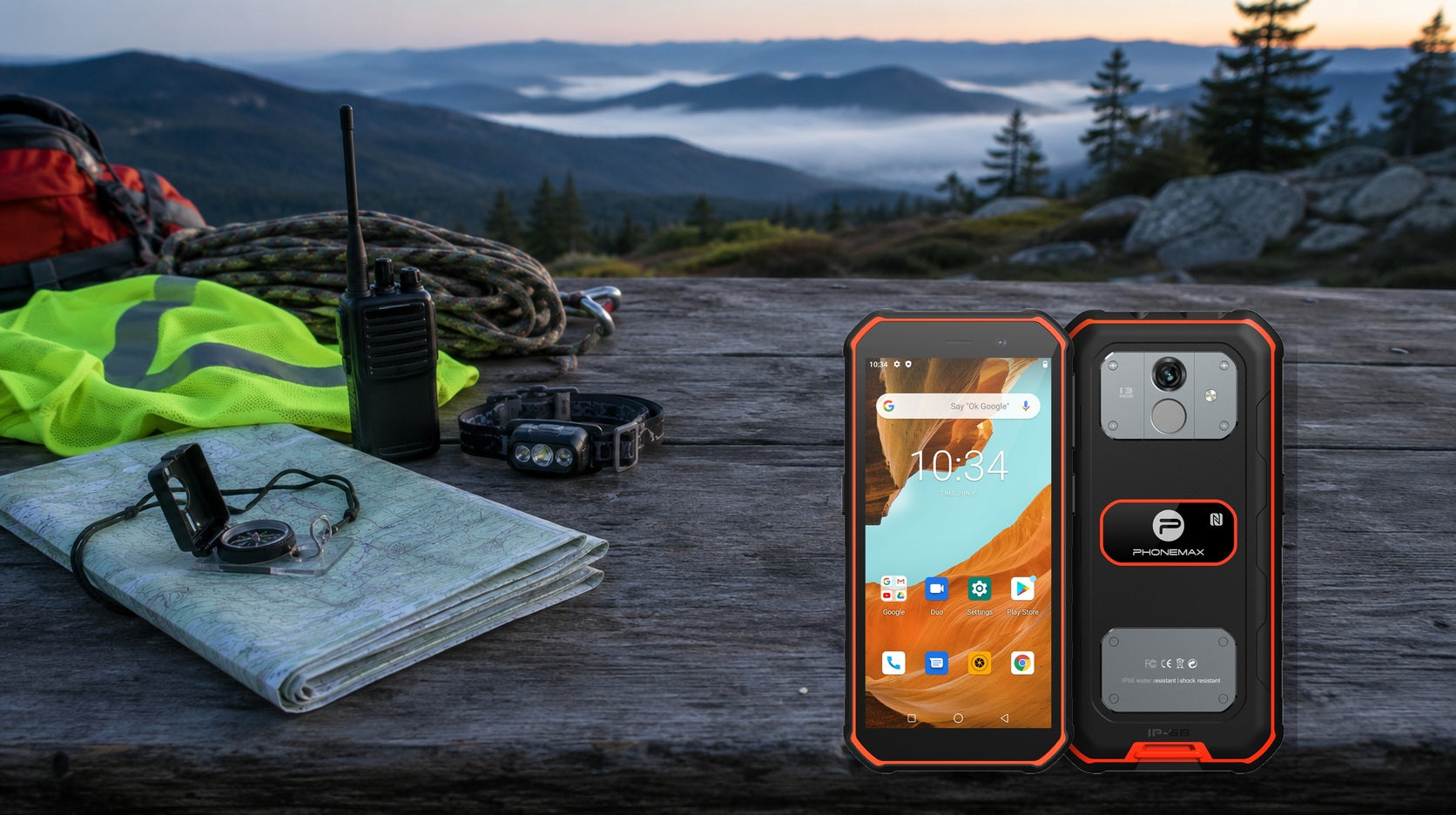
Phonemax publishes this comparison. The Phonemax X5 is one compact rugged option: its current page lists a 5.3-inch display, 238 g body, Android 16, 5000mAh battery and IP68/IP69K. It may fit buyers who want integrated rugged construction without an oversized body. It is not an independent “winner,” and buyers must verify carrier bands, app support and the exact variant. The page states that protection can decrease with wear, impacts or damaged seals.
The IEC IP rating guide explains what the enclosure code evaluates. It does not compare drop outcomes, repair speed, camera performance or software longevity, so those require separate evidence.
Stop conditions
Choose neither option until you have confirmed network compatibility, critical-app operation, mount fit and charging workflow. A hazardous classified location may require specifically approved equipment; an ordinary rugged phone is not a substitute. Also reject a rugged model if its extra mass creates a handling problem, or a case solution if workers routinely remove the case to charge, scan or dock.
Two related checks are What Is the Most Underrated Rugged Phone Feature? It May Not Be Drop Resistance and Rugged Phone Buying Guide 2026: 12 Things to Check Before You Buy.
FAQ
Does a protective case make a regular phone a rugged phone?
It can improve impact protection, but it does not automatically change the phone’s certified ingress rating or internal design.
Is a rugged phone always cheaper over three years?
No. It depends on breakage, repair, downtime, accessories, support and replacement cycles.
Should office workers buy rugged phones?
Usually only when their travel, hobby or secondary duties create repeated exposure. Otherwise the compromises may outweigh the protection.
What should fleets pilot first?
Test one complete kit of each option with real apps, mounts, chargers, gloves and users for at least two weeks.
Sources:
Next step: Run the ten-day exposure audit before choosing between a rugged phone and a regular-phone kit.

Yorum yazın
Tüm yorumlar yayınlanmadan önce incelenir.
Bu site hCaptcha ile korunuyor. Ayrıca bu site için hCaptcha Gizlilik Politikası ve Hizmet Şartları geçerlidir.