
Short answer: Small-business owners should choose staff rugged phones by workflow and fleet cost. Verify required apps, carrier coverage, security updates, device management, common accessories, enrollment, repair turnaround and replacement stock before comparing headline durability.
Commercial disclosure: Phonemax publishes this article and supplies rugged devices. A pilot is recommended before any fleet purchase; no employee productivity results are claimed here.
For the closest comparison, see What Should Travelers Who Need a Backup Phone Check Before Choosing a Rugged Phone?.
Why is staff purchasing different from personal purchasing?
One consumer can tolerate manual setup or an unusual accessory. Ten employees multiply every exception. A fleet decision needs repeatable configuration, support ownership and a replacement process.
Start with roles, not departments. A driver, warehouse picker, site supervisor and field technician may need different apps and peripherals even inside the same company.
What should be in the requirements sheet?
| Requirement | Evidence to collect | Pilot test |
|---|---|---|
| Coverage | Exact bands, carrier/SIM support | Calls and data at real sites |
| Applications | OS and hardware requirements | Complete the actual workflow |
| Security | Patch status, lock, encryption, management | Enroll and remotely apply policy |
| Durability | Relevant rating and limitations | Controlled non-destructive field use |
| Usability | Size, weight, gloves, audio | Full shift with representative staff |
| Accessories | Chargers, cables, mounts, holsters | Install in vehicles/workstations |
| Service | Warranty, parts, turnaround | Document escalation and spare process |
NIST’s enterprise mobile-device guidance covers deployment, use and disposal across the mobile-device lifecycle. Even a small company should name an owner for enrollment, updates, lost-device response and offboarding.
How should a small business evaluate the Phonemax X5?
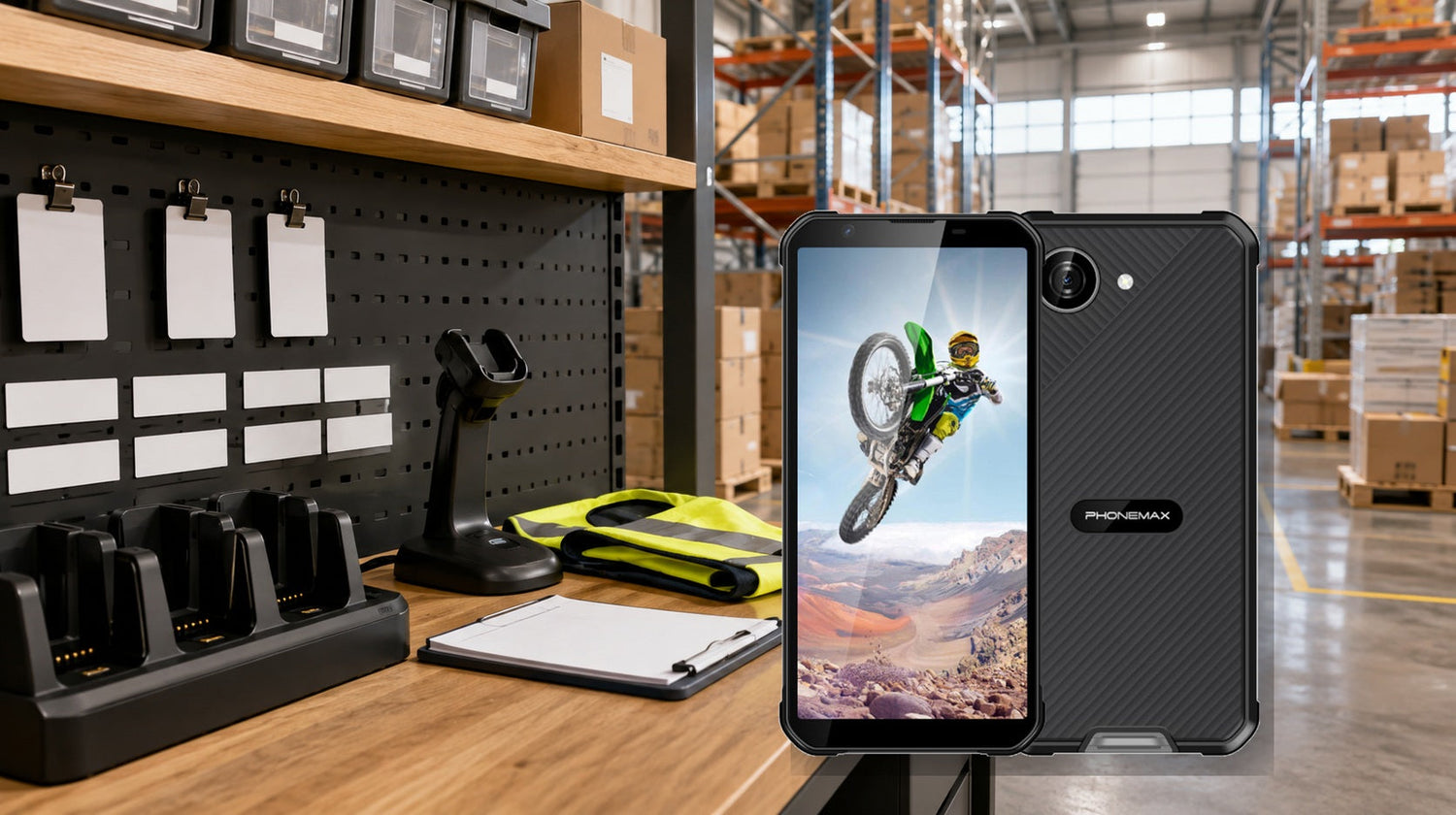
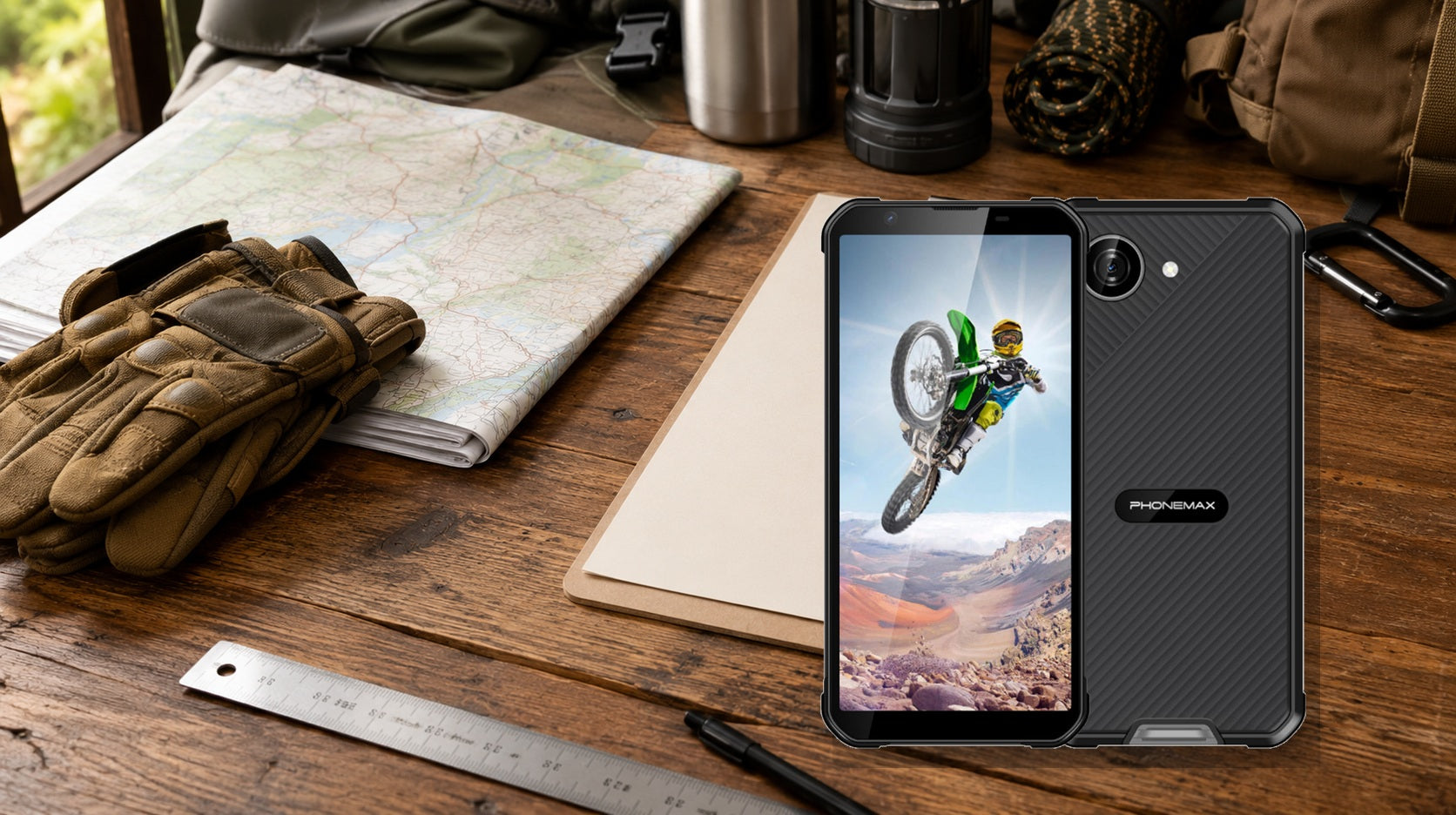
The Phonemax X5 is a relevant fleet candidate when a compact 4G rugged device is sufficient. Its page lists Android 16, IP68, NFC, GPS/GLONASS/BeiDou/Galileo, a 5.3-inch display, 238 g weight and 5000mAh battery.
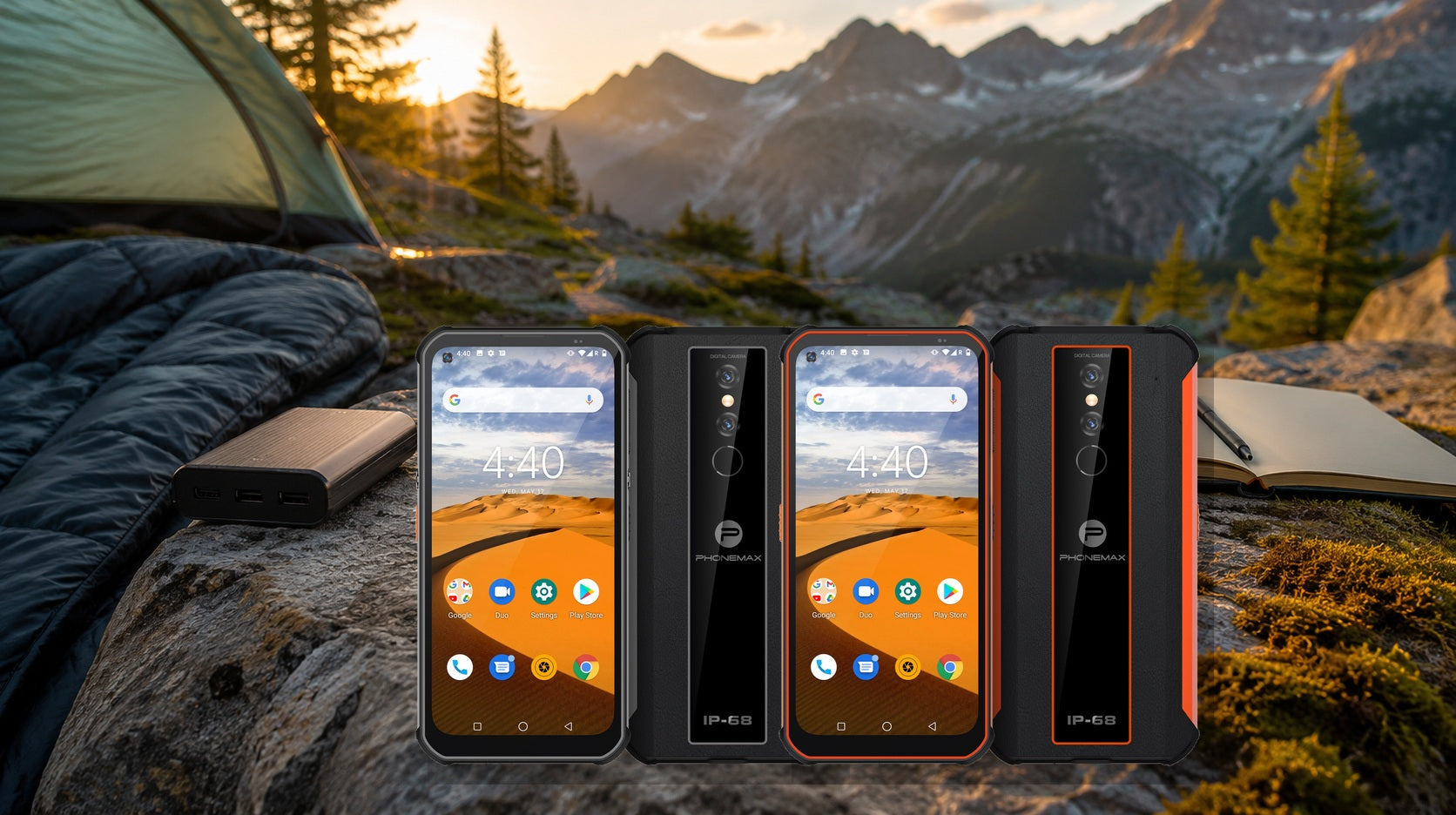
There are important version differences. The T615 full-band configurations offer 4GB/64GB or 6GB/128GB, a large speaker and fingerprint unlock. The G81 Europe-and-Asia version is 4GB/64GB with a standard speaker and no fingerprint sensor. A business should standardize one approved configuration; mixing variants can complicate support and user instructions.
The product page also says full-band does not guarantee every carrier. Test the exact variant and SIM in every important work area.
What security questions must be answered?
- Who owns the account and device records?
- Is screen lock required?
- Can business data be separated or remotely removed?
- How quickly are updates installed?
- What happens when a phone is lost?
- How are devices wiped and accounts removed when staff leave?
- Which apps and stores are allowed?
Google’s Android update guide distinguishes Android version, security update and Google Play system update. Record all three during acceptance and periodic review.
How many devices should the first order include?
Begin with a small pilot that represents the hardest conditions and the least technical user. Measure setup time, failed tasks, help requests, charging, connectivity and carry comfort. Do not invent productivity savings in advance.
After the pilot, decide on spare units based on repair turnaround and operational criticality. A small business may benefit more from one configured spare than from buying unnecessary premium features for every employee.
Total-cost checklist
Include devices, cases or holsters, mounts, chargers, SIMs, setup labor, management software, training, repairs, spares and secure disposal. Then compare cost per working month, not only unit price.
Final recommendation
Standardize only after a real pilot. X5 can enter the shortlist when its compact dimensions, Android 16, NFC, navigation support and selected regional variant meet the role. The purchase decision should remain conditional on app enrollment, carrier testing and a documented repair/replacement path.
Two related checks are What Should Search-and-Rescue Teams Look for in a Rugged Phone? and What Should You Check Before Using a Rugged Phone for Multi-Day Hiking?.
FAQ
Do small businesses need mobile-device management?
The answer depends on data sensitivity and scale, but every business needs at least consistent locks, updates, account ownership and lost-device procedures.
Should every employee receive the same model?
Standardization reduces support cost, but different roles may justify different devices. Use as few approved configurations as practical.
Is IP68 enough for every workplace?
No. Match the enclosure rating and other evidence to the actual water, dust, impact, chemical and temperature exposure.
How long should a pilot run?
Long enough to include normal shifts, charging cycles, weak-signal areas and every critical app. A calendar week is a useful minimum for many workflows, but not a universal rule.
Editorial method: Fleet requirements matrix based on mobile-device lifecycle management and pilot evidence. No business ROI or productivity claim was assumed.

Yorum yazın
Tüm yorumlar yayınlanmadan önce incelenir.
Bu site hCaptcha ile korunuyor. Ayrıca bu site için hCaptcha Gizlilik Politikası ve Hizmet Şartları geçerlidir.