
For a marine tablet project, request the enclosure alloy, finish and relevant assembly evidence; do not convert salt-spray test hours directly into years of service. A “marine-grade aluminum” label needs a defined material and intended exposure before it can guide a purchasing decision.
Read a corrosion report in context
| Report detail | Review question |
|---|---|
| Specimen | Was it a material panel, enclosure part or assembled device? |
| Material and finish | Do these match the proposed production configuration? |
| Exposure and result | What conditions and acceptance criteria were actually used? |
| Intended service | What further evidence is needed for the real environment? |
ASTM's B117 public significance notes caution against using salt-spray results alone to predict corrosion performance in natural environments. A report is useful evidence of its specified test, not a universal service-life conversion.
Review the whole installed arrangement
Describe where the tablet will be used, the expected wetting and cleaning, storage conditions and proposed mount and power accessories. Ask the supplier to identify which exposed components are covered by its evidence and which remain unverified. Have the project reviewer decide whether additional evaluation is required; do not invent a salt-water operating limit from an IP label.
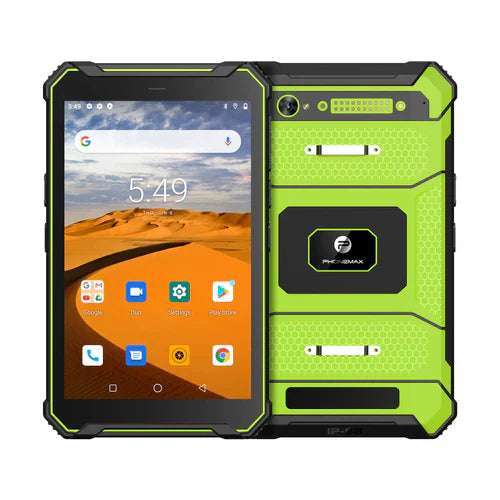
The N1 listing describes a rally navigation tablet with IP68/IP69K and a manufacturer MIL-STD-810H statement. It does not declare a marine-grade aluminum alloy, publish a salt-spray report or establish salt-water suitability for your installation.
No corrosion or marine-use test is reported here. Use the material-evidence checklist for documentation questions, and contact Phonemax with the proposed environment and assembly.


Leave a comment
All comments are moderated before being published.
This site is protected by hCaptcha and the hCaptcha Privacy Policy and Terms of Service apply.