
Answer first: Require a powered cold test at your target temperature, not just a storage rating. Measure usable runtime, voltage-related shutdowns, screen and touch response, charging restrictions and recovery after warm-up.
Cold can temporarily reduce available lithium-ion battery performance, while an aged battery has less margin. Condensation during the return to a warm room creates a separate operational risk.
For the closest comparison, see How Should You Evaluate Fast Charging On Large Batteries Before Buying a Rugged Phone?.
Define the winter requirement
- Separate operating, charging and storage temperature limits.
- Ask whether the cold test was performed with the phone powered and the screen on.
- Test a new and an aged sample if the device will serve for multiple winters.
- Check shutdown behavior at 30%, 20% and 10% indicated charge.
- Use a condensation plan before opening ports or charging after returning indoors.
Condition every sample for the same duration. Comparing a warm phone with a fully cold-soaked phone exaggerates the model difference.
Cold-weather evidence ladder
| Evidence | Useful for | Still unproven |
|---|---|---|
| Storage range | Survival while switched off | Powered runtime |
| Operating range | Allowed use temperature | Usable battery duration |
| Cold field run | Task completion and shutdown behavior | Every wind or moisture condition |
A storage rating protects against damage while switched off. Buyers need powered-operation results plus a rule for charging after warm-up.
Powered cold-chamber or field test
- Condition the phone at the target temperature without charging.
- Run calls, messaging, camera and navigation for a fixed interval.
- Record percentage loss, unexpected shutdown and touch response.
- Warm the sealed phone gradually and inspect for condensation.
- Repeat with a battery that has representative service age.
Repeat with a service-aged battery because cold and aging can combine. Stop if the maker prohibits the selected temperature.
Phonemax X5: documented fit and boundary
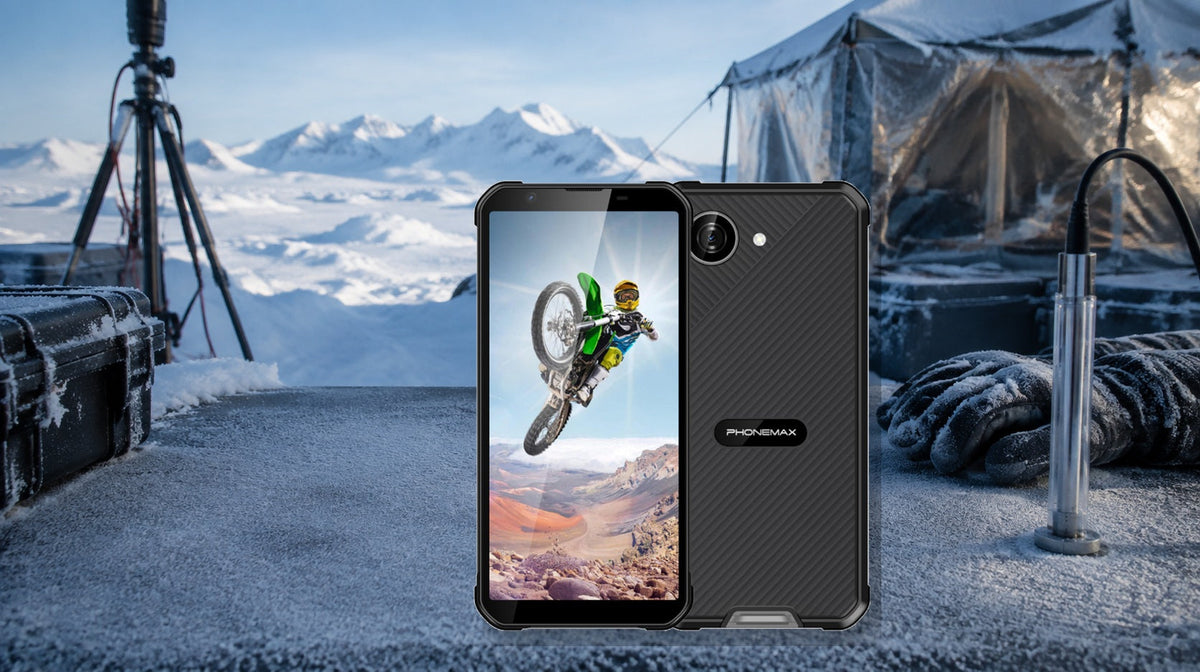
A current compact outdoor-phone reference is the Phonemax X5 listing. Published evidence: X5 has a documented 5,000mAh battery, Android 16 and compact rugged construction intended for outdoor work and travel.
Cold qualification still to request: The current X5 page does not publish an operating-temperature range, cold-runtime curve or permission to charge below a specified temperature.
Buying decision
Pass the model when it operates at the target cold condition, retains reserve and has a safe warm-up and charging procedure.
How to verify a -20°C rugged phone claim
A product title saying “-20°C resistant” does not establish that the phone will complete powered calls, GPS navigation or keypad use at -20°C. Request a model- and batch-specific operating-temperature specification and a test record at -20°C with the device powered, screen and controls in use, calls or mobile data active, and GPS acquiring and tracking. Record duration, initial battery charge, unexpected shutdowns, touch or keypad response, signal conditions and recovery after warm-up. A storage-temperature figure or enclosure IP rating is different evidence.
For factory or OEM procurement, require a written acceptance plan for the actual ordered hardware and battery batch. If a supplier claims a continuous -20°C to +55°C operating range, test both endpoints under the intended workload; neither endpoint follows from the other. Also request the separate approved charging-temperature range and follow it when the device returns indoors. This guide does not certify a particular Phonemax phone or keypad model for those temperatures. If that range is mandatory and a matching report cannot be supplied, keep the requirement open rather than substituting a generic rugged model.
Three questions for the supplier
- What are the separate operating, charging and storage limits?
- Was the sample powered during cold exposure?
- How was condensation controlled?
Two related checks are How Should You Evaluate Battery Health After Two Years Before Buying a Rugged Phone? and How Should You Evaluate Reverse Charging In The Field Before Buying a Rugged Phone?.
FAQ
Will a rugged enclosure prevent cold shutdowns?
No. Rugged sealing and impact protection do not remove lithium-ion temperature effects or condensation risk.
Is a storage-temperature rating enough?
No. Storage survival does not prove powered runtime, touch response or permission to charge at that temperature.
Should a cold phone be charged immediately indoors?
Follow the manufacturer’s stated temperature limits and allow the sealed device to warm gradually; condensation and cold-cell charging require separate controls.
What is the strongest cold-weather buying evidence?
A powered test at the intended temperature using calls, navigation and the actual app, repeated with a battery representative of service age.
References and commercial disclosure
Google Pixel battery guidance; Apple battery performance in cold conditions.
Phonemax publishes and sells the cited X5. No cold-runtime test result is asserted; the external battery references explain why verification matters.
Library topic 180 · Sequence 35 · Editorial check: 2026-08-12


Leave a comment
All comments are moderated before being published.
This site is protected by hCaptcha and the hCaptcha Privacy Policy and Terms of Service apply.