
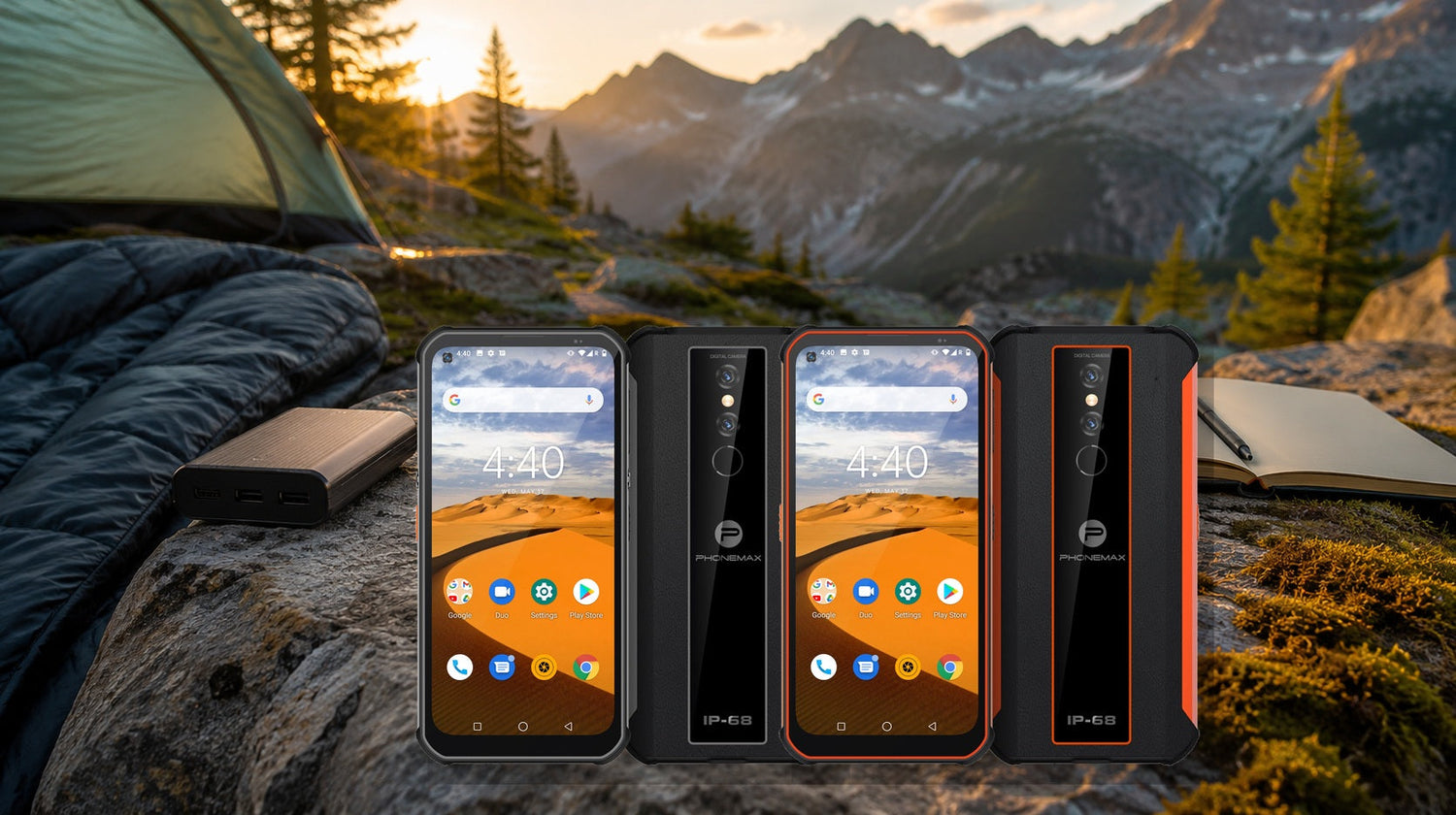
Short answer: If battery matters more than cameras, define the workload first. Compare battery capacity, screen and radio demand, weak-signal exposure, navigation time, charging access, device weight and battery service. A lower camera priority can save money, but it does not guarantee longer runtime.
Commercial disclosure: Phonemax publishes this guide and sells P1 and P2. Their 6100mAh listings are manufacturer specifications, not independently measured endurance results.
Why is mAh not the same as battery life?
Milliamp-hours describe charge capacity under specified conditions. Runtime also depends on voltage, chipset efficiency, display, refresh behavior, screen brightness, network signal, GPS, hotspot use, cameras, temperature, apps and standby management.
Two phones with the same capacity can deliver different real-world endurance. A battery-first buyer needs a workload model, not a capacity leaderboard.
What workload should you calculate?
Estimate a demanding day:
| Activity | Daily time | Battery risk to note |
|---|---|---|
| Screen-on app use | ___ hours | Brightness and display size |
| Navigation | ___ hours | Screen, GNSS and mobile data together |
| Weak-signal standby | ___ hours | Radio may work harder |
| Calls or push-to-talk | ___ hours | Audio and network demand |
| Hotspot or uploads | ___ hours | Sustained radio and heat |
| Photos/document capture | ___ items | Usually secondary unless video-heavy |
Add a safety margin for cold, detours and battery aging. Then run the same pattern during the return window.
What can battery-first buyers de-prioritize?
If the camera is used mainly for work records, you may not need advanced zoom, computational photography or high-end video. Define a minimum instead: readable labels, acceptable document capture, QR scanning and evidence photos in expected lighting.
Do not assume a low camera specification automatically saves substantial power. Display and radio use may dominate the day.
How do Phonemax P1 and P2 fit this decision?
The current product listings for Phonemax P1 and Phonemax P2 both identify a 6100mAh battery. P2’s current variant listing also specifies 8GB + 128GB. These models are relevant examples when a buyer wants moderate large-battery capacity without requiring the 10,000mAh class discussed in our large-battery rugged phone analysis.
This article does not claim a number of days per charge. Phonemax’s current text listings do not provide a standardized, independently verified runtime result for comparison here. Buyers should verify charging specifications, included charger, regional compatibility, dimensions, weight and current software details before choosing either model.
What charging questions matter as much as capacity?
- How long does a full charge take with the included equipment?
- Can you top up during a break or in a vehicle?
- Is the cable and port easy to replace or protect?
- Does the phone charge reliably with your approved power source?
- Can it remain powered for the workflow while charging, if required?
- What is the battery service or replacement route?
A 6100mAh phone that is easy to charge at midday may outperform a larger phone that misses the available charging window.
How should battery durability affect the purchase?
Battery capacity declines with use and age. Heat, physical damage and poor storage can increase risk. For smartphones in the scope of the EU rules applying from June 2025, the framework includes battery endurance and durability information; the European Commission says covered batteries must meet cycle-retention requirements and the label provides comparison information. See the EU smartphone and tablet overview. Confirm whether the exact product and market are in scope.
Never use or travel with a swollen or damaged battery. The FAA lithium-battery guidance states that damaged or recalled batteries and devices posing heat or spark risks must not be carried unless made safe under applicable rules.
A battery-first scorecard
Score each phone from 0 to 5:
- Verified capacity and charging details
- Runtime in your repeatable workload
- Weak-signal performance at real locations
- Weight and carry comfort
- Software and app efficiency
- Battery service and warranty path
- Camera meets the minimum documentation task
Do not give extra points for capacity beyond what the workload needs. Excess capacity can add weight without adding practical value.
Final recommendation
P1 and P2 belong on a Phonemax battery-first shortlist because both are currently listed with 6100mAh capacity. Choose only after confirming the rest of the specification and testing your workload. The right battery phone is the one that completes the longest realistic day with a margin while remaining comfortable, compatible and serviceable.
FAQ
Is 6100mAh enough for two days?
It may be for some light workloads, but no duration can be promised without testing signal, screen, apps and temperature.
Does turning off the camera save much battery?
Only when camera use is material. Display, navigation, radio and hotspot use may consume more over a workday.
Is 10,000mAh always better than 6100mAh?
No. Compare added runtime with added size, mass and charging time.
Should I carry a power bank instead?
That depends on charging access, airline rules, carry burden and whether device redundancy is also needed.
Editorial method: Workload-based battery scoring with explicit uncertainty. No laboratory endurance or charging test was performed.

Jätä kommentti
Kaikki kommentit moderoidaan ennen julkaisemista.
Tämä sivu on suojattu hCaptcha-tunnistuksella, ja hCaptchan tietosuojakäytäntöjä ja käyttöehtoja sovelletaan.