
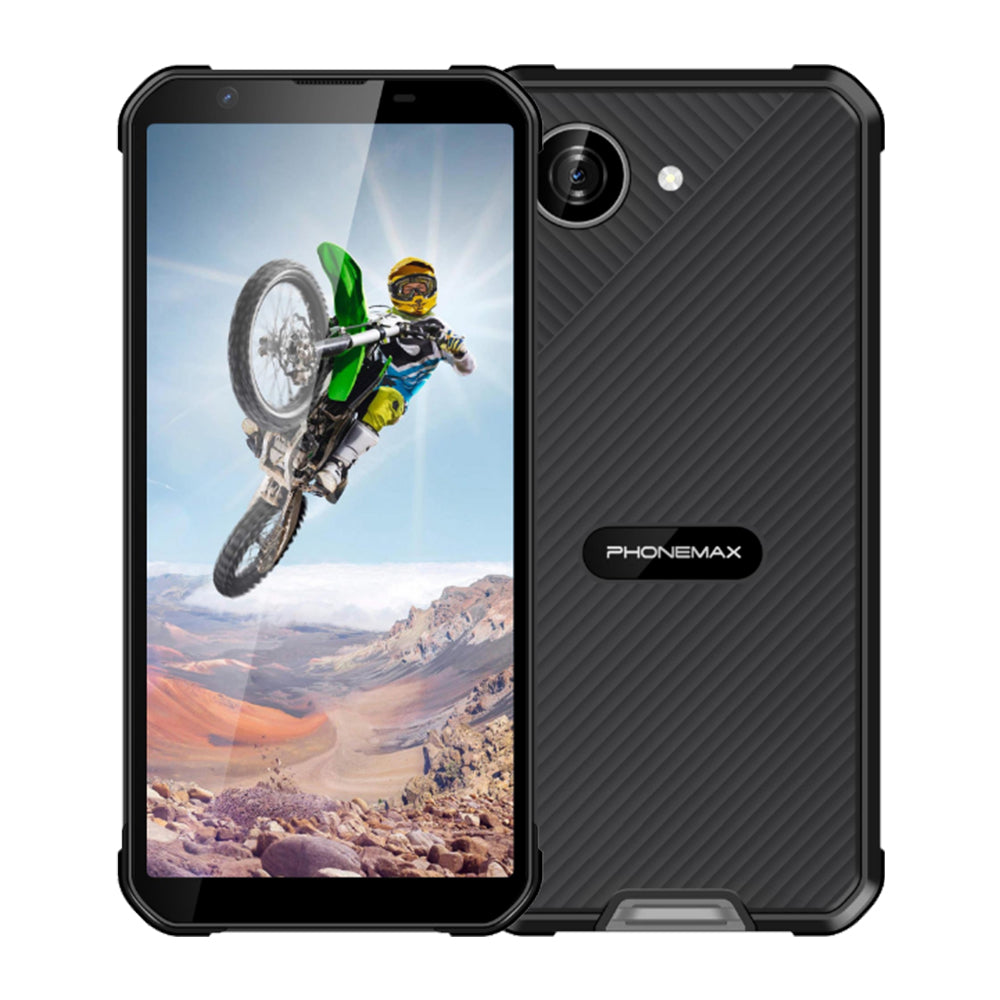
Industrial buyers often see phrases such as “chemical-resistant rugged phone” used beside waterproof, dustproof or shock-resistant claims. These terms are not interchangeable. A phone can have a published ingress-protection rating without having documented resistance to solvents, fuels, disinfectants, acids or other workplace chemicals. The safe procurement approach is to verify the exact exposure, material and test method before treating chemical resistance as a product specification.
IP ratings do not prove chemical resistance
IP ratings describe protection against solid-particle and water ingress under defined test conditions. They do not, by themselves, establish compatibility with cleaning agents, oils, fuels, salt solutions or industrial chemicals. Likewise, a rugged housing or reinforced frame does not automatically mean that seals, adhesives, coatings, buttons and ports tolerate repeated chemical contact.
What industrial buyers should request
Ask the supplier to identify the chemical or chemical family, concentration, exposure method, contact time, temperature and pass/fail criteria. For repeated cleaning, request evidence for the actual disinfectant and wiping procedure. For field use around fuel, lubricants or corrosive substances, request material-compatibility information or a relevant test report rather than relying on a broad marketing phrase.
Use current rugged specifications as a separate baseline
A current rugged model such as the Phonemax X5 can be evaluated from its published specifications, including 4G connectivity, Android 16, a 5.3-inch display, a 5000mAh battery and IP68-rated protection. Those specifications are useful for deployment planning, but they should not be reinterpreted as proof of chemical resistance. If chemical exposure is a requirement, it needs its own evidence.
Build chemical exposure into the acceptance test
For an OEM, ODM or fleet purchase, put the exposure requirement into the written specification before samples are approved. Test the final production configuration, including protective covers and accessories, after the planned exposure cycle. Check sealing, button operation, display readability, charging, audio and enclosure changes. If the supplier cannot provide suitable evidence, record chemical resistance as unverified rather than assuming it from an IP or rugged claim.
Procurement takeaway
“Rugged,” “waterproof” and “chemical-resistant” answer different questions. Treat chemical resistance as a separate engineering requirement, define the real workplace exposure, and require evidence that matches that exposure. This prevents an attractive keyword from becoming an unsupported fleet specification.

Commenta
Nota che i commenti devono essere approvati prima di essere pubblicati.
Questo sito è protetto da hCaptcha e applica le Norme sulla privacy e i Termini di servizio di hCaptcha.