
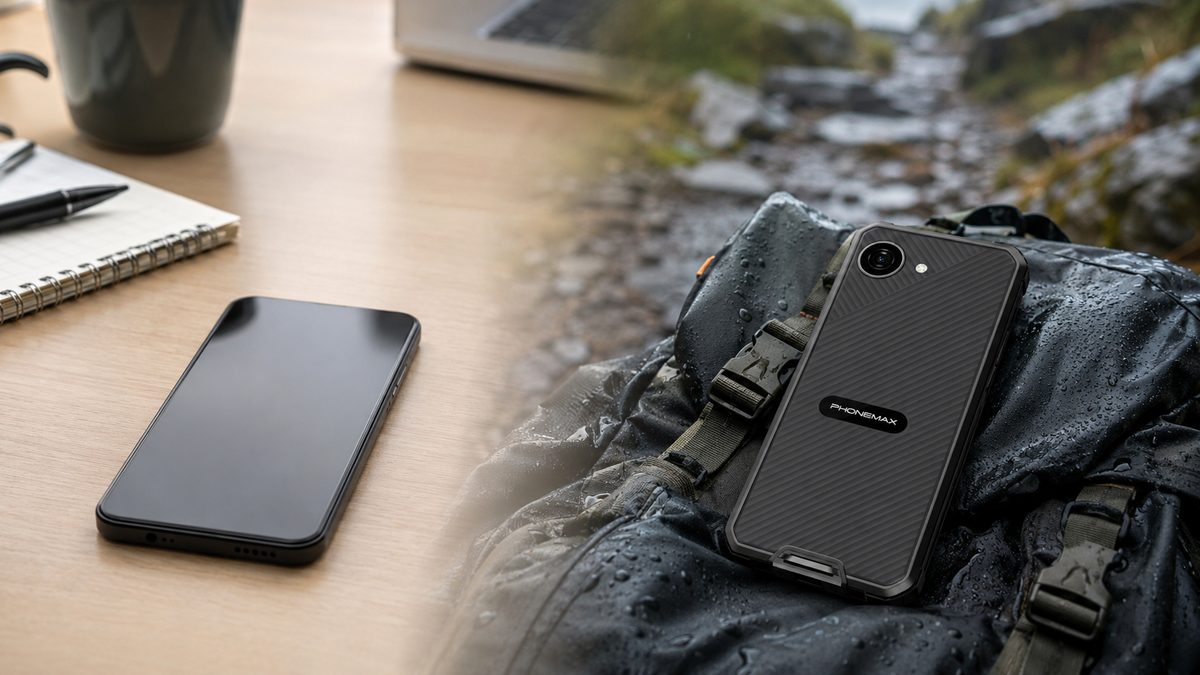
A regular smartphone is often the right choice for office work, entertainment and everyday communication. A compact rugged smartphone is designed for people who need additional protection and dependable use in outdoor, industrial or travel environments.
The difference is not simply that one phone is “stronger.” It is about how the device is designed, carried and used when rain, dust, drops, long workdays or poor connectivity become part of the user’s routine.
The Phonemax X5 is an example of this category: a 5.3-inch Android 16 smartphone with IP68 protection, a 5000mAh battery and a reinforced compact body.
See the current Phonemax X5 configurations.
Quick Comparison
| Consideration | Regular smartphone | Compact rugged smartphone such as X5 |
|---|---|---|
| Protection | Varies by model | Designed around rugged construction and IP68 water and dust resistance |
| Portability | Usually slim and light | Compact but thicker and approximately 238g |
| Battery priority | Varies by model | 5000mAh capacity for communication, navigation and outdoor use |
| Outdoor use | Suitable when conditions are controlled | Designed for work, travel, rain, dust and everyday impacts |
| App experience | Depends on operating system | Android 16 and commonly used Android applications |
| Best buying question | Which features and camera quality do I need? | What protection, battery and network support do I need? |
1. Protection Is the Main Difference
Regular smartphones can include water resistance, but the level of protection varies widely by model and manufacturer. A compact rugged smartphone is built with protection as a central design requirement.
The X5 has IP68-rated water and dust resistance, reinforced corners and a rugged outer structure. These features are intended to help reduce the risk of damage from rain, dust, dirt and accidental drops under specified laboratory conditions.
That does not mean the phone is indestructible. Seals can wear, ports must be closed and liquid exposure outside the stated conditions can still cause damage. Rugged design reduces risk; it does not remove the need for careful use.
For the complete product specifications and protection notices, see the Phonemax X5 IP68 rugged smartphone guide.
2. Rugged Phones Are Compact in a Different Way
Many people assume a rugged phone must be very large. The X5 takes a more portable approach with a 5.3-inch display, dimensions of 146.0 × 71.7 × 15.5mm and an approximately 238g body.
It is not as thin as many regular smartphones, because the protective structure and larger battery require additional space. In return, it is easier to use in work bags, vehicle mounts and outdoor environments where protection is more important than the thinnest possible design.
3. Battery Capacity Matters Away from a Desk
Battery needs change when a phone is used for GPS navigation, work communication, mobile data, photographs and video throughout the day. The X5 uses a 5000mAh battery to support these activities.
Battery capacity is not the same as guaranteed operating time. Screen brightness, signal strength, application activity, temperature and network conditions all affect battery life. The benefit is additional capacity for users who may not have regular access to a charger.
4. The Android App Experience Remains Familiar
A rugged phone should still be useful as a smartphone. The X5 runs Android 16 and supports common uses such as calls, messages, navigation, social media, video and work applications.
For official platform information, read the Android 16 overview. App availability depends on the country, software version and application provider. Buyers should confirm any specialized business app requirements before purchasing a device for a company-wide deployment.
5. Outdoor Navigation and Connectivity
The X5 supports 4G, Wi-Fi 5, Bluetooth 5.2 and NFC. It also supports GPS, GLONASS, BeiDou and Galileo positioning systems for compatible navigation applications.
This combination can be useful for outdoor workers, travellers, delivery staff, motorcyclists and people who need maps or communication away from a fixed workplace. For general background on GPS positioning and navigation services, see the official GPS.gov GPS overview.
Mobile service still depends on carrier coverage and band compatibility, so a rugged body cannot solve a network mismatch.
When Should You Choose a Regular Smartphone?
A regular smartphone may be the better fit if you primarily use your phone indoors, prioritize a thin and lightweight body, need a specific camera system or already have reliable protection through your work and travel environment.
It may also be preferable when your carrier, company software or accessories are certified only for a particular standard smartphone model.
When Should You Choose a Compact Rugged Smartphone?
Consider a compact rugged smartphone when you regularly face one or more of these conditions:
- Outdoor work in rain, dust or dirt.
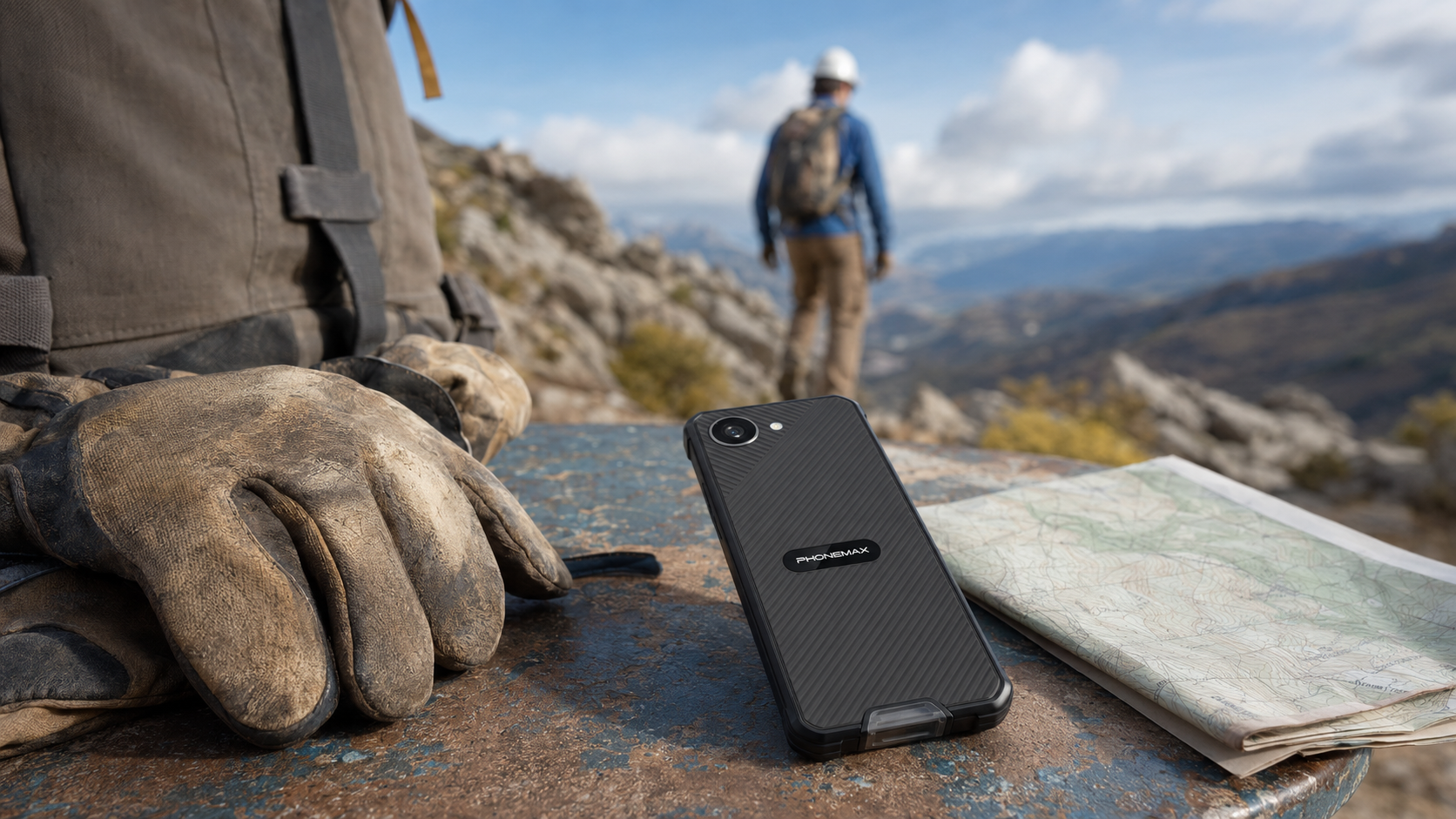
- Frequent travel, hiking, camping or motorcycle riding.
- Navigation use for extended periods.
- Higher risk of accidental drops or impacts.
- Long shifts away from convenient charging.
- A need for a protective phone without carrying a very large rugged device.
Where the Phonemax X5 Fits
The X5 is designed for users who want a practical middle ground: more protection and battery capacity than a typical everyday phone, while remaining smaller than many oversized rugged smartphones.
Its core specifications include a 5.3-inch display, 238g weight, Android 16, 5000mAh battery, IP68 protection, 13MP front and rear cameras and 4G connectivity. The T615 configurations also add a large speaker, fingerprint unlock and a 6GB+128GB option.
To compare the three available configurations, read the Phonemax X5 version guide. For more outdoor-use context, see why the Phonemax X5 is designed for outdoor work and everyday travel.
What to Check Before Buying
- Network bands: Compare the selected version with your local carrier.
- Physical size: Confirm that your pocket, mount or case can accommodate a rugged body.
- Battery expectations: Consider your screen time, GPS use and charging access.
- App compatibility: Check any essential work or navigation apps.
- Protection requirements: Read the IP68 conditions and keep all port covers closed.
Final Takeaway
The right choice depends on your environment. A regular smartphone is often ideal for controlled everyday use, while a compact rugged smartphone is more appropriate when protection, battery capacity and outdoor reliability are important.
The Phonemax X5 is built for users who want Android smartphone functions in a compact body designed for work, travel, navigation, and reliable everyday communication.
Frequently Asked Questions
Is a compact rugged smartphone better than a regular smartphone?
It is better for users who need more protection, a larger battery and outdoor usability. A regular smartphone may be better for users who prioritize a thinner body, specialized cameras or indoor use.
Is the Phonemax X5 too heavy for everyday carry?
The X5 weighs approximately 238g. It is heavier than many slim phones but remains compact enough for pockets, bags and compatible vehicle mounts.
Does rugged mean unbreakable?
No. Rugged construction and IP68-rated protection reduce risk under specified conditions, but impact, liquid exposure, wear and misuse can still damage the phone.
What is the main reason to buy the X5?
The main reason is the combination of compact size, rugged protection, a 5000mAh battery and Android 16 for outdoor work, travel, navigation and everyday communication.
Ready to Upgrade Your Outdoor Gear?
Ready to upgrade your outdoor gear? Explore the Phonemax X5 specs and full configuration options today.


Commenta
Nota che i commenti devono essere approvati prima di essere pubblicati.
Questo sito è protetto da hCaptcha e applica le Norme sulla privacy e i Termini di servizio di hCaptcha.