
For the closest comparison, see What Is the Most Underrated Rugged Phone Feature? It May Not Be Drop Resistance.
Quick answer
The ideal rugged phone in 2026 would not be the biggest or most extreme device. It would be balanced and purpose-built: verified protection for the intended environment, a readable outdoor display, enough battery without unnecessary weight, dependable navigation and connectivity, useful physical controls, current Android software with a clear support policy, reliable cameras, repair support and an accessory ecosystem that fits the job.
Last reviewed: August 7, 2026 · Editorial disclosure: This article is published by Phonemax, a rugged-device manufacturer. It is a design thought experiment and editorial framework, not an announcement of an unreleased product. Phonemax models mentioned below are first-party examples from our current catalog.
The design principle: ruggedness should protect usefulness
A phone can survive an impact and still be a poor field tool. The better target is a device that remains useful when the environment becomes difficult. That changes the design question from “How many extreme specifications can we fit?” to “Which combination of hardware and software keeps the user working?”
1. Protection that is specific, not vague
The ideal phone would state exactly what was tested. IEC 60529 defines IP-code enclosure protection, while ISO 20653:2023 covers IP-code protection for road-vehicle electrical equipment. The U.S. DoD’s MIL-STD-810 record makes another important point: environmental tests should be tailored to the stresses a product is expected to face rather than treated as one universal toughness badge.
The ideal product page would identify the standard, method, test conditions and limitations instead of relying on “military grade” alone.
2. Battery sized for the mission
There is no single perfect battery capacity. A compact everyday rugged phone and a multi-day navigation device should make different compromises.
Android’s power documentation shows why runtime cannot be predicted from milliamp-hours alone: display, GPS, cellular radios, camera, CPU and other systems all consume power. The ideal design would combine sufficient capacity, efficient hardware and charging fast enough to recover during the user’s actual routine.
3. A display designed for outdoors, not only a showroom
The ideal screen would prioritize sustained outdoor visibility, good contrast, manageable glare, accurate touch, glove use and wet-hand behavior. Extreme resolution would be secondary if it adds power consumption without improving field readability.
For navigation and inspection, being able to read the information quickly is more important than winning a pixel-density comparison.
4. Navigation treated as a complete subsystem
The ideal rugged phone would combine appropriate GNSS support with a stable compass, offline-map compatibility, reliable mounting and power during long navigation sessions. For vehicle use, vibration and charging accessories should be considered part of the navigation system rather than afterthoughts.
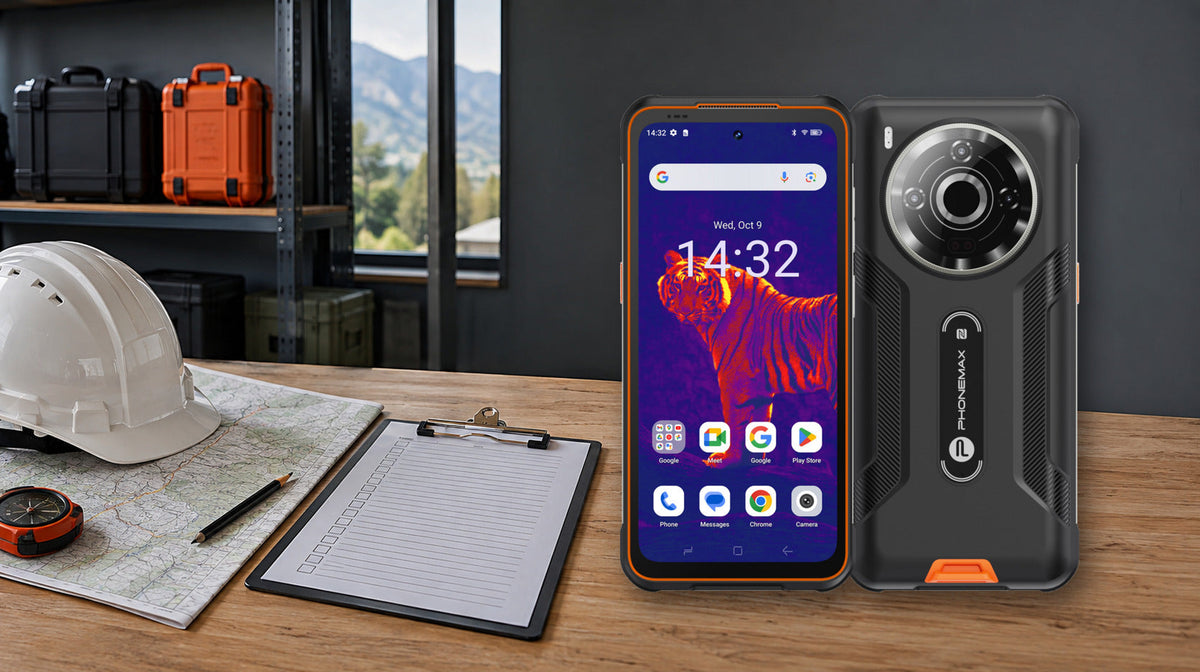
Our Phonemax X3 is a current catalog example of a model positioned around outdoor navigation and low-light documentation. It is included as a manufacturer example, not an independent recommendation.
5. Physical controls that users can configure
A programmable side key can be more valuable in the field than another decorative feature. The ideal phone would allow users to assign actions such as PTT, camera, flashlight, SOS, navigation or a work app, and the button would remain easy to locate while wearing gloves.
6. Cameras organized around tasks
The main camera should prioritize dependable focus, documentation, QR or label capture, useful video and predictable results rather than megapixel marketing alone.
Specialist sensors should be modular by product segment. Thermal imaging belongs on devices for users who inspect temperature patterns. Night vision belongs on devices for users who repeatedly need visual detail in darkness. Neither should be added to every phone merely to lengthen the specification sheet.
Our Phonemax P20 Pro is a thermal-imaging example from our own catalog, while the X3 represents the night-vision side of that segmentation.
7. Current Android plus a published support policy
Physical durability without software longevity is incomplete. Google’s current Android Enterprise Recommended requirements illustrate a strong transparency model: participating manufacturers must publish security-support information and guaranteed OS-upgrade commitments.
The ideal rugged phone would clearly state the Android version at launch, security-update end date, update frequency, promised OS upgrades, Google certification status and enterprise-management support where relevant.
8. Connectivity that is easy to verify
“Global 5G” should never replace a real band table. The ideal phone would publish LTE and 5G bands by market, explain dual-SIM or eSIM options, and make it easy for buyers to verify carrier compatibility. Strong Wi-Fi, Bluetooth, NFC and USB-C support would be expected where they serve the target workflow.
9. Grip and weight treated as durability features
A phone that is difficult to hold may create its own drop risk. The ideal design would use sensible width, textured grip zones, protected corners, accessible controls, raised screen and camera protection and balanced weight distribution.
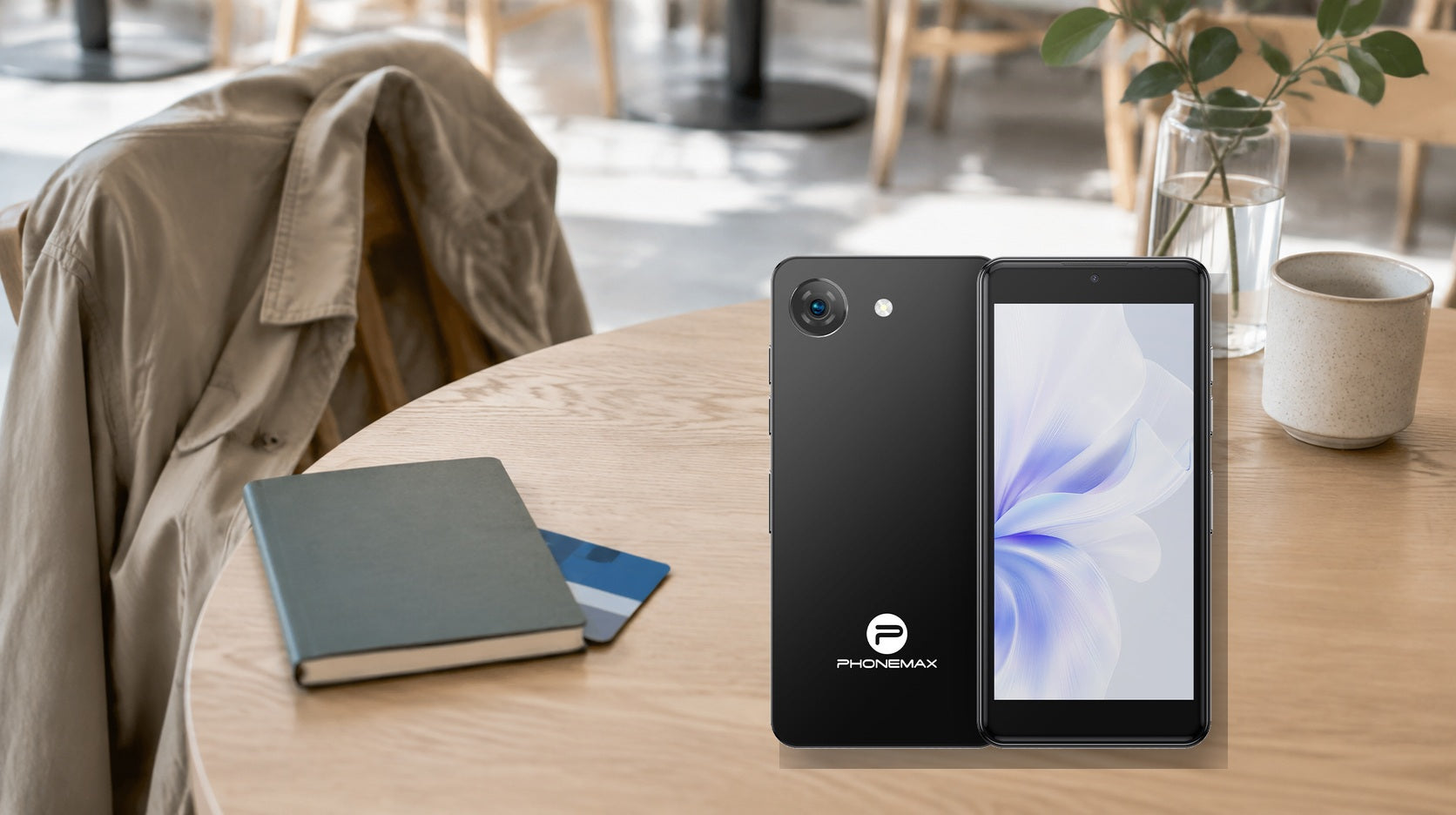
Our current Phonemax X5 listing emphasizes a compact 5.3-inch, 238 g form factor. It illustrates one direction the category can take: ruggedness does not always have to mean maximum size.
10. An accessory ecosystem designed at the same time as the phone
Professional users often need vehicle or motorcycle mounts, charging docks, hand straps, screen protectors, replacement covers and sometimes external antennas. The ideal platform would design these accessories alongside the device so power, mounting and protection work together.
11. Repairability and after-sales information
Physical toughness does not eliminate wear or accidental damage. The ideal manufacturer would provide clear warranty terms, repair contacts, replacement parts, battery-service options, firmware support and realistic repair turnaround.
For fleet buyers, lifecycle and end-of-support information should be visible before purchase, not discovered after deployment.
12. Multiple “perfect” rugged phones instead of one giant compromise
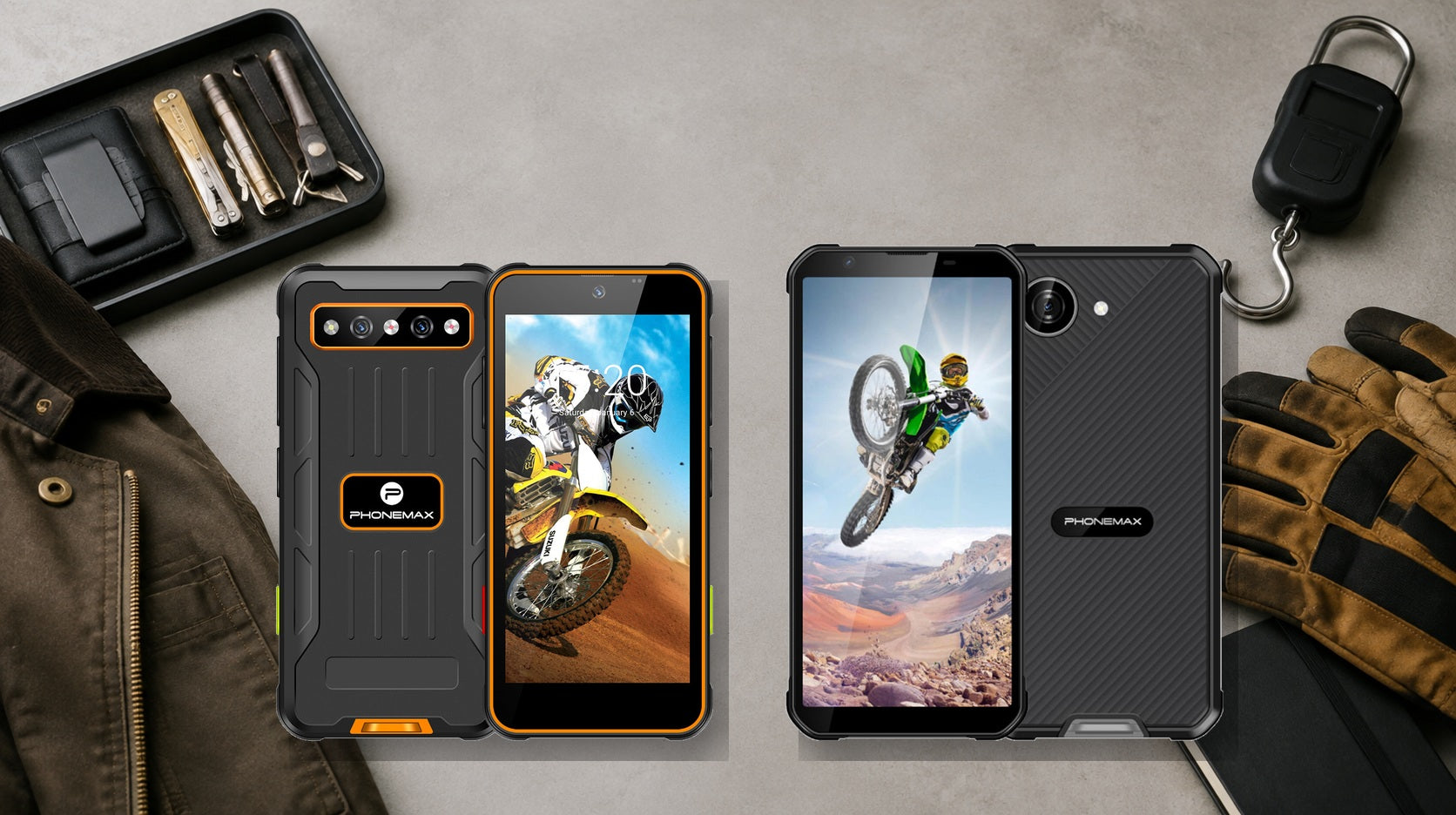
This is the most important design conclusion. The perfect compact rugged phone is different from the perfect large-battery navigation device. The perfect thermal-inspection phone is different from the perfect motorcycle roadbook device.
A mature category should segment around real tasks rather than force every specialist feature into one extremely heavy device.
The 2026 Phonemax design scorecard
The following is an editorial design framework, not an industry standard or a published engineering specification.
| Design goal | Question the product should answer |
|---|---|
| Protection | Which tests match the intended environment? |
| Ergonomics | Can the user carry and control it for an entire shift? |
| Power | Does battery and charging match the real workload? |
| Visibility | Can the screen be read in the actual lighting? |
| Navigation | Do GNSS, mount and charging work as one system? |
| Software | How long will security and app compatibility remain supported? |
| Connectivity | Can the buyer verify carrier compatibility easily? |
| Specialist tools | Do thermal, night vision or PTT solve a defined task? |
| Service | Can the device be repaired and supported over its intended life? |
What the perfect rugged phone would not chase
- the largest battery at any weight,
- the highest megapixel count without real image quality,
- the most durability logos without test context,
- specialist sensors that most buyers will never use,
- a “global” label without verifiable network details.
Limitations
This is a design philosophy, not a claim that one current product satisfies every criterion. Different users should intentionally make different compromises. A compact model can be excellent without a huge battery; a thermal-inspection model can be excellent even if it is too heavy for a runner’s pocket.
Bottom line
The perfect rugged phone in 2026 is not an indestructible brick. It is a modern smartphone that keeps doing the right job when the environment becomes difficult. Durability should support usability, battery should support mobility, software should support long ownership and specialist features should support real workflows.
Two related checks are Rugged Phone Buying Guide 2026: 12 Things to Check Before You Buy and What Should First-Time Rugged Phone Buyers Check Before Choosing a Rugged Phone?.
FAQ
Does the ideal rugged phone need a 10,000mAh battery?
No. Capacity should match the form factor and workload. A smaller phone may be better with a moderate battery if the resulting weight improves everyday usability.
Does every rugged phone need thermal imaging?
No. It is valuable for specific inspection work and unnecessary for many other users.
What matters more than an extreme IP rating?
Relevance. The test must match the user’s real exposure, and the rest of the phone still needs suitable battery, software, screen, connectivity and ergonomics.
What should rugged-phone brands improve most?
Transparency: test conditions, software-support policy, network bands, battery testing, real camera samples and after-sales information.
Sources and verification
- IEC 60529 — IP Code
- ISO 20653:2023
- U.S. DoD ASSIST — MIL-STD-810
- Android Developers — Power Profiler
- Android Enterprise Recommended requirements
Next step: define your own “perfect” phone by ranking the five features that determine whether the device can complete your real task—not by choosing the highest number in every specification row.

Commenta
Nota che i commenti devono essere approvati prima di essere pubblicati.
Questo sito è protetto da hCaptcha e applica le Norme sulla privacy e i Termini di servizio di hCaptcha.