
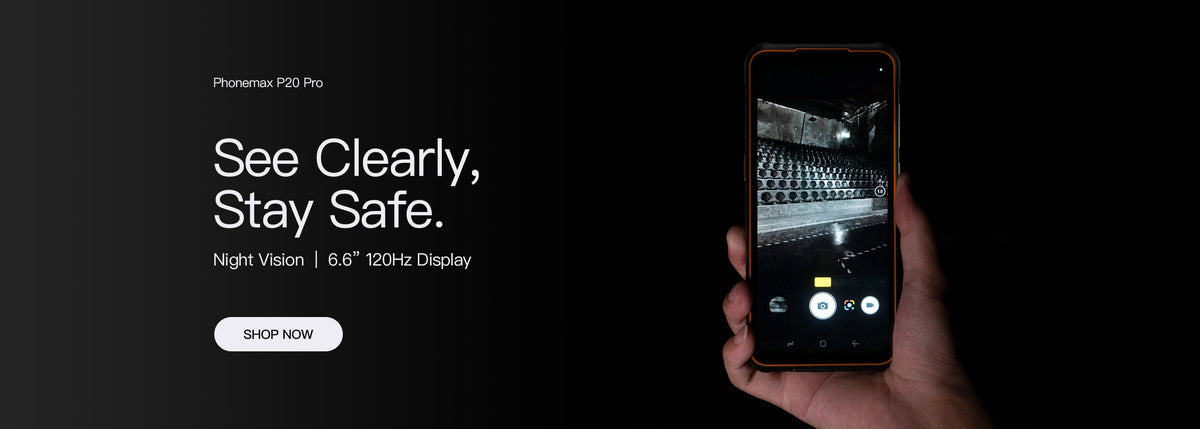
A 6000mAh battery can give a rugged smartphone more endurance than many standard-size phones without automatically moving into the very large, heavy-battery category. But battery capacity alone does not determine runtime. Display size and brightness, processor efficiency, mobile signal, GPS use, cameras, temperature, apps, and charging habits all affect how long a phone lasts in real work.
What does 6000mAh mean in practice?
Battery capacity is measured in milliamp-hours (mAh). A 6000mAh battery stores more charge than a 5000mAh battery of the same voltage, but the actual gain in runtime depends on how efficiently the device uses that energy. Two 6000mAh phones can perform very differently if one has a brighter display, a less efficient processor, weaker signal conditions, or more demanding background software.
Who benefits from a 6000mAh rugged phone?
This capacity can suit users who need more than ordinary daily endurance but still care about portability. Common use cases include field inspections, logistics, construction, vehicle navigation, outdoor travel, warehouse work, and long shifts where charging opportunities are limited.
What drains a rugged phone battery fastest?
- Continuous GPS: Navigation keeps positioning hardware, the display, and often mobile data active.
- Weak network signal: A phone can use more power while searching for or maintaining LTE or 5G service.
- High screen brightness: Outdoor readability often requires a brighter display, increasing power consumption.
- Hotspot and data use: Tethering, video calls, large uploads, and cloud synchronization can reduce runtime.
- Special cameras and sensors: Night vision, thermal imaging, barcode scanning, or prolonged camera use can increase demand.
- Temperature: Very cold or hot conditions can reduce available battery performance and affect charging.
6000mAh vs 5000mAh
A 6000mAh device can provide extra capacity, but the difference does not translate directly into a fixed percentage of additional runtime because hardware and usage vary. A 5000mAh model may be preferable when compact size and lower weight are priorities. A 6000mAh model can be a useful middle ground for users who want more endurance without the bulk of very large-battery rugged phones.
6000mAh vs 10000mAh or larger
Very large batteries can be useful for multi-day field use, remote work, or heavy navigation, but they normally increase thickness and weight. Before choosing the largest available capacity, compare the full device dimensions, weight, charging time, and how the phone will actually be carried or mounted.
Charging speed matters
Capacity should be considered together with charging support. A larger battery can take longer to recharge if charging power is limited. Check the phone’s supported charging protocol, charger and cable requirements, connector protection, and whether your work routine provides enough charging time.
Battery health and long-term use
Lithium-based batteries gradually lose usable capacity as they age. Frequent exposure to high heat, repeated deep discharge, and heavy charging cycles can accelerate wear. For long-term ownership or fleet deployment, after-sales support and battery-service options can be as important as the original capacity figure.
Do rugged features change battery requirements?
They can. A rugged phone may have a brighter outdoor display, stronger speakers, extra sensors, continuous GPS use, or specialized cameras. These features can justify extra battery capacity, but buyers should avoid assuming that every rugged model needs the largest possible battery. The right capacity depends on workload and portability requirements.
What to compare before buying
- Battery capacity and charging support.
- Full device dimensions, thickness, and weight.
- Display size and outdoor brightness.
- LTE/5G bands for the intended carrier and country.
- GPS and navigation requirements.
- Ingress-protection and durability test conditions.
- Camera, thermal imaging, night vision, scanner, NFC, or other job-specific features.
- Android version, memory, storage, and app compatibility.
Is 6000mAh a good balance?
For many users, 6000mAh sits between a conventional smartphone battery and the extremely large batteries found in some heavy-duty rugged devices. It can be a sensible option when all-day or extended-shift endurance matters but size and weight still need to remain manageable.
Browse the current Phonemax product range to compare rugged phones and tablets. For exact battery capacity, charging power, network bands, ingress-protection conditions, or model-specific specifications, use the contact page to confirm the configuration before purchase.
FAQ
Does 6000mAh guarantee two days of battery life?
No. Runtime depends on display use, signal strength, GPS, apps, processor efficiency, temperature, and workload.
Is 6000mAh better than 10000mAh?
Not automatically. A larger battery can extend potential runtime but usually adds size and weight. The better choice depends on the user’s workload and portability needs.
Does ruggedness itself increase battery life?
No. Rugged construction protects the device, but battery life depends on capacity, hardware efficiency, software, and usage.


Laat een reactie achter
Alle reacties worden gemodereerd voordat ze worden gepubliceerd.
Deze site wordt beschermd door hCaptcha en het privacybeleid en de servicevoorwaarden van hCaptcha zijn van toepassing.