
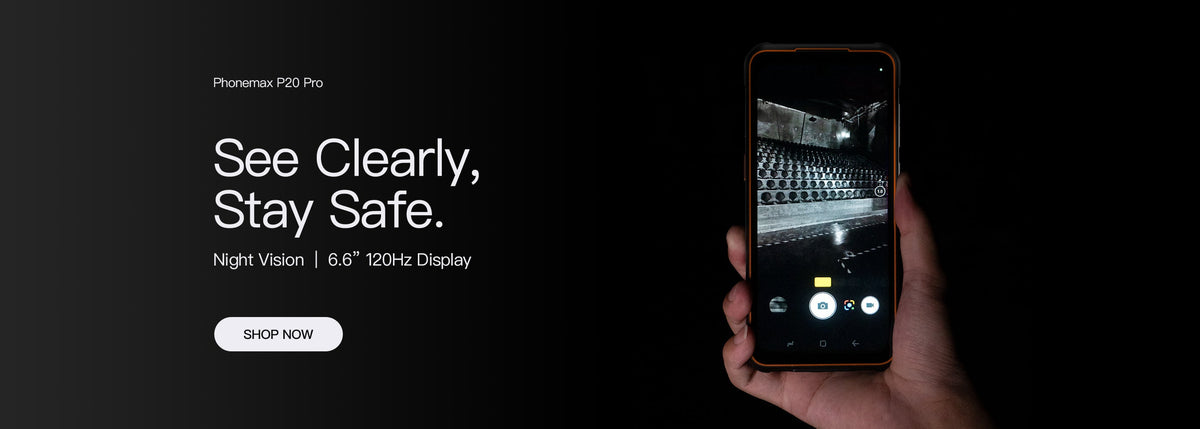
An 8000mAh rugged phone used with an external speaker can be useful when workers, travelers or outdoor users need both long battery reserve and louder audio than a phone alone can provide. The important point is to evaluate the phone and speaker as a system. Battery capacity, connection method, audio volume, charging, durability and portability all affect how practical the setup is in the field.
Why pair a rugged phone with an external speaker?
Phone speakers are designed for personal listening and calls. In noisy workshops, vehicles, outdoor areas or group environments, an external speaker can make voice instructions, navigation prompts, alerts or media easier to hear. Depending on the equipment, the connection may use Bluetooth or another supported audio interface.
Do not assume that every rugged phone supports every type of external speaker. Check the phone's actual Bluetooth version, audio features, ports and accessory compatibility before purchasing.
What does an 8000mAh battery add?
An 8000mAh battery gives a phone a relatively large energy reserve, which can be valuable when the device is used for long shifts, navigation, mobile data and continuous Bluetooth connections. Actual runtime still depends on the full workload.
Continuous GPS, high screen brightness, weak mobile signal, hotspot use, camera activity and Bluetooth audio can all consume energy. A large battery provides more margin, but it does not guarantee a specific number of hours or days.
Battery factors to consider
- how many hours the screen remains active;
- whether GPS navigation runs continuously;
- signal quality and 4G/5G activity;
- duration of Bluetooth audio use;
- temperature and outdoor conditions;
- background work apps and synchronization;
- availability of charging during the shift.
Bluetooth speaker compatibility
Bluetooth is a common way to connect a phone to an external speaker because it avoids an exposed audio cable. Before relying on it for work, test pairing stability, reconnect behavior, usable range and audio delay with the actual speaker.
In a fleet deployment, using a known phone-and-speaker combination can reduce support problems. A device that pairs correctly in an office should also be tested in the intended vehicle, workshop or outdoor environment.
Wired audio and ports
If a wired speaker is required, check the exact phone and accessory interfaces. Some phones may rely on USB-based audio or adapters rather than a traditional headphone connection. Rugged devices may also use protective port covers that affect convenience.
A cable can be reliable, but it can also create strain on the connector when the phone is mounted or carried. For vehicle and industrial use, cable routing and vibration should be considered.
Volume is not the only audio requirement
A louder speaker is useful only if speech remains understandable. For work communication, compare voice clarity, distortion at high volume and performance in background noise. Navigation prompts and spoken instructions often require different audio characteristics than music.
If the speaker is used for safety alerts or critical communication, test the complete system under realistic noise conditions rather than relying only on a maximum-volume specification.
Ruggedness of the phone and speaker
A rugged phone does not automatically make the external speaker rugged. If both devices will be exposed to dust, rain, vibration or drops, check the environmental protection of each device separately.
For outdoor or industrial applications, consider:
- the phone's documented IP and drop-resistance information;
- the speaker's own IP rating, if any;
- port and connector protection;
- mounting security;
- operating-temperature limits;
- charging arrangements in wet or dusty areas.
Navigation and vehicle use
A large-battery rugged phone may be used as a navigation device in a car, truck or on a motorcycle. An external speaker can make turn-by-turn directions easier to hear in a noisy cabin or outdoor environment.
For this use, test GPS stability, screen visibility, speaker placement, Bluetooth reconnection and charging while the vehicle is moving. Heat and vibration can be significant in vehicle-mounted applications and should be included in the evaluation.
Field communication
Construction, logistics, maintenance and outdoor teams may need to hear calls, voice messages or app notifications in noisy environments. An external speaker can help, but privacy and microphone placement should also be considered when calls are involved.
For two-way communication, a speaker alone may not be sufficient. Check whether the chosen setup includes a suitable microphone or whether a dedicated communication accessory would be more appropriate.
Charging two devices
A phone and an external speaker normally have separate batteries and charging requirements. Plan how both devices will be charged during long shifts. The phone's 8000mAh battery does not imply that it can or should charge the speaker; reverse charging depends on the specific phone and should be verified separately.
For vehicle use, check whether available USB power can support both devices without creating cable clutter or connector strain.
Size and portability
An 8000mAh rugged phone is usually larger than a slim everyday smartphone, and carrying an external speaker adds another device. The setup should therefore be evaluated for the way it will actually be transported—pocket, tool bag, vehicle mount, backpack or workstation.
If portability is the main goal, a phone with a strong built-in speaker may be simpler. If high audio output is essential, a separate speaker can provide more flexibility.
What to check before buying
- exact phone dimensions and weight;
- Bluetooth and audio compatibility;
- speaker pairing and reconnect behavior;
- phone and speaker battery endurance;
- charging requirements for both devices;
- network bands and GPS performance;
- environmental protection for both devices;
- mounts, cables and accessories;
- Android version and required app compatibility;
- warranty and after-sales support.
Practical setup test
- Pair the phone and speaker and confirm automatic reconnection.
- Test voice clarity in the actual noise environment.
- Run GPS or the main work app for several hours.
- Observe battery drain on both devices.
- Test incoming calls, alerts and navigation prompts.
- Check charging and cable placement.
- Confirm that mounts and covers do not block controls or ports.
- For business fleets, repeat the test with the intended carrier and standard accessories.
FAQ
Does an 8000mAh rugged phone automatically have a very loud speaker?
No. Battery capacity and speaker output are separate specifications. Check the audio performance of the specific phone.
Can any Bluetooth speaker connect to a rugged Android phone?
Many standard Bluetooth speakers can pair with Android phones, but compatibility, controls and reconnect behavior should be tested with the actual devices.
Does using Bluetooth audio drain the phone battery?
Bluetooth uses power, although the total drain depends on the complete workload. GPS, screen brightness, cellular signal and other apps can have a larger combined effect.
Can the phone's 8000mAh battery charge an external speaker?
Only if the specific phone supports an appropriate reverse-charging function. Do not assume this from battery capacity alone.
Is an external speaker useful for construction or logistics?
It can be useful when navigation prompts, alerts or voice communication need to be heard in a noisy environment. The speaker itself should also be evaluated for durability and the actual work conditions.
Conclusion
An 8000mAh rugged phone and external speaker can be a practical combination for navigation, field work and noisy environments, but the two devices should be tested together. The best setup balances battery endurance, audio clarity, connection stability, charging, durability and portability rather than relying on one headline specification.


Laat een reactie achter
Alle reacties worden gemodereerd voordat ze worden gepubliceerd.
Deze site wordt beschermd door hCaptcha en het privacybeleid en de servicevoorwaarden van hCaptcha zijn van toepassing.