
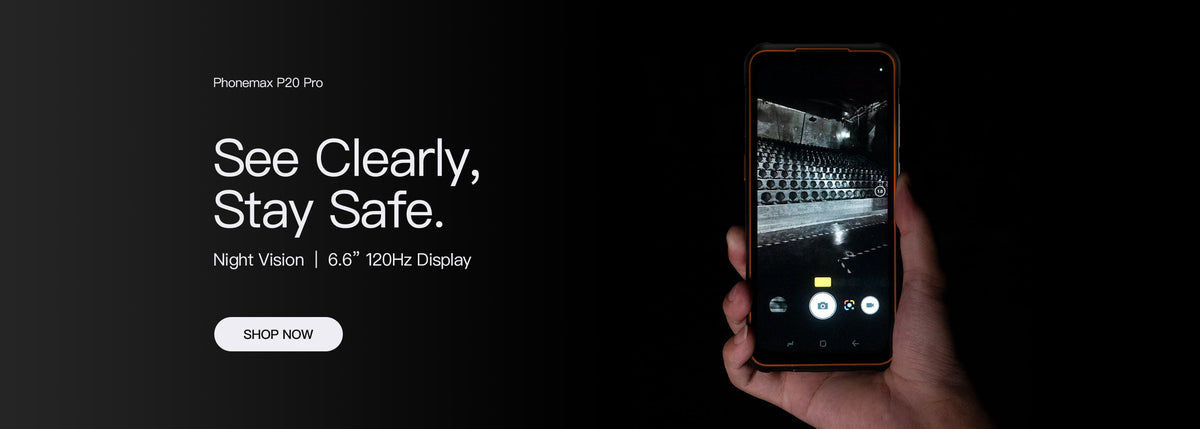
An 8000mAh battery + IP69 rugged phone combines a large battery reserve with a high ingress-protection rating for users who work around dust, rain, mud and demanding outdoor conditions. The headline specifications can be useful, but they should not be interpreted as guarantees of unlimited battery life or unrestricted water exposure. The practical value of the phone depends on its complete design, stated test conditions, network support, charging system, size, weight and software.
What does an 8000mAh battery mean?
An 8000mAh battery stores more charge than many conventional smartphone batteries. That can provide useful extra margin for long shifts, continuous navigation, mobile data, field applications or travel away from reliable charging.
Actual runtime still depends on the workload. Continuous GPS, high screen brightness, weak cellular signal, camera use, hotspot sharing and extreme temperatures can all increase power consumption. Two phones with the same 8000mAh capacity can therefore deliver different real-world endurance.
Typical battery-drain factors
- screen brightness, size and refresh rate;
- 4G or 5G signal quality;
- continuous GPS and navigation;
- camera, scanning and video use;
- hotspot and heavy mobile-data activity;
- processor efficiency and background apps;
- cold or hot operating environments.
What does IP69 mean on a rugged phone?
An IP rating describes protection against solid particles and water under defined test conditions. In IP69, the first digit indicates strong dust protection, while the water-protection category addresses demanding water-jet exposure under specified conditions. Buyers should check the exact test information supplied for the specific model because the rating does not describe every possible real-world situation.
IP69 should not be interpreted as permission for unlimited underwater use. High-pressure jets, immersion, salt water, chemicals and long-term exposure are different conditions and may require separate testing or certifications.
IP69, IP68 and IP67 are not interchangeable
These ratings address different water-exposure test categories. IP67 is associated with a defined temporary immersion test. IP68 uses product-specific immersion conditions. IP69 addresses a demanding water-jet category. A phone may carry more than one rating, but buyers should verify the exact claims for the specific model rather than assuming that one number automatically includes every other protection scenario.
| Use condition | What to verify |
|---|---|
| Dust and dirt | Exact IP rating and condition of ports and seals |
| Rain and splashes | Manufacturer's stated water-resistance limits |
| Water jets or wash-down environments | Whether the device is specifically tested for the required jet conditions |
| Temporary immersion | Separate immersion rating and stated depth/time conditions |
| Marine or chemical environments | Additional material and certification requirements |
Why “waterproof” is an oversimplification
No IP rating should be treated as permanent waterproofing. Seals can be affected by impact damage, aging, repairs, worn port covers and repeated mechanical stress. Salt water, detergents and chemicals can also create risks that are different from standard laboratory water tests.
For work applications, the most useful approach is to match the documented protection level to the actual environment and follow the manufacturer's usage instructions.
Who might benefit from an 8000mAh IP69 rugged phone?
This type of device can make sense for people who combine long operating hours with frequent exposure to dust, dirt or wet outdoor conditions. Examples can include:
- construction and infrastructure teams;
- utilities and maintenance workers;
- logistics and delivery operations;
- field inspection teams;
- outdoor and adventure users;
- workers in environments where equipment may require frequent cleaning.
Specialized industrial, explosive-atmosphere, marine or hazardous environments can require additional certifications beyond an IP rating.
Battery capacity versus size and weight
An 8000mAh battery occupies more physical volume than a smaller battery. Rugged construction adds reinforced materials, seals and impact protection, which can make the phone thicker and heavier. That trade-off may be worthwhile for users who prioritize endurance, but it is important to check the complete dimensions and weight before purchasing.
For vehicle mounting or tool-belt use, a heavier phone may be acceptable. For everyday pocket carry or use as a secondary phone, a smaller battery and more compact body may be preferable.
GPS and navigation performance
Large-battery rugged phones are often used for navigation. Continuous GPS, mobile data and a bright display can remain active for hours, so this workload is a useful way to evaluate endurance. Buyers should compare positioning performance, supported satellite systems, screen visibility, mounting options and charging behavior under sustained use.
Offline maps can help in low-coverage areas, although the GPS receiver and display still consume power.
Network compatibility
Before purchasing a rugged phone for travel or fleet use, check the exact supported 4G and 5G bands against the intended carriers. Poor compatibility or weak coverage can reduce reliability and can also increase battery drain as the phone searches for a usable signal.
For business deployment, test a sample device with the real carrier and applications before placing a large order.
Charging an 8000mAh battery
Charging time depends on the phone's supported input power, charger compatibility, thermal management and battery state. The charger's maximum wattage alone does not determine how quickly the phone will charge.
In field applications, also consider whether the charging connector remains protected and practical to access, whether vehicle charging is required and whether cables will be exposed to vibration or strain.
Battery health in demanding environments
Lithium batteries gradually lose usable capacity over time. Excessive heat can accelerate aging, while cold temperatures can temporarily reduce available performance. A rugged body does not make the battery immune to temperature effects.
For multi-year business fleets, battery replacement policy, warranty terms, spare devices and charging practices should be considered as part of the total cost of ownership.
What else should you compare?
- exact IP test conditions;
- drop-resistance or durability information;
- dimensions and weight;
- screen brightness and glove usability;
- 4G/5G network bands;
- GPS performance;
- charging specification;
- Android version and app compatibility;
- NFC, fingerprint or programmable keys if needed;
- camera and specialist imaging requirements;
- mounts, accessories and after-sales support.
Practical buying checklist
- Define the actual water, dust and cleaning conditions.
- Check the model's documented IP69 test information.
- Determine whether immersion protection is also required.
- Estimate daily screen-on and GPS time.
- Verify carrier and network-band compatibility.
- Check dimensions, weight and carrying or mounting method.
- Confirm charging requirements and accessories.
- For fleet purchases, validate a sample device in the real working environment.
FAQ
Does IP69 mean a phone is completely waterproof?
No. IP69 describes protection under defined water-jet test conditions. It does not mean unlimited underwater use or resistance to every liquid or pressure condition.
Is IP69 better than IP68?
They address different water-exposure categories. IP68 relates to specified immersion conditions, while IP69 addresses demanding water-jet exposure. The required rating depends on the intended environment.
Will an 8000mAh battery always last several days?
No. Runtime depends on screen use, GPS, signal strength, mobile data, temperature and other workloads. Capacity is only one part of battery endurance.
Is an 8000mAh IP69 phone suitable for construction?
It can be, if the device's full durability, network, software and environmental specifications match the job. The IP rating and battery size should be evaluated together with the complete device.
What should a business verify before a bulk order?
Verify the exact hardware configuration, IP and durability test conditions, network bands, software requirements, certifications, charging accessories, warranty terms and sample performance before purchasing in volume.
Conclusion
An 8000mAh IP69 rugged phone can be useful when long battery reserve and strong protection against dust and demanding water-jet conditions are important. The most reliable purchasing decision comes from checking the exact test conditions and matching the entire phone to the real workload rather than relying only on the words “8000mAh,” “rugged” or “waterproof.”


Leave a comment
All comments are moderated before being published.
This site is protected by hCaptcha and the hCaptcha Privacy Policy and Terms of Service apply.