
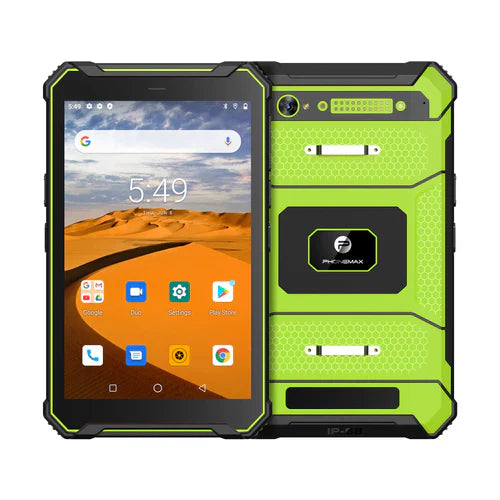
A 10000mAh rugged tablet can be a practical choice for field teams that need longer time away from a charger, but battery capacity by itself does not tell you how long a tablet will run. Screen brightness, cellular use, GPS, processor load, temperature, accessories and battery condition can all change real-world endurance.
This guide explains how to evaluate a 10000mAh-class rugged tablet without treating the mAh number as a guaranteed runtime figure.
What does 10000mAh mean on a rugged tablet?
mAh is a battery-capacity rating. A larger capacity can provide more stored energy than a smaller battery built at a similar voltage, but two 10000mAh tablets can still deliver different operating times. Display size and brightness, modem activity, navigation, cameras, barcode scanning, background apps and power-management software all matter.
For procurement, compare battery capacity together with the complete device specification and the workload you expect to run.
What affects real-world battery life?
- Display brightness: Outdoor use often requires a brighter screen, which increases power draw.
- 4G/5G and weak signal: Continuous mobile-data use and poor reception can increase modem power consumption.
- GPS and navigation: Frequent positioning updates add to the workload, especially when the screen stays on.
- Scanning and peripherals: Barcode scanners, USB devices, NFC workflows and vehicle accessories can change energy use.
- Temperature: Very hot or cold environments can reduce available battery performance.
- Application load: Video, mapping, camera processing and CPU-intensive applications use more energy than light data entry.
10000mAh does not equal a fixed number of hours
A claim such as “10000mAh equals X hours” is only meaningful when the test conditions are stated. Ask for the screen brightness, network mode, radios enabled, application workload, ambient temperature and battery age used in the test. For fleet deployment, the most useful check is a pilot test using your own applications and normal shift pattern.
When a large battery is useful
A 10000mAh-class battery is most relevant when charging opportunities are limited. Typical examples include warehouse shifts, field inspection, logistics, vehicle navigation, construction, utilities and outdoor data collection. In vehicle-mounted applications, also evaluate whether the tablet supports a stable charging or docking setup so the internal battery is not the only power source.
Charging and deployment considerations
Battery size is only one part of deployment planning. Check the supplied charger, supported charging standard, USB-C implementation, docking options and whether the device can be charged safely in the environment where it will be used. A large battery paired with slow charging may create downtime between shifts.
For shared devices, document a charging routine and avoid leaving every unit at very low charge for long periods. If tablets are stored for extended periods, follow the device-specific storage guidance provided with the battery or product documentation.
How to compare rugged tablets with 10000mAh-class batteries
- Confirm the rated battery capacity and whether it is typical or minimum capacity.
- Check the ruggedness standard and make sure ingress and drop claims apply to the exact model being purchased.
- Compare display requirements, especially outdoor brightness and screen-on time.
- List the radios and sensors that will stay active during a normal shift.
- Check charging time and accessories, including docks, vehicle power and spare charging stations.
- Run a pilot test with your own software before making a large fleet decision.
Battery capacity vs. total device fit
Do not choose a rugged tablet only because it has the largest battery. A lighter tablet with adequate runtime may be better for handheld work, while a heavier device with a larger battery may make more sense in a vehicle or fixed industrial workflow. CPU performance, memory, connectivity, display readability, mounting, scanner support and serviceability should be evaluated alongside battery capacity.
Phonemax rugged tablet options
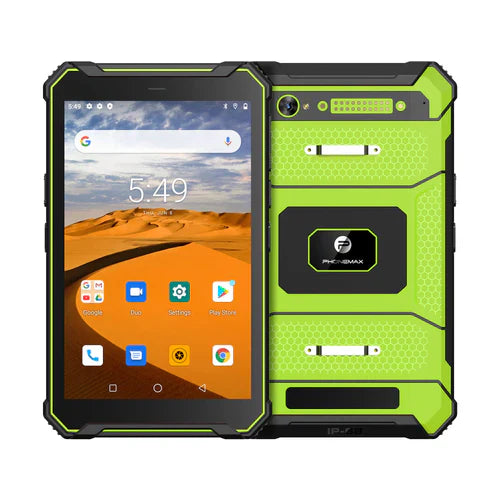
You can compare current models in the Phonemax Rugged Tablets collection and the Industrial Tablets collection. For example, the active Phonemax T1 industrial rugged tablet is positioned for industrial use. Always check the current product page for the exact configuration rather than assuming that every model or variant uses the same battery, memory or accessory package.
Questions to ask before buying
- What is the battery capacity of the exact configuration?
- What workload and settings were used for any runtime claim?
- How long does a full charge take with the supplied charger?
- Does the tablet support vehicle or desktop docking?
- What happens to runtime at high screen brightness or with continuous GPS/mobile data?
- Are battery and charging specifications documented for the exact SKU?
Bottom line
A 10000mAh rugged tablet can provide useful endurance for long field shifts, but the capacity number should be treated as one input rather than a runtime guarantee. The best purchasing decision combines battery size with workload testing, charging infrastructure, ruggedness, display needs, connectivity and the exact configuration you will deploy.
Editorial note: This guide discusses battery-capacity evaluation in general. Product specifications can vary by model and configuration; verify the current product page or written specification before purchase.


Lämna en kommentar
Alla kommentarer modereras innan de publiceras.
Denna webbplats är skyddad av hCaptcha och hCaptchas integritetspolicy . Användarvillkor gäller.