
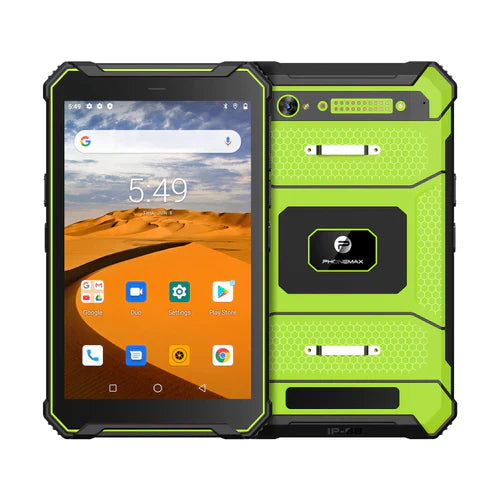
A 10.1-inch sunlight-readable rugged Android tablet is intended for work where a large screen must remain usable outdoors. The extra display area can benefit maps, inspection forms, field dashboards and technical documentation, but outdoor readability depends on more than a single brightness number.
What makes a tablet sunlight readable?
Brightness is important, but reflection control, contrast, optical bonding, viewing angle and cover-glass treatment can be equally important. A highly reflective display may remain difficult to use even with a high headline nit rating.
Ask whether brightness is peak or sustained and whether thermal conditions cause dimming. Test the device in the actual outdoor environment whenever possible.
Brightness versus battery and heat
Running a large display at high brightness increases power use and heat. For field deployment, compare display performance together with battery capacity, charging options and expected shift duration. GPS, cellular radios, cameras and scanning can add further load.
Touch in gloves, rain and dust
Outdoor workers may use gloves or operate the device in wet conditions. Verify glove mode, wet-touch behavior or alternative physical keys if those functions are required. Touchscreen performance should be tested with the actual protective equipment used by the team.
Rugged protection
Check IP rating, drop conditions, operating temperature and connector protection for the exact model. An IP rating does not describe drop resistance, and neither characteristic guarantees suitability for every chemical or environmental exposure.
Android, apps and connectivity
Confirm Android version, application compatibility, security requirements and MDM or kiosk support. Check cellular bands, Wi-Fi, Bluetooth and GNSS for the intended region and workflow.
10.1-inch form-factor tradeoffs
A larger screen improves working area but can increase weight and mounting requirements. Consider how often workers carry the tablet, whether a hand strap or shoulder strap is needed and whether the device will spend time in a vehicle or dock.
Buying checklist
- Test display readability under expected daylight.
- Compare sustained brightness, not only peak claims.
- Verify glove and wet-touch requirements.
- Check documented rugged specifications.
- Confirm battery runtime at high screen brightness.
- Validate Android apps and fleet-management requirements.
- Check network bands and GNSS for the target region.
- Test the final sample before fleet deployment.
FAQ
Is 800 nits always enough outdoors?
There is no universal threshold. Reflections, contrast, viewing angle and lighting conditions all affect readability, so the actual display should be tested.
Does sunlight readable mean waterproof?
No. Display readability and ingress protection are separate specifications.
Browse rugged-device options or contact Phonemax about an outdoor deployment.

Yorum yazın
Tüm yorumlar yayınlanmadan önce incelenir.
Bu site hCaptcha ile korunuyor. Ayrıca bu site için hCaptcha Gizlilik Politikası ve Hizmet Şartları geçerlidir.