

A future 6G roadmap is not a substitute for a phone that works on your network today. Buyers evaluating a rugged smartphone supplier should separate industry standards work, a supplier's documented development plans and the capabilities of the exact device being quoted.
What does IMT-2030 mean for 6G procurement?
ITU uses IMT-2030 for the next generation of International Mobile Telecommunications, commonly called 6G. Its official programme describes a standards-development and evaluation process. The programme is not a certificate that an individual phone supports 6G, nor a commitment that a particular supplier will ship a compatible product on a particular date.
Use the ITU IMT-2030 programme to check the industry context. For a purchase, ask for a named device, its radio specification and evidence for the services you intend to use. Do not infer 6G capability from an Android version, an AI feature or a large battery.
Start with the networks your team can use now
Write down the country, carrier, work locations, SIM arrangement and essential applications. Compare the selected device's published bands with the intended service, then test a sample on that service. Band overlap alone does not establish carrier acceptance, voice features or dependable performance at a difficult site.
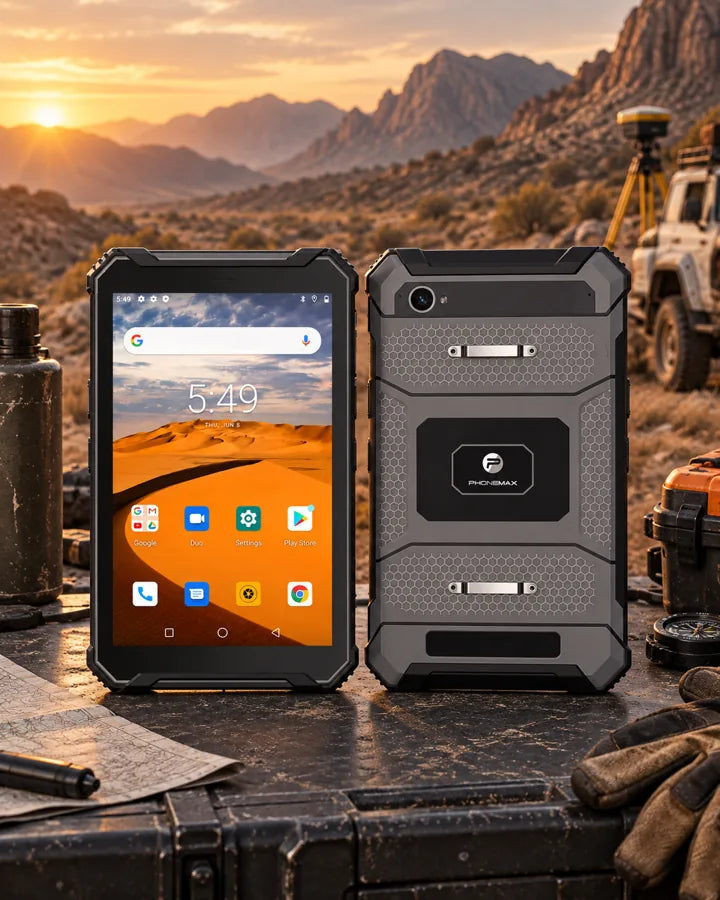
Current Phonemax examples illustrate different purchasing choices: the P20 Pro is listed as a 5G thermal-imaging rugged phone, while the X5 is a compact 4G rugged smartphone with version-specific hardware and band support. These are current product references, not evidence of a future 6G upgrade.
Ask for evidence at three different levels
- Industry direction: identify the standards document and whether it describes a framework, a draft requirement or an adopted specification.
- Supplier plan: request a written project scope, development status, dependencies and approval milestones. A research proposal or prototype is different from a production release.
- Sale configuration: record the model, hardware revision, modem, supported bands, firmware and market documentation. Confirm which functions are included in the quotation.
Do not treat general references to chipset partners, antenna research or test equipment as proof of a supplier's participation or delivery commitment. If a statement matters to the contract, obtain the corresponding document and identify who is responsible for it.
Protect the useful life of today's fleet
Future network discussions should not displace practical checks: security-update commitments, app compatibility, charging arrangements, spare parts, repair support and replacement availability. Ask which commitments apply to the chosen version and how a hardware or firmware change will be communicated.
For a sample trial, record calls and data sessions at the actual work sites, app login and synchronisation, location use, battery consumption and charging recovery. Retain the software versions and test conditions so a later device can be compared fairly. This produces useful acceptance evidence without relying on a future network promise.
Discuss a defined project with Phonemax
For a current deployment, contact Phonemax with the destination country, carrier, required functions, quantity and intended rollout date. For a development request, review OEM/ODM services and ask for a written feasibility assessment. A requested feature, tentative schedule or proposed customisation should become a purchasing commitment only after its scope is agreed.
Buying takeaway: choose current hardware for verified network and workflow requirements. Evaluate any future-generation claim separately, using model-specific evidence and an explicit project agreement.
Reviewed October 28, 2026.


Leave a comment
All comments are moderated before being published.
This site is protected by hCaptcha and the hCaptcha Privacy Policy and Terms of Service apply.