
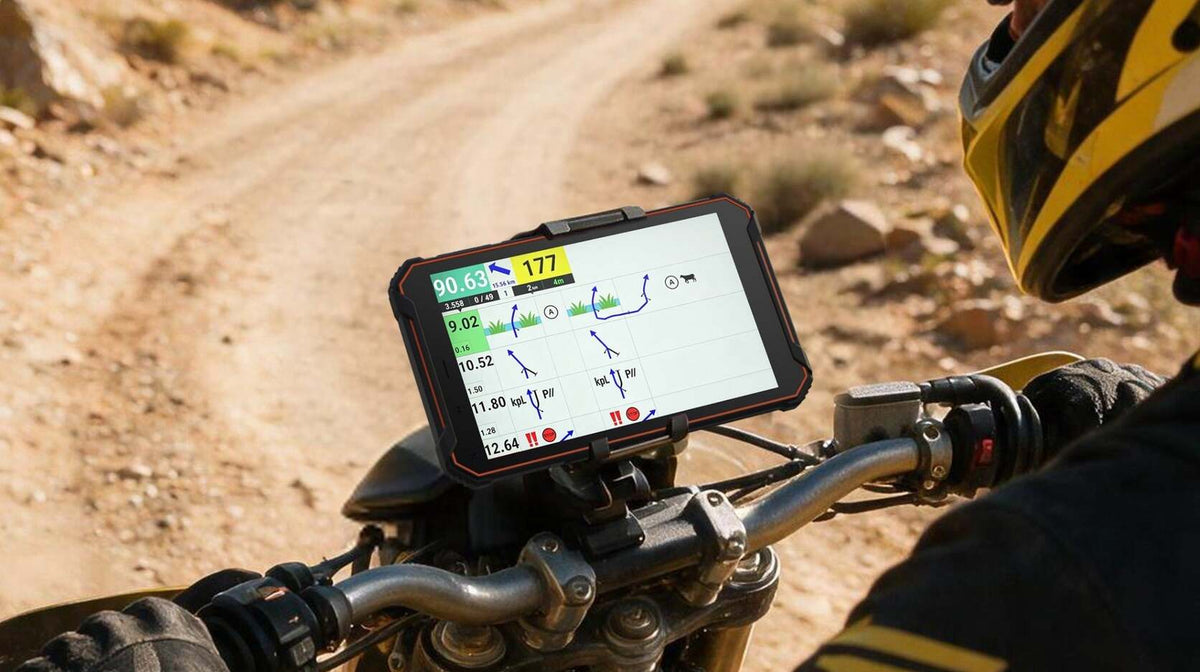
Direct answer: GNSS reception is only one load. A bright always-on display, map rendering, cellular handoffs and heat often dominate an all-day navigation profile. Treat the capability as unverified until a written, repeatable test matches the intended use.
What evidence answers this question?
A useful buyer test is a controlled route replay or field shift with fixed brightness, radios, navigation app and logging settings.
Battery capacity is not a runtime promise. Screen brightness, cellular signal, temperature, app behavior, logging rate and mount power can materially change endurance.
A useful report identifies severity, duration, sample condition, accessories, operating state and pass criteria. A category label cannot replace those details.
All-day GPS endurance evidence ladder
| Layer | Required record | Stop condition |
|---|---|---|
| Standard | Named all-day GPS endurance method and edition | Only a broad rugged label is stated |
| Model result | Retail configuration and sample count | Tested unit is unclear |
| Field fit | Task completed under representative conditions | Critical function fails |
Run the field protocol
1. Test the exact navigation app, map mode and logging interval
Replay a representative route with fixed settings and retain time-stamped battery, temperature and signal observations. Test the exact navigation app, map mode and logging interval. Capture app, map mode, screen level, logging rate, radios, route and temperature; Compare energy per hour and the remaining safety reserve, not just whether the route eventually completed.
2. Fix screen brightness and screen-on time to the real workflow
For step 2, define the all-day GPS endurance acceptance threshold before the observation begins. Fix screen brightness and screen-on time to the real workflow. Capture app, map mode, screen level, logging rate, radios, route and temperature; Compare energy per hour and the remaining safety reserve, not just whether the route eventually completed.
3. Record starting/ending charge, temperature, signal quality and distance
For step 3, define the all-day GPS endurance acceptance threshold before the observation begins. Record starting/ending charge, temperature, signal quality and distance. Capture app, map mode, screen level, logging rate, radios, route and temperature; Compare energy per hour and the remaining safety reserve, not just whether the route eventually completed.
4. Repeat with weak cellular coverage or airplane mode as appropriate
For step 4, define the all-day GPS endurance acceptance threshold before the observation begins. Repeat with weak cellular coverage or airplane mode as appropriate. Capture app, map mode, screen level, logging rate, radios, route and temperature; Compare energy per hour and the remaining safety reserve, not just whether the route eventually completed.
5. Verify safe vehicle power, cable retention and recovery after disconnects
For step 5, define the all-day GPS endurance acceptance threshold before the observation begins. Verify safe vehicle power, cable retention and recovery after disconnects. Capture app, map mode, screen level, logging rate, radios, route and temperature; Compare energy per hour and the remaining safety reserve, not just whether the route eventually completed.
Why does capacity fail to predict navigation runtime?
Screen brightness, map rendering, cellular handovers, logging and temperature can dominate GNSS power. Measure energy per completed route with fixed settings.
When scoping the all-day GPS endurance trial, compare the adjacent failure modes in How Should You Evaluate High-Brightness Screen Battery Drain Before Buying a Rugged Phone?, How Should You Evaluate 5G Battery Consumption Before Buying a Rugged Phone? and How Should You Evaluate Cold-Weather Battery Performance Before Buying a Rugged Phone? so one passing result is not stretched into a different claim.
Phonemax N1: verified facts and limits
The current Phonemax N1 product page lists GPS/GLONASS/Galileo positioning, a 12,000mAh battery, Android 16 and 18W charging for rally and overland navigation. Battery capacity is not a runtime promise. Screen brightness, cellular signal, temperature, app behavior, logging rate and mount power can materially change endurance.
Phonemax publishes this commercial guide. The product is a first-party example, not independent proof.
Acceptance rule for all-day GPS endurance
Approve only when the retail configuration completes the planned exposure without insufficient end-of-shift reserve, navigation interruption, overheating, cable disconnect or shutdown. A control is acceptable only if it is written, repeatable and practical for every deployed unit.
Boundary of the all-day GPS endurance conclusion
The conclusion belongs to the tested sample, settings, accessories and severity. Change app, map mode, screen level, logging rate, radios, route and temperature and the outcome may change. Record an untested condition as unknown rather than borrowing confidence from another rating.
FAQ
Does a 12,000mAh battery guarantee a full navigation day?
No. Display, maps, cellular conditions, heat and application behavior determine the usable runtime.
Which variables must appear in the all-day GPS endurance record?
At minimum, document app, map mode, screen level, logging rate, radios, route and temperature, the retail configuration, the sample identifier and the pass threshold.
What counts as a all-day GPS endurance failure?
Do not limit failure to a blank screen. Include insufficient end-of-shift reserve, navigation interruption, overheating, cable disconnect or shutdown, plus any loss of the workflow’s required function.
What should procurement do when the supplier has no matching report?
Mark the capability unverified, run a controlled trial on evaluation units and write the accepted boundary into the purchase record.
Sources
- Google Play services location API reference
- Primary technical source for all day GPS battery drain rugged phone
- Android Battery Historian
Next step: Convert the procedure into a dated acceptance record before purchase.


Napsat komentář
Všechny komentáře jsou před zveřejněním moderovány.
Tento web je chráněn službou hCaptcha a vztahují se na něj Zásady ochrany osobních údajů a Podmínky služby společnosti hCaptcha.