
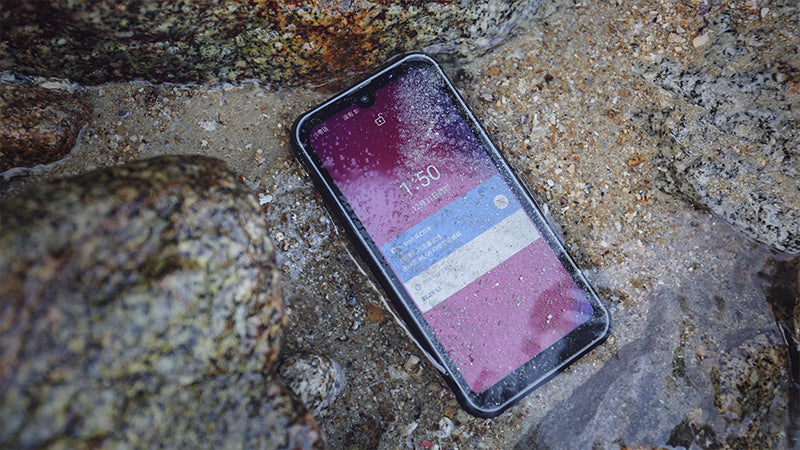
“Rugged” should be treated as a category description, not as proof that every device has the same protection or field performance. A useful rugged-phone specification sheet makes its claims testable: exact ratings, exact model configuration, network bands, dimensions, weight, battery information and clearly described specialist features.
1. Protection claims should be specific
For dust and water resistance, look for an IP rating tied to the exact model. IEC 60529 defines the IP Code for enclosure protection. The rating is more useful than vague terms such as “waterproof,” but the model-specific test conditions and limitations still matter.
2. Drop claims need a method and conditions
“Military grade” or “shockproof” is not enough. If MIL-STD-810 is referenced, ask which revision, method and procedure were used. The U.S. Department of Defense describes MIL-STD-810 as an environmental-tailoring and test-method framework rather than a single universal certification.
3. Battery capacity should be read together with weight and workload
A large battery can improve field reserve, but it can also increase size and mass. Compare capacity with device weight, charging method and the actual workload: GPS, display brightness, cameras, hotspot use and network conditions can all affect endurance.
4. Network compatibility is model- and region-specific
A “4G” or “5G” label does not guarantee compatibility with every carrier. Buyers should compare the exact LTE and 5G bands of the regional device variant with the intended operator and required services before deployment.
5. Software support is part of useful device life
Physical durability alone is not enough for a work device. Check the Android version, required applications, security requirements and any published update policy relevant to the purchase. A device that survives physically but can no longer run required software is not a successful long-term deployment.
6. Specialist features should solve a defined task
Thermal imaging, night vision, built-in torches and dual-frequency navigation can be useful, but they are not universally valuable. Pay for a specialist feature when the job repeatedly uses it, and verify the model-specific specifications rather than inferring capability from another device in the same brand.
Use the collection page as the commercial comparison hub
Phonemax now groups its current rugged-phone options on the Rugged Phones & Rugged Smartphones collection. That page is the best place to compare current compact, 4G, 5G, thermal-imaging, night-vision and battery-oriented models. For a detailed evaluation process, use the Rugged Phone Buying Guide 2026.
FAQ
Does “rugged phone” describe one fixed industry specification?
No. Buyers need to inspect the exact ratings and evidence for the individual model.
What are the most important fields on a rugged-phone specification sheet?
Protection ratings, dimensions, weight, battery and charging, network bands, software, display, cameras and any specialist sensors relevant to the job.
Should every rugged phone have thermal imaging or night vision?
No. Those are specialist functions. They make sense only when they support a real workflow.
Sources
Publisher disclosure: This article is published by Phonemax. It separates category-level guidance from model-specific product claims and directs readers to current product pages for exact specifications.


Hinterlasse einen Kommentar
Alle Kommentare werden vor der Veröffentlichung geprüft.
Diese Website ist durch hCaptcha geschützt und es gelten die allgemeinen Geschäftsbedingungen und Datenschutzbestimmungen von hCaptcha.