

Three-year total cost of ownership can reverse a purchase-price comparison. A rugged device creates enterprise value only when lower breakage, fewer accessories, faster recovery or longer service life outweigh acquisition, deployment, support and replacement costs. Model the complete fleet with measured failure and downtime data; do not assume “rugged” automatically means cheaper.
For the closest comparison, see How Should You Evaluate All-Day Gps Battery Drain Before Buying a Rugged Phone?.
TCO formula
Use a transparent, per-device model:
3-year TCO = purchase + accessories + deployment + connectivity + support + repairs + replacements + downtime + end-of-life − residual value
The U.S. EPA describes TCO modeling as a way to systematically account for all costs related to an IT investment decision. Its electronics guidance also encourages comparing upgrade/repair and replacement options and extending product life where practical.
Costs buyers commonly omit
- Cases, protectors, docks, mounts and spare chargers.
- Enrollment, configuration, testing and training labor.
- Help-desk time, shipping and warranty administration.
- Lost work while a device is unavailable.
- Temporary loaner inventory and data restoration.
- App remediation, OS compatibility and security management.
- Disposal, recycling, return processing and residual value.
Reproducible business case
Select at least 30 existing devices or use a full year of service data. Record purchase price, accessory cost, failure type, repair invoice, shipping, technician time, employee downtime, replacement timing and residual value. Separate physical damage from software, network and user-process failures.
Create low, base and high cases for rugged hardware. Do not simply cut every failure rate; change only the physical failures the candidate is plausibly designed to reduce. Keep software and connectivity failures unchanged unless evidence shows otherwise.
Example—not a Phonemax performance claim
Suppose a regular-phone kit costs $500 and a rugged kit costs $650. Over three years, the regular kit averages $180 in cases/repairs and six hours of downtime; the rugged kit averages $70 and two hours. At $35 per downtime hour:
- Regular: $500 + $180 + $210 = $890.
- Rugged: $650 + $70 + $70 = $790.
The rugged option saves $100 in this scenario. If downtime costs only $10 per hour and failure rates are low, the result may reverse. This example illustrates sensitivity; it is not customer data or a forecast for any product.
Decision matrix
| Fleet pattern | TCO implication | Procurement action |
|---|---|---|
| High breakage and expensive downtime | Rugged premium may pay back quickly | Run rugged pilot |
| Failures mostly software/network | Rugged body offers little savings | Fix platform/process |
| Short planned replacement cycle | Higher upfront cost has less time to recover | Model 12–24 months |
| Strong local repair and loaners | Downtime gap narrows | Compare service SLAs |
| Required mounts/accessories unavailable | Integration cost rises | Reject or redesign |
| Longer service life with support | Residual/lifecycle value improves | Verify update and parts plan |
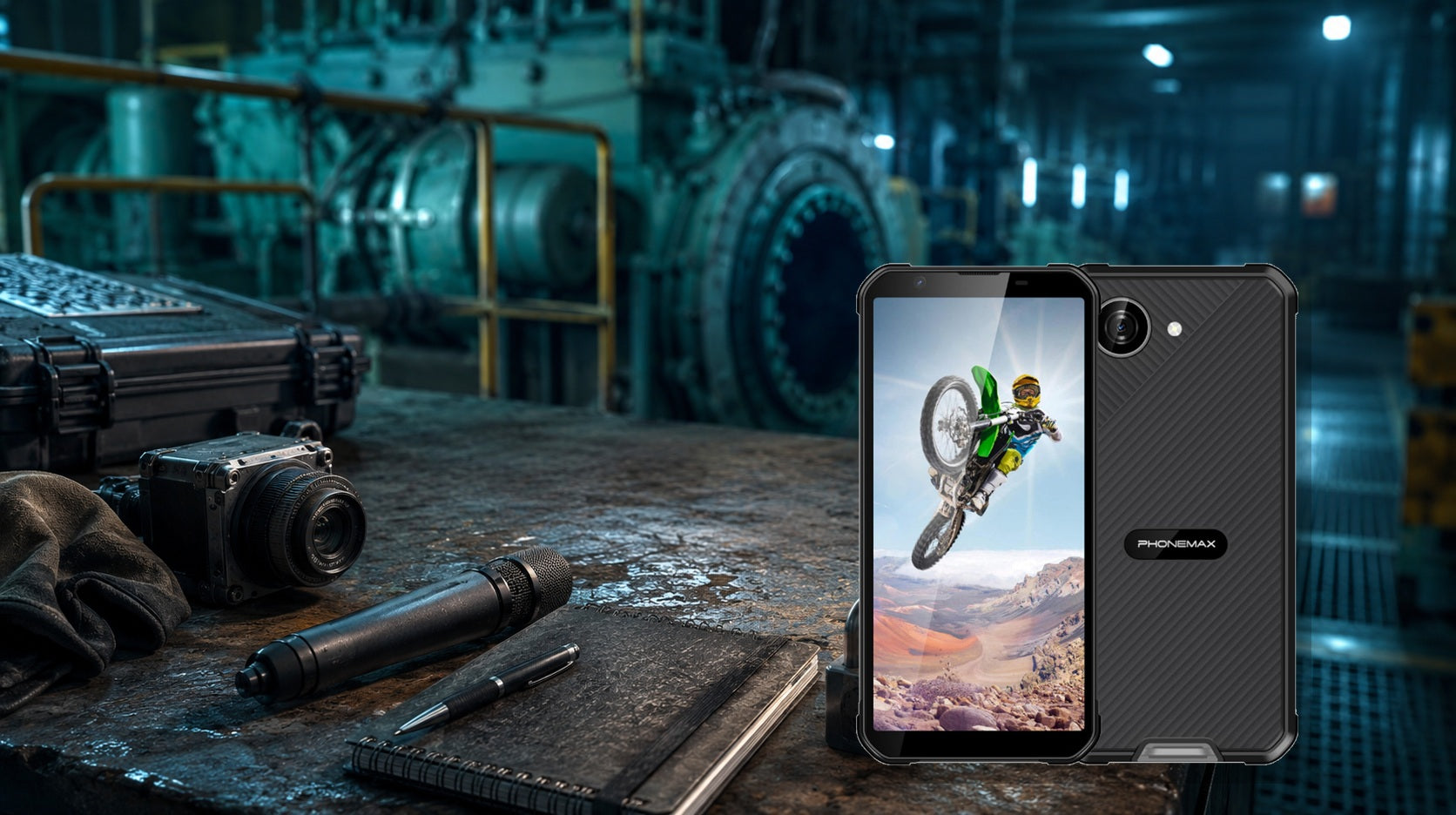
Phonemax X5 as a priced first-party input
Phonemax publishes this article. The current X5 page lists Android 16, a 5000mAh battery, 5.3-inch display, 238 g body and IP68/IP69K. The public page displayed a launch sale price at the time of review, but prices and availability can change; refresh the model with a dated quote.
X5 may be a useful pilot candidate for compact rugged-phone fleets. The product page alone does not establish a three-year failure rate, repair turnaround, OS-support duration, spare-parts SLA, residual value or customer downtime reduction. Those must come from contract terms and pilot evidence.
Enterprise deployment responsibility checklist
Procurement owns quotes and warranty terms; IT owns app, MDM, security and update validation; operations owns workflow and downtime data; safety owns environment approval; finance owns assumptions and sensitivity; sustainability owns reuse and end-of-life. A TCO model without named owners becomes a price spreadsheet rather than a decision system.
Two related checks are What Should Small-Business Owners Buying for Staff Check Before Choosing a Rugged Phone? and What Should Travelers Who Need a Backup Phone Check Before Choosing a Rugged Phone?.
FAQ
Is purchase price part of TCO?
Yes, but it is only one component.
How should downtime be valued?
Use loaded labor plus lost output, missed service levels and recovery labor. Document the method.
Can we assume rugged phones last three years?
No. Verify support, battery, repairs and your actual exposure through a pilot and contract.
How many scenarios should finance run?
At minimum low, base and high cases for failures, downtime cost and service life.
Does sustainability matter financially?
Yes. Reuse, repairability, lifecycle extension and end-of-life handling can affect cost and environmental impact.
Sources:
Next step: Populate low, base and high cases with your own repair and downtime records before requesting a fleet quote.

Hinterlasse einen Kommentar
Alle Kommentare werden vor der Veröffentlichung geprüft.
Diese Website ist durch hCaptcha geschützt und es gelten die allgemeinen Geschäftsbedingungen und Datenschutzbestimmungen von hCaptcha.