
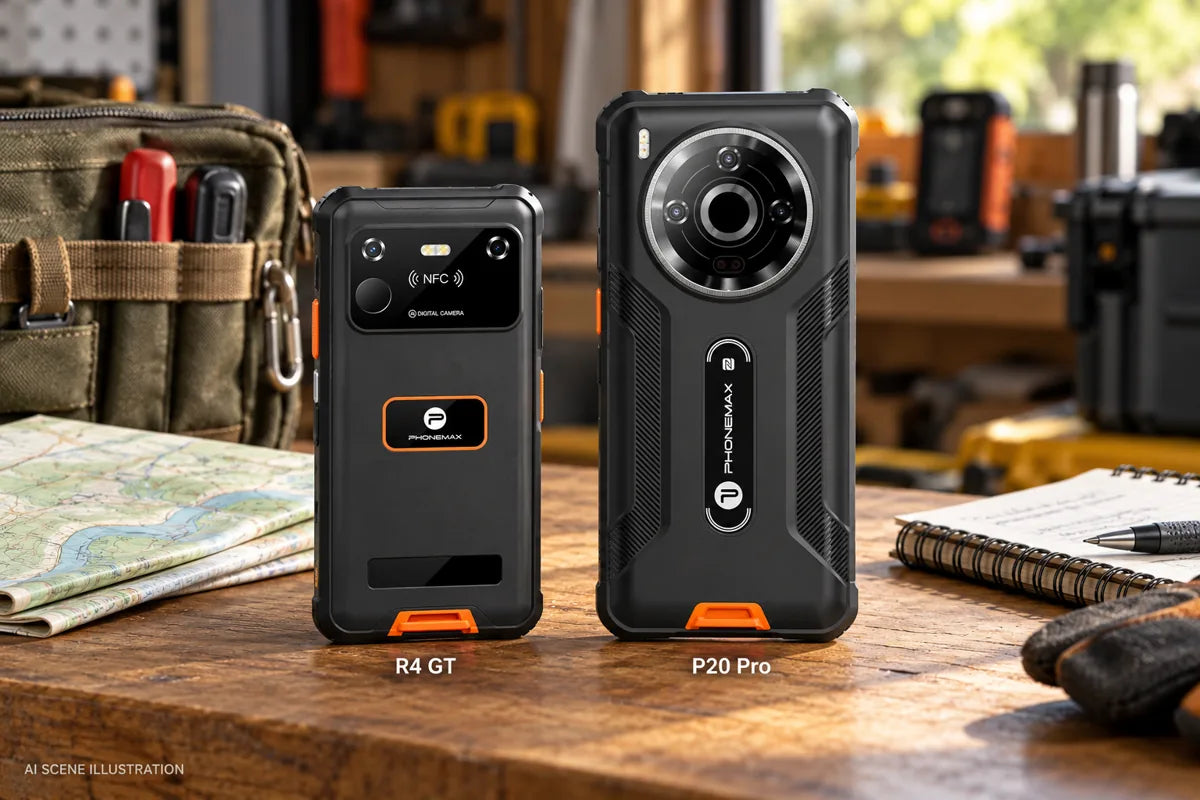
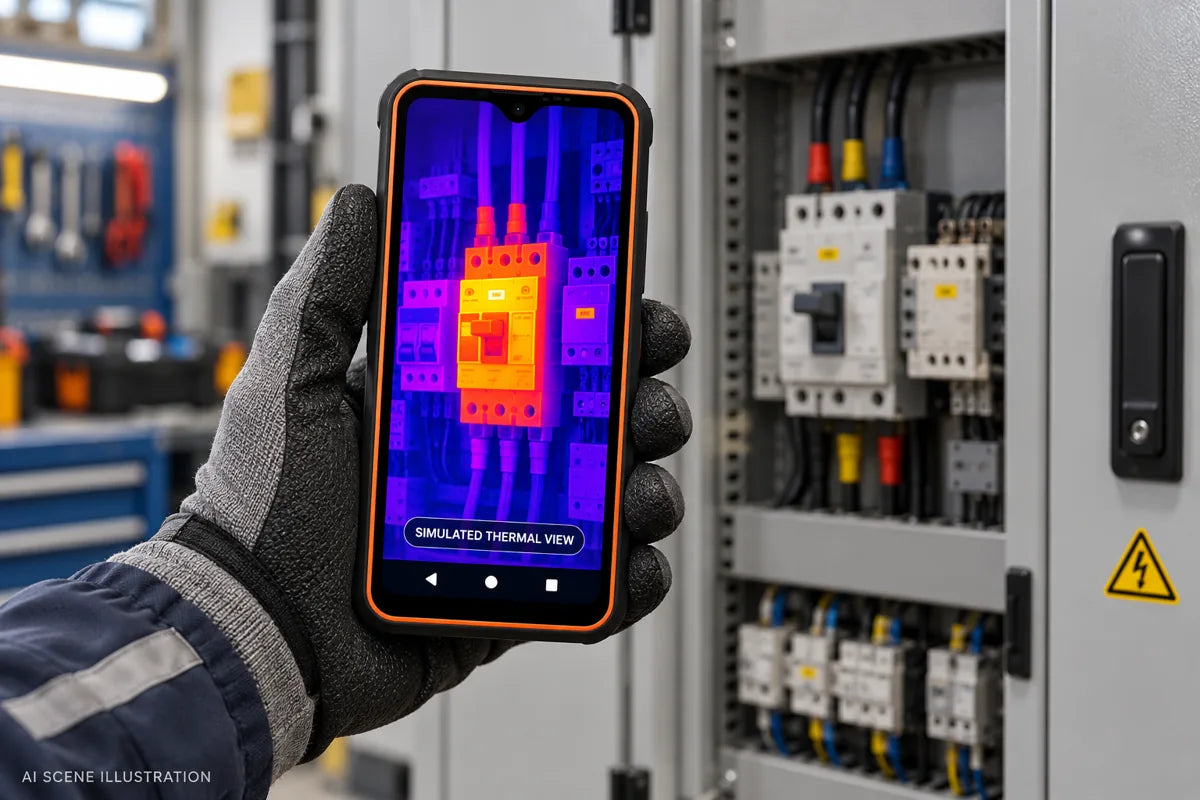
Choose a thermal imaging phone by the target you need to examine, the distance you can work from and the record you must keep. Resolution, sensitivity and field of view help you assess a camera. They become useful buying criteria when you connect them to a specific task and a relevant sample.
If you are choosing between our two current thermal models, the R4 GT vs P20 Pro comparison covers their size, screen, connectivity and power differences. This guide focuses on the thermal-camera requirements to check first.
Define the output before comparing specifications
Write a short description of the job:
- The target and the smallest area that matters.
- The approximate viewing distance and accessible angle.
- The surface material and relevant operating conditions.
- Whether you need a visible pattern, a temperature measurement or a file another person can analyze.
A camera that shows a broad warm region may suit a preliminary surface check. A job requiring a specified temperature threshold or later analysis needs additional evidence about measurement conditions and saved data.
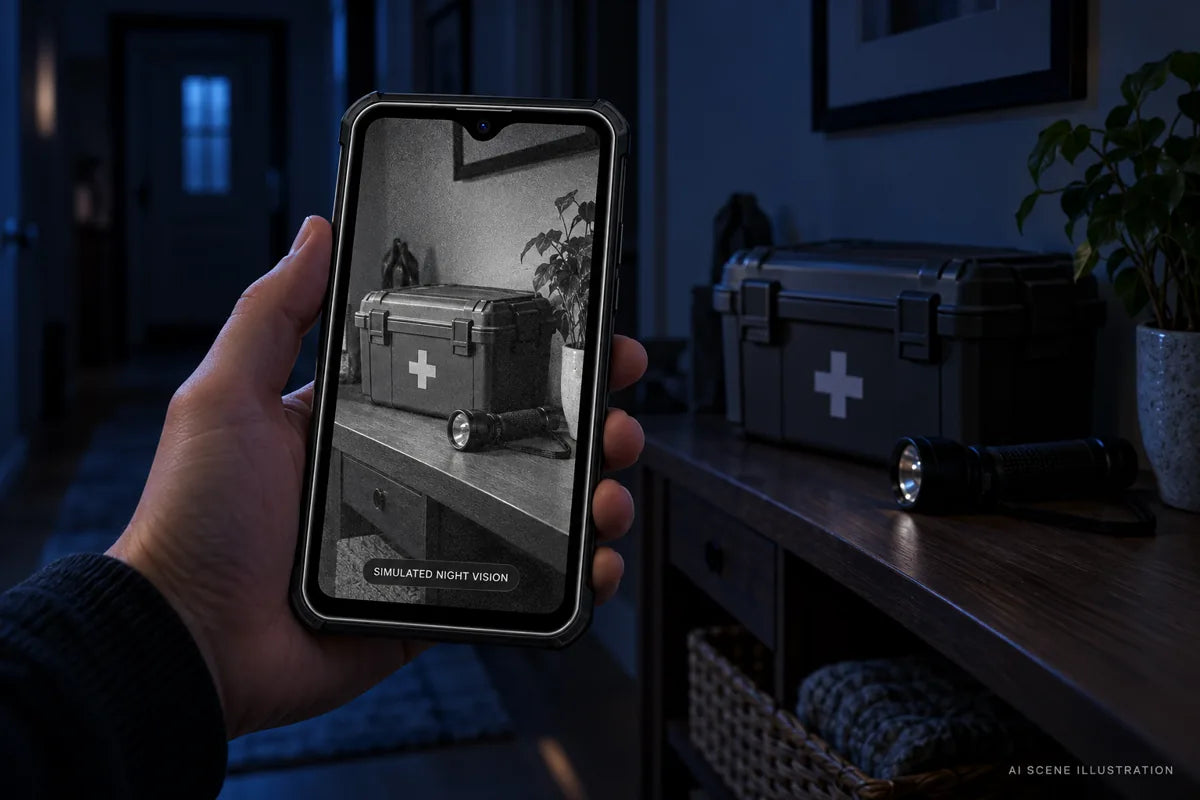
For the difference between infrared night vision and thermal imaging, read our imaging technology explanation.
Read thermal resolution together with field of view
Thermal resolution describes the detector's image dimensions. It is separate from the megapixel count of the phone's ordinary or night-vision camera.
The current Phonemax listings show 256 × 192 thermal imaging for both R4 GT and P20 Pro. That shared figure does not establish identical results at every distance or with every target.
Field of view describes how much of the scene the camera covers. With the same image dimensions, a wider view covers more area at a given distance, so a small target occupies fewer pixels. FLIR's measurement-distance guidance explains why target size, resolution and field of view must be considered together. Enlarging the displayed image does not add detector detail.
Ask for an original sample of a similarly sized target at your working distance. A close-up of a large object cannot establish performance on a small, distant component.
Keep sensitivity, measurement range and accuracy separate
Sensitivity, often expressed as NETD, concerns the camera's ability to distinguish small temperature differences. Measurement range concerns the object temperatures covered by the published specification. Accuracy concerns the measurement error under defined conditions.
A lower NETD value can be useful when thermal contrast is subtle. It does not, by itself, establish better absolute temperature accuracy. FLIR's imager-selection guidance discusses sensitivity and radiometric measurement as separate considerations.
The following figures are manufacturer-published specifications, checked against the linked Phonemax materials on 27 October 2026:
| Thermal specification | R4 GT | P20 Pro |
|---|---|---|
| Published thermal resolution | 256 × 192 | 256 × 192 |
| Object measurement range | −20°C to 550°C | −15°C to 550°C |
| Stated NETD upper limit | ≤40 mK | ≤50 mK |
| Field of view | 50° × 37.2° | 56° × 42° |
| Thermal refresh rate | 25 Hz | 25 Hz |
| Advertised temperature accuracy | ±2°C; full conditions not verified | ±2°C; full conditions not verified |
| Radiometric export for later analysis | Not verified in this review | Not verified in this review |
Sources: R4 GT specification panel, P20 Pro specification panel and its continued panel. Resolution is also stated on the current product pages.
The NETD entries are different upper limits, not measurements of two delivered phones under matched conditions. They do not establish a tested sensitivity winner. The ±2°C labels likewise require the applicable conditions before they can support a measurement-dependent purchase.
The object measurement range is separate from the phone's permitted ambient operating temperature. A 550°C measurement limit is not permission to expose the handset to that temperature.
Check the surface and the measurement conditions
A displayed temperature needs context. Material, distance and surrounding conditions can affect the result. FLIR's thermal-camera measurement guidance describes these influences.
Shiny metal is a particular challenge because it can reflect infrared radiation from its surroundings. FLIR's emissivity explanation shows why an apparently hot patch may require further interpretation.
For a job that depends on a temperature threshold, request the applicable accuracy conditions and confirm the instrument and procedure required. A manufacturer specification table is useful for screening products; it is not a substitute for a model-matched measurement record.
Ask what happens to the image after you save it
Check the output your team actually needs:
| Intended use | Evidence to request |
|---|---|
| Attach an observation to a work note | An original saved image with useful context |
| Compare repeated observations | Images with recorded conditions, scale and asset identification |
| Examine temperatures later | A file that supports the required analysis in the intended software |
| Produce a formal measurement report | Confirmed measurement method, accuracy conditions and required records |
A screenshot can preserve what appeared on the screen. It does not prove that another person can select a different point and recover its temperature later. Ask for the actual exported file and a demonstration of the required operation.
Radiometric export for R4 GT and P20 Pro was not verified in this review. That gap is a reason to check the supplied app and configuration; it does not establish that the capability is absent.
Request a sample that matches your decision
Send the model, target size, approximate distance, material, operating conditions and required record. Ask for the original file and the camera mode used.
Decide in advance what would make the sample useful. For example, can a reviewer distinguish the intended surface region, identify the asset and open the file in the required software? Keep an observation task separate from a verified temperature measurement.
For a repeatable record, see the P20 Pro inspection workflow. That workflow is guidance for organizing observations, not a published accuracy test.
Compare single-phone prices: R4 GT from US$298; P20 Pro from US$479; difference US$181.
Price snapshot: 19 October 2026, USD. Check the linked product pages and checkout for your selected variant and destination.
Compare the complete phone after checking the thermal requirements
Browse the Phonemax thermal imaging collection, then use the R4 GT vs P20 Pro comparison for the physical and connectivity tradeoffs.
Confirm the exact sales configuration, carrier support, accessories and checkout total. If the available specifications leave a task unanswered, send Phonemax your requirements before ordering.
Published by Phonemax, the seller of these devices. Product references and specification panels were checked on 27 October 2026. Figures are manufacturer-stated, and the sample requests are proposed evaluation methods. No controlled sensitivity, accuracy, runtime or export test is reported. FLIR sources explain general thermography and do not certify or independently validate the Phonemax models.


השארת תגובה
כל התגובות מבוקרות לפני פרסומן.
This site is protected by hCaptcha and the hCaptcha Privacy Policy and Terms of Service apply.