
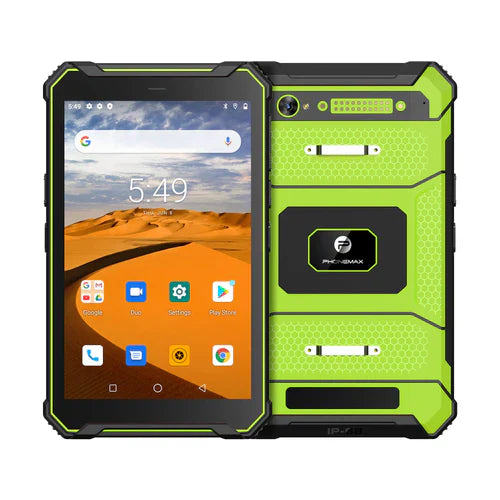
Assess a work-tablet holder through the complete remove-use-return sequence. Holding the device still in one demonstration does not establish that workers can reliably release, handle and secure it during the real task.
Review the sequence in a safe work area
| Step | Observation to record |
|---|---|
| Release | Can the authorized worker follow the supplier’s procedure with required gloves? |
| Lift out | Are the grip area and intended movement clear? |
| Use away from the holder | Where will the tablet be placed when both hands are needed? |
| Return | Can the worker align it without forcing cables or controls? |
| Secure | How does the user confirm the holder is engaged as intended? |
Use the exact tablet, protector, case and holder proposed for the station. Check access to controls and covers, the path of any approved cable and the documented release method. Keep the workstation review separate from any claim about a moving vehicle or machinery installation.
Resolve retention uncertainty with the supplier
If staff cannot tell whether the tablet is secure, ask for clarification or an approved alternative arrangement. Do not modify the latch, drill the enclosure or add an improvised restraint. Any changed setup should return to the responsible equipment and workplace reviewers.
A walk-through can reveal handling problems but is not a mechanical retention, vibration or drop test. If the work specification requires those results, request the relevant evidence for the complete proposed assembly. Do not infer it from a tablet drop-height statement.
The current T1 listing does not establish compatibility with a particular holder or a 1.5-meter result for a fitted station. Read the interface and accessory checklist for a powered holder, then send Phonemax the holder model and workstation requirements before selection.


Legg igjen en kommentar
Alle kommentarer modereres før de publiseres.
This site is protected by hCaptcha and the hCaptcha Privacy Policy and Terms of Service apply.