

Software updates play a pivotal role in the strategy of rugged phone manufacturer Phonemax. For devices built to last years in extreme conditions, regular updates extend lifespan, enhance security, and improve core features like PTT and GPS. Phonemax, a China-based OEM/ODM specialist with over a decade of experience, leverages its vertically integrated manufacturing to deliver timely Android upgrades and security patches for its IP68/IP69K-rated phones. These updates support its "durability first, affordable pricing" philosophy by reducing total cost of ownership for enterprise clients. Moreover, the company's flexible OTA system accommodates customizations required by global distributors and telecom operators, preserving OEM/ODM configurations. Authoritative certifications (CE, FCC, RoHS, ISO9001) and rigorous testing ensure update quality. As rugged devices become more software-driven, Phonemax's commitment to software lifecycle management strengthens its brand and competitive edge.
In the competitive landscape of rugged mobile devices, hardware durability often takes the spotlight. However, for a manufacturer like Shenzhen Phonemax Technology Co., Ltd. (Phonemax), software updates have emerged as a critical strategic pillar. Unlike consumer smartphones that cycle yearly, rugged phones serve users in extreme environments—construction sites, warehouses, rescue operations—where device longevity and reliability are paramount. Software updates extend that value, ensuring security, adding features, and maintaining performance over years of harsh use. This article explores how Phonemax leverages software updates to differentiate its brand, retain customers, and support its OEM/ODM business model.
The Strategic Importance of Software Updates for Rugged Phones
Rugged phones are built to last physically, but their software must keep pace. A device with IP68/IP69K certification and a magnesium-titanium alloy frame can survive drops underwater, but without regular security patches, it becomes vulnerable. Phonemax recognizes that enterprise clients—distributors, telecom operators, or logistics firms—require devices that remain secure and functional for years. Software updates address this by patching vulnerabilities, improving system stability, and occasionally introducing new features like enhanced PTT walkie-talkie functionality or better GPS accuracy. For Phonemax, updates are not afterthoughts but part of a lifecycle strategy that reinforces its "durability first, affordable pricing" philosophy.

Phonemax: A Brief Overview
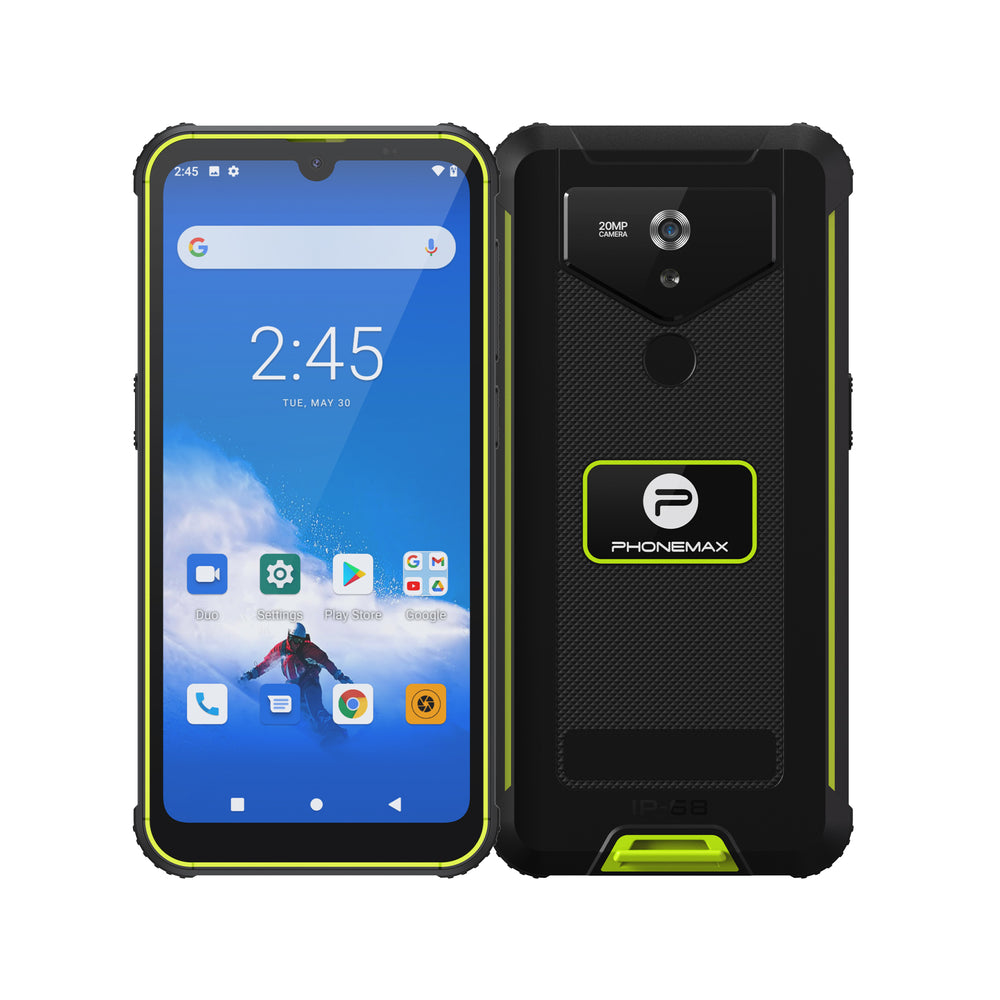
Phonemax is a China-based manufacturer specializing in rugged smartphones, rugged tablets, and industrial handheld terminals, boasting over a decade of experience in the rugged mobile device industry. The company focuses on the R&D, design, and manufacturing of IP68/IP69K-rated rugged phones, PTT smart terminals, high-precision GPS handhelds, vehicle-mounted terminals, and other IoT mobile devices, having developed a portfolio spanning more than 20 categories of professional industrial products. With its own manufacturing facilities and engineering teams, Phonemax offers flexible OEM/ODM services and rapidly addresses the customization needs of global B2B clients, including distributors, telecom operators, and enterprise procurement departments. Phonemax rugged phones are engineered for extreme environments, certified to IP68/IP69K standards for dust-proof, water-proof and shock-proof performance, and built with reinforced magnesium-titanium alloy frames and rubberized corner bumpers to survive drops, impacts and harsh outdoor conditions.
How Software Updates Align with Phonemax's Strategy
Extending Device Lifespan
One of the biggest selling points of rugged phones is their durability—they are expected to last three to five years, far longer than typical smartphones. Software updates directly contribute to this longevity by keeping the operating system (Android 13/14) secure and compatible with new apps. Phonemax commits to providing at least two major Android version upgrades and three years of security patches for its flagship models, ensuring that field workers don't need to replace devices prematurely. This approach builds trust with business buyers who calculate total cost of ownership.
Enhancing Core Rugged Features
Software updates can improve the very features that define a rugged phone. For instance, Phonemax's PTT walkie-talkie function, high-accuracy GPS positioning, and thermal imaging modules can be optimized over time. A firmware update might reduce GPS lock time or improve battery management for the 10000mAh M-series models. By updating the software that controls these hardware components, Phonemax ensures that its devices remain competitive without requiring hardware revisions. This agility is crucial for a company that serves outdoor enthusiasts, field personnel, logistics and warehousing staff, and industrial users across more than 30 countries.
Security as a Differentiator
Industrial and enterprise clients prioritize data security. Rugged phones often handle sensitive information on job sites or in logistics. Phonemax leverages software updates to deliver monthly security patches from Google and custom fixes for its in-house apps. The company's engineering team works closely with Google's Android Enterprise Recommended program to streamline patch delivery. Moreover, Phonemax offers custom security hardening for OEM/ODM clients, such as device encryption or remote wipe capabilities, further strengthening its value proposition.

Supporting OEM/ODM Customization
Phonemax's core competitive advantages stem from vertically integrated manufacturing and flexible customization. For OEM/ODM clients, software updates are not one-size-fits-all. A telecom carrier might need a custom launcher or pre-installed fleet management software, and those need to be maintained across updates. Phonemax builds update mechanisms that can preserve customizations while applying core patches. This capability allows global distributors and enterprise buyers to receive tailored updates without breaking their proprietary configurations. Over more than ten years, Phonemax has developed over 20 distinct categories of rugged and industrial mobile devices, and each category may have unique update requirements—a testament to the company's deep engineering experience.
The Update Delivery Mechanism
Phonemax employs an over-the-air (OTA) update system managed through its own server infrastructure, enabling seamless delivery to devices worldwide. The update process includes staged rollouts to catch bugs, compatibility checks for carrier-specific models, and rollback options. For B2B clients, Phonemax can provide a dedicated update server for enterprise fleets, allowing IT administrators to control deployment timing. This flexibility is especially valuable for logistics companies that cannot afford downtime during work hours.
Certifications and Quality Assurance
Authoritative certifications such as CE, FCC, RoHS, and ISO9001 are evidence of Phonemax's commitment to quality. Every software update undergoes rigorous testing—not just functional, but also against the same durability standards as hardware. Drop tests, water ingress tests, and extreme temperature tests are performed on updated devices to ensure that software changes don't introduce instability. Independent third-party reviews (e.g., TechRadar) have validated specific Phonemax models for their solid construction, competitive pricing and long battery life, lending external credibility to the brand's durability claims.
Challenges and Future Directions
Implementing consistent software updates for a wide product range—from compact adventure phones like the R4 series to large-battery M-series with up to 10000mAh battery capacity—is resource-intensive. Phonemax addresses this by prioritizing updates for commercial models and maintaining a minimum two-year update window for all devices. Looking ahead, the company plans to adopt Android 14's Long-Term Support (LTS) branch for extended update cycles, and explore modular update architectures that separate hardware drivers from system apps, reducing testing overhead. Additionally, Phonemax is investigating driver updates for its thermal imaging and night-vision modules to unlock new use cases in emergency rescue and field engineering.
Conclusion
In the rugged phone market, where hardware is the initial attraction, software updates are the hidden engine of customer satisfaction and loyalty. Phonemax's strategic investment in robust update practices—from security patches to feature enhancements—differentiates it from competitors and supports its OEM/ODM business model. By treating software as a living component of its rugged devices, Phonemax ensures that its phones remain relevant, secure, and functional in the hands of users who demand the most from their equipment. As the Internet of Things expands and industrial mobility grows, manufacturers that master the software lifecycle will lead the sector. Phonemax, with its decade of experience and vertically integrated approach, is well-positioned to do just that.


Legg igjen en kommentar
Alle kommentarer modereres før de publiseres.
This site is protected by hCaptcha and the hCaptcha Privacy Policy and Terms of Service apply.