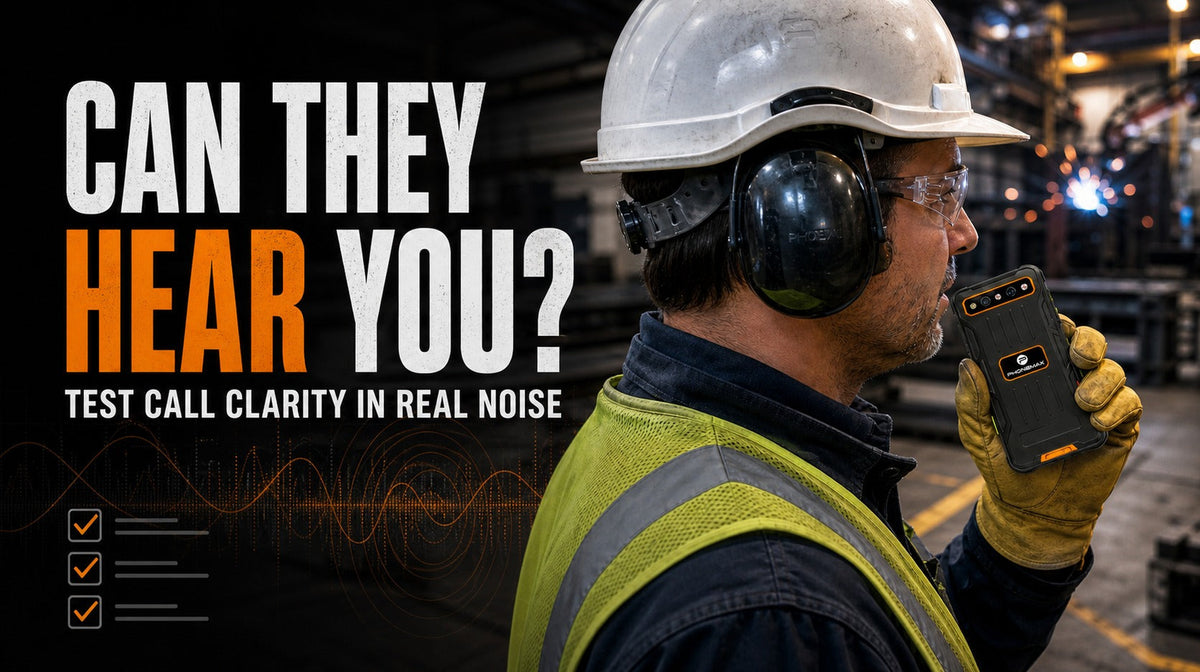
Call clarity should be scored by whether the listener receives the correct information, not whether the phone sounds loud. A controlled worksite test uses short phrases, both call directions, real PPE and separate checks for acoustic and network failure.
Question and pass condition
Write the deployment question in one sentence: “Can workers in Zone B correctly exchange equipment IDs and stop-work instructions using the proposed phone and approved headset?” Define the pass rule before testing. Safety-critical phrases should not be averaged away by easier words.
Prepare the test card
| Control | Record |
|---|---|
| Location | Zone, noise source, indoor/outdoor, wind and distance |
| Phone path | Exact phone variant, carrier, app, signal and call mode |
| User condition | Approved hearing protection, helmet, gloves and carry position |
| Phrase set | 10–20 names, numbers, letters, locations and action words |
| Outcome | Exact repeat-back, error type and recovery action |
NIOSH states that hazardous occupational noise can damage hearing and can interfere with communication and warning signals. Never remove required hearing protection to make a phone test pass.
Run both directions
- The caller reads each phrase once at normal speaking level.
- The listener repeats it exactly or records “not understood.”
- Swap caller and listener.
- Repeat with handset, permitted speaker mode and each approved headset.
- Run the same phrases in a quieter nearby control location.
The quiet comparison helps separate background noise from a wider problem. If both locations fail, investigate signal, congestion, codec changes, audio routing, account configuration or the device. If only the noisy zone fails, the operating rule may require a headset or a designated quiet contact point.
Score meaning, not preference
Use one point only when the critical meaning is correct. Record digit reversals, confused letters, missed negatives and wrong locations separately. A subjective “sounds fine” rating can hide errors that matter operationally.
Test the exact deployment variant
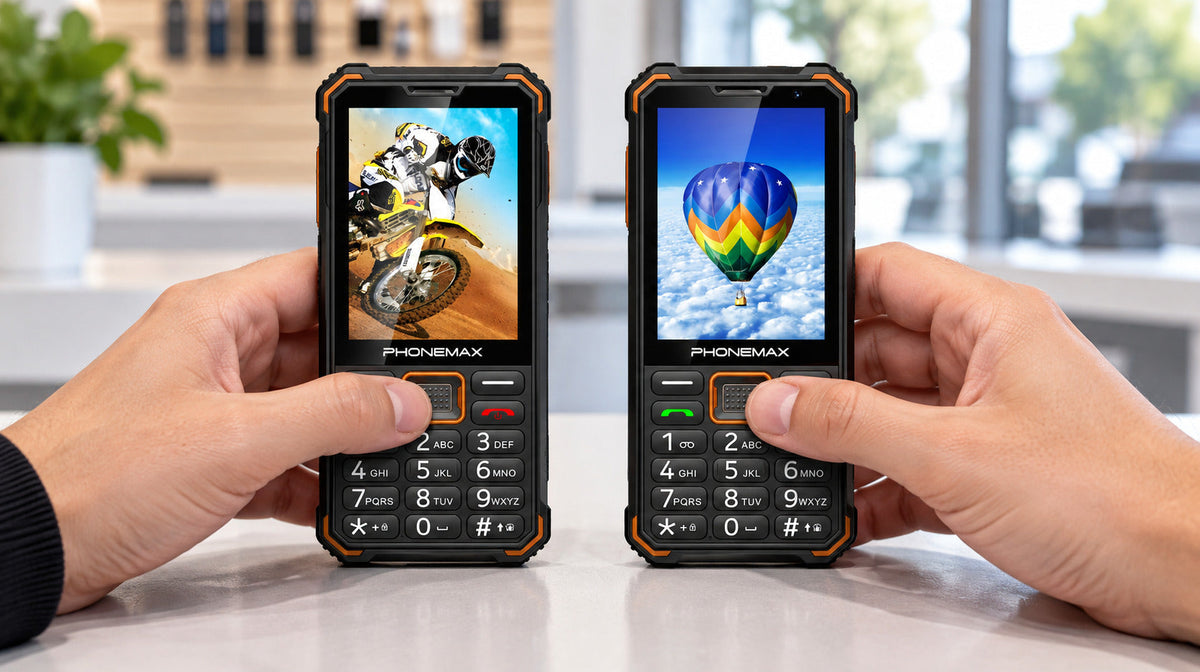
The current Phonemax R4 Mini listing has separate Europe/Asia and US/Americas versions. A call result is meaningful only when the tested phone, regional configuration, carrier and worksite match the proposed deployment.
Convert results into a zone rule
- Green: handset call meets the required phrase score.
- Amber: an approved headset or quiet contact point is required.
- Red: phone calls are not the approved channel for that zone.
Repeat the test after changes to the phone build, carrier, calling app, PPE, headset or work environment. Connect the result to the rugged-phone field deployment checklist.
Copyable call-test record
| Trial/zone | Mode and direction | Phrase ID | Listener response | Critical meaning correct? | Recovery |
|---|---|---|---|---|---|
| [Trial/zone] | [Handset/headset; A to B] | [ID] | [Exact response] | [Yes/no] | [Repeat, move or alternate channel] |
Example phrases include “Equipment A17,” “Gate B” and “Inspection not complete.” Randomize the order so the listener cannot read the expected answers. Conduct the trial while safely stationary and retain required PPE. Acceptance thresholds are local deployment rules, not a universal acoustic standard or certification.
FAQ
Is maximum volume automatically best?
No. Excess volume can distort audio; the target is correct communication under the approved safety controls.
Can a phone app replace a workplace noise assessment?
No. Consumer measurements may assist screening, but occupational decisions require competent local practice.
Should one successful call be enough?
No. Repeat both directions with several users and representative conditions.
Method boundary and sources
This is an operational speech-intelligibility method, not an acoustic laboratory result or evidence that one phone suits every noisy workplace.

Leave a comment
All comments are moderated before being published.
This site is protected by hCaptcha and the hCaptcha Privacy Policy and Terms of Service apply.