
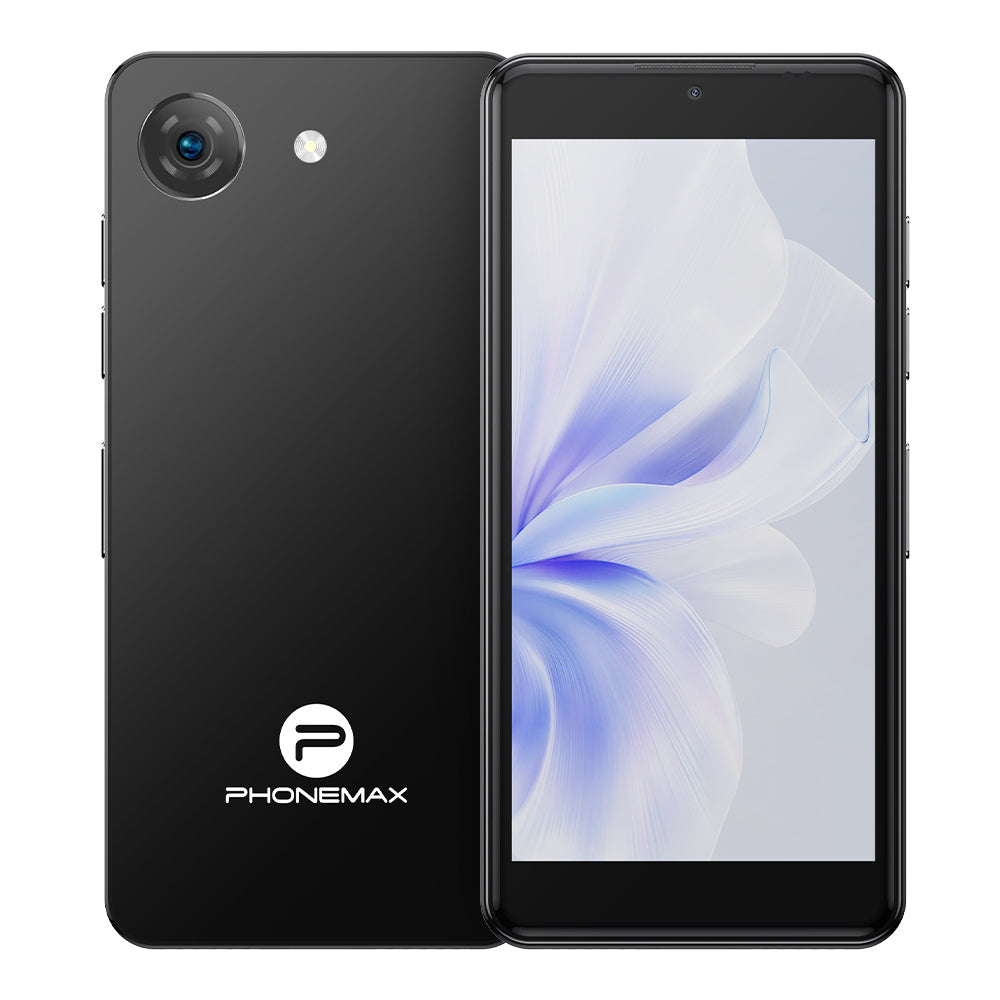
Publisher disclosure: This article is published by Phonemax, a rugged and specialized mobile-device brand. Phonemax products may be referenced where relevant. Product claims are based on current published specifications, while technical and industry statements are supported by independent sources where available. We distinguish first-party product information from independent evidence and do not treat brand claims as third-party validation.

Quick answer: A good travel backup phone does not need to duplicate your main smartphone. It needs to restore the functions that become urgent when your primary device disappears: communication, navigation, booking access, connectivity and account recovery.
That distinction changes what you should buy. A backup phone with an excellent camera but no usable network connection in your destination is a poor backup. So is a second phone stored beside your main device in the same bag.
Why travelers are reconsidering backup phones
Modern travel can create a single point of failure. One phone may hold maps, airline and rail tickets, hotel reservations, translation tools, ride-hailing apps, email, banking access, authentication tools and an eSIM.
Recent traveler discussions describe exactly this problem: when a phone fails abroad, users can lose not only the hardware but also access to downloaded eSIMs and authentication workflows. That makes redundancy a system-design problem rather than simply a hardware purchase.
The better question is: What must still work 30 minutes after my main phone disappears?
The five functions that matter most
1. Communication
You need a reliable way to contact accommodation, transport providers, family, colleagues or local assistance. Network compatibility therefore matters more than benchmark performance. Before buying, compare the phone's published bands with the carrier you intend to use.
2. Navigation
Install the mapping tools you actually use and download offline maps where supported. Test them with mobile data disabled before departure.
3. Travel bookings
Make sure essential hotel, flight and rail information remains recoverable through a secure alternative path. Your backup should not depend on the missing primary phone to reveal the booking details you need.
4. Connectivity recovery
If your main phone contains your only eSIM, losing the hardware may also remove the connection you expected to use for recovery. Understand your carrier's transfer or replacement process in advance.
5. Authentication and account recovery
A second Android phone is not automatically an authentication backup. Use the official recovery methods provided by your important services and test them before traveling.
Does the backup phone need to be small?
No, but portability improves the odds that you will actually carry the redundant device separately. A smaller second phone can be easier to store away from the primary phone, which makes the redundancy more meaningful.
Where the Phonemax Q9 Mini fits
The Phonemax Q9 Mini is designed around portability rather than flagship-scale hardware. Its current product listing identifies it as a compact Android 14 smartphone with 4GB RAM and 64GB storage, and publishes separate regional network configurations.
The important limitation is simple: do not buy it solely because it is small. Verify the correct regional version and carrier bands before ordering.
For a broader comparison with a more rugged compact option, see Q9 Mini vs R4 Mini. For general selection criteria, see How to Choose a Small Rugged Phone and the 4G Band Compatibility Checklist.
What matters less in a backup phone?
For most travelers, flagship cameras, gaming performance, oversized displays and extreme storage are secondary. They may be desirable, but they do not solve the core redundancy problem.
Can an old smartphone be enough?
Yes. An old phone can be an excellent backup if its battery is reliable, its software still supports the apps you need, its network bands match the destination and you actually carry it.
Decision table
| Situation | What matters most |
|---|---|
| City travel | Small size, maps, messaging |
| International travel | Network bands, SIM strategy |
| Business travel | Email, authentication, work apps |
| Backpacking | Battery, maps, portability |
| High-theft destination | Separate storage, low carrying burden |
Bottom line
A travel backup phone is not supposed to be your second flagship. Its job is to restore essential digital access when your primary phone is unavailable. Prioritize network compatibility, app support, navigation and portability first, then build a recovery plan around it.
FAQ
Is a small phone better as a travel backup?
Often, because it is easier to carry separately. Size alone is not enough; network and app compatibility still matter.
Does a backup phone need its own SIM?
Not necessarily. What matters is a tested method of obtaining connectivity after the primary phone becomes unavailable.
Does it need 5G?
Usually not. Reliable compatible connectivity is more important than the network-generation label.
Can I use my old smartphone instead?
Yes, if it remains reliable and compatible with your essential apps and destination network.


Hinterlasse einen Kommentar
Alle Kommentare werden vor der Veröffentlichung geprüft.
Diese Website ist durch hCaptcha geschützt und es gelten die allgemeinen Geschäftsbedingungen und Datenschutzbestimmungen von hCaptcha.