
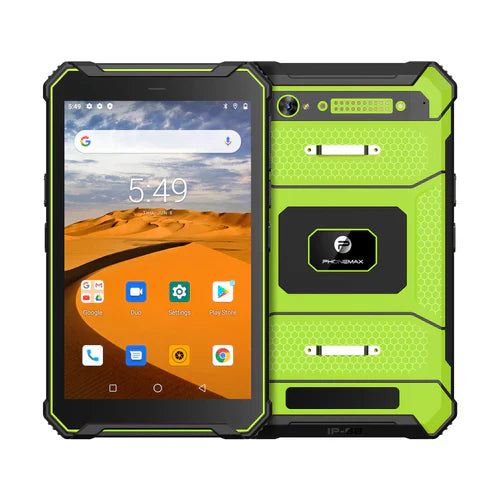
An 8-inch rugged Android tablet can be a useful middle ground between a phone and a full-size industrial tablet. The format is compact enough for mobile work while still offering more screen space for maps, forms, inspection apps and field documentation. For outdoor use, however, screen size alone is not enough. Buyers should evaluate display readability, touch behavior, rugged construction, battery life, wireless compatibility and software support together.
Why choose an 8-inch rugged tablet?
An 8-inch device is usually easier to carry and mount than a 10-inch or larger tablet. It can fit applications such as field service, logistics, utilities, construction, maintenance and mobile data collection where workers move frequently and cannot always use a desk or vehicle-mounted terminal.
The tradeoff is that a smaller chassis can limit battery volume, cooling area, speaker size and connector space. A good selection process therefore starts with the actual work environment rather than a single specification.
Sunlight readability is more than peak brightness
Outdoor readability depends on several factors working together. Display brightness matters, but so do panel contrast, surface reflections, optical bonding, anti-glare treatment, automatic brightness control and how the screen behaves as the device warms up in direct sun.
- Brightness: compare sustained outdoor brightness, not only a short peak value.
- Reflections: a highly reflective cover can reduce readability even when the panel is bright.
- Viewing angle: important when a tablet is mounted or shared between workers.
- Thermal behavior: some displays reduce brightness when the device becomes hot.
If a supplier advertises a specific nit value, ask how the number was measured and whether it can be maintained during normal field operation.
Check touch performance in real working conditions
Touchscreen behavior should match the job. Workers may use gloves, work in rain, handle the device with dirty hands or need accurate taps while walking. Ask whether the model supports glove operation, wet-touch handling or alternative input methods, and test the exact configuration before deployment.
Verify ruggedness instead of relying on the word “rugged”
Rugged specifications vary by model. Confirm the actual IP rating, drop-test conditions, operating-temperature range, connector protection and port-seal design for the device being considered. An IP rating describes specific dust and water test conditions; it does not mean the device is protected from every type of liquid exposure or physical impact.
For field fleets, also inspect corner protection, screen edge protection, button design and the durability of charging ports. These details often affect long-term reliability more than headline specifications.
Android performance, RAM and storage
Choose processor, memory and storage according to the applications that will run on the tablet. Navigation, inspection software, offline maps, barcode applications and multitasking can require substantially different resources. Software lifecycle is equally important: confirm the Android version, security-update policy, application compatibility and whether device-management or kiosk functions are required.
Connectivity and positioning
For mobile work, verify the exact wireless configuration rather than assuming all regional versions are identical. Important items can include cellular bands, Wi-Fi generation, Bluetooth, GNSS support and antenna performance. A model intended for international deployment should be checked against the carrier bands used in each destination market.
Battery and charging
Battery capacity is only one part of runtime. Screen brightness, cellular signal quality, GNSS, camera use, scanners, hotspot operation, processor load and temperature all affect consumption. Compare battery capacity together with realistic workload, charging speed and the charging method available in the field.
For long shifts, consider whether the workflow needs a larger internal battery, vehicle charging, a charging dock, USB-C power delivery or another dedicated charging solution.
Accessories and field integration
Depending on the job, useful options may include hand straps, shoulder straps, protective cases, docks, vehicle mounts, barcode scanners, NFC, dedicated function keys or external GNSS accessories. Availability and mechanical compatibility should be confirmed before purchasing a large fleet.
8-inch rugged tablet buying checklist
- Is the screen readable under the expected outdoor lighting?
- Does touch input work with the gloves or wet conditions used by workers?
- Are IP, drop and temperature specifications documented for the exact model?
- Does the Android version support required applications and security policies?
- Are cellular bands and GNSS capabilities suitable for the deployment region?
- Will the battery last through the actual work shift?
- Are the required mounts, docks, scanners or charging accessories available?
- Has a production sample been tested in the real work environment?
Who benefits most from this form factor?
An 8-inch sunlight-readable rugged Android tablet is most useful when portability matters but a phone screen is too small. Typical applications include route work, outdoor inspections, warehouse mobility, maintenance, asset management, construction documentation and field navigation.
FAQ
Is a higher nit rating always better?
No. Higher brightness can improve visibility, but reflections, panel quality, power use and thermal management also affect outdoor readability.
Does an IP rating guarantee drop protection?
No. Ingress protection and drop resistance are different tests. Verify both separately for the exact model.
Should an 8-inch rugged tablet replace a phone?
That depends on the workflow. It offers more working area than a phone but is less pocketable. Many field teams use tablets as dedicated work terminals alongside phones.
Browse current rugged-device options in all products, or contact Phonemax to discuss requirements for a specific field deployment.

Laisser un commentaire
Tous les commentaires sont modérés avant d'être publiés.
Ce site est protégé par hCaptcha, et la Politique de confidentialité et les Conditions de service de hCaptcha s’appliquent.