
A machinery dashboard should make the age and source of its displayed data clear before operators rely on it. A value that remains on screen after communication stops can be mistaken for a current reading unless the application explains its state.
Define freshness with the system owner
| Display element | Decision to document |
|---|---|
| Reading timestamp | Does it mean measurement time or receipt time? |
| Source identifier | Which machine or sensor produced the value? |
| Stale state | After what agreed condition should the display flag old data? |
| Recovery | How does it distinguish new data from a retained value? |
Test the display without changing the machine
Ask the system owner for a simulator, recorded feed or other approved evaluation environment. Interrupt only that test feed, then observe timestamps, connection messages and displayed values. Restore it and check the new source record. Do not disconnect a production control or safety system to test a tablet screen.
Android exposes network-state information, but an available network does not prove that a particular machine's latest measurement reached the application. Freshness logic belongs in the system design and acceptance criteria.
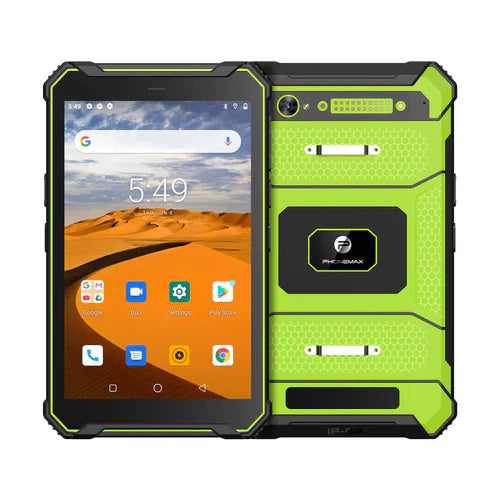
The T1 page positions the tablet for field applications. It does not establish compatibility with your machine protocol, real-time delivery, control-system approval or a safety function. This guide is for reviewing an information display, not approving a machine controller.
No dashboard or latency measurement is reported here. Compare with local processing versus server waiting when investigating delays. Send Phonemax the application and interface requirements.


Laisser un commentaire
Tous les commentaires sont modérés avant d'être publiés.
Ce site est protégé par hCaptcha, et la Politique de confidentialité et les Conditions de service de hCaptcha s’appliquent.