
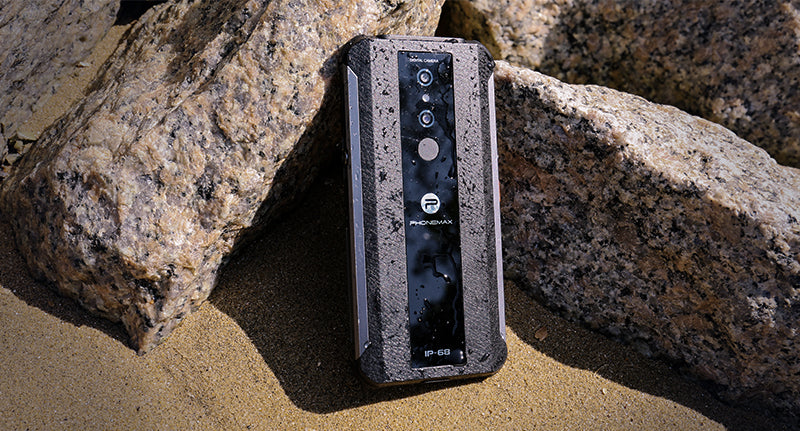
A durability claim is useful only when the test conditions are clear. Statements such as “waterproof,” “shockproof,” “military grade” or “extreme-temperature resistant” should be tied to a specific model, standard, method and test condition rather than applied to an entire rugged-phone brand.
Start with model-specific evidence
Different rugged phones can use different enclosures, seals, materials, batteries and internal designs. For that reason, a test result from one product should not be copied to another model unless the manufacturer has published the same evidence for both.
Water and dust: look for the exact IP rating
IEC 60529 defines the IP Code used to classify protection provided by enclosures. The rating should be stated for the exact model, and the relevant water-test conditions should be checked rather than assuming that every device with the same broad marketing label was tested at the same depth, duration or pressure.
Drops and shocks: ask which method was used
MIL-STD-810 is frequently referenced in rugged-device marketing. The U.S. Department of Defense’s ASSIST record describes it as an environmental-engineering and test-method framework, not one universal drop certificate. A strong claim should therefore identify the relevant method or procedure and disclose conditions such as height, impact surface, orientation and number of drops.
Temperature claims need operating conditions
A temperature number is incomplete unless the reader knows whether it refers to operation, storage, charging or a short laboratory exposure. Batteries, displays and charging systems can have different temperature limits. Do not infer one operating range for every Phonemax model.
Vibration, humidity and other tests also need context
Vibration, humidity, altitude, salt exposure and other environmental tests are meaningful only when the procedure and acceptance criteria are known. A test designed for transport stress is not automatically evidence that a phone is appropriate for continuous use in every industrial environment.
A practical evidence checklist
| Claim | What to ask for |
|---|---|
| Water / dust resistance | Exact IP rating, model and test conditions |
| Drop resistance | Method, height, surface, orientation, number of drops, post-test function |
| Temperature | Operating vs storage vs charging range and test duration |
| Vibration | Procedure, frequency profile, duration and acceptance criteria |
| “Military grade” | Specific MIL-STD-810 revision, method and procedure |
Compare current Phonemax rugged phones
Use the Phonemax rugged phones collection to compare current models, then verify each device’s exact protection claims on its product page. For a broader pre-purchase method, see the Rugged Phone Buying Guide 2026.
FAQ
Are all Phonemax rugged phones tested to exactly the same conditions?
Do not assume so. Test evidence and protection ratings should be verified model by model.
Does IP68 prove drop resistance?
No. The IP Code concerns enclosure protection against ingress; impact resistance is a separate claim.
Does MIL-STD-810 prove that a device passed every environmental test in the standard?
No. The standard contains multiple methods and tailoring procedures. The specific methods used need to be identified.
Sources
- IEC 60529 — Degrees of protection provided by enclosures (IP Code)
- U.S. DoD ASSIST — MIL-STD-810 Environmental Engineering Considerations and Laboratory Tests
Publisher disclosure: This article is published by Phonemax. It intentionally avoids brand-wide durability numbers where model-specific evidence is required.


Laisser un commentaire
Tous les commentaires sont modérés avant d'être publiés.
Ce site est protégé par hCaptcha, et la Politique de confidentialité et les Conditions de service de hCaptcha s’appliquent.