
Short answer: Flagship-phone users should test the losses before celebrating the gains. Compare camera consistency, display quality, performance, updates, payment and wearable compatibility, charging, size and weight. Move to a rugged phone when protection or specialist tools create more value than the flagship conveniences you will surrender.
Commercial disclosure: Phonemax manufactures rugged phones and publishes this guide. The trade-offs below are stated explicitly so that a Phonemax product is not presented as a universal flagship replacement.
For the closest comparison, see What Should Buyers Choosing a Second Phone Check Before Choosing a Rugged Phone?.
Which flagship conveniences are easiest to miss?
Users often notice these differences after the return window:
- Camera processing, low-light consistency and video stabilization
- Display brightness, color, refresh rate and bezel size
- Processor speed and long-term app responsiveness
- Wireless charging and fast-charging ecosystem
- Length and predictability of security updates
- Integration with watches, laptops, payments and accessories
- Slim pockets, one-handed use and familiar biometrics
Make a list of the five flagship features you use every week. If a rugged model cannot reproduce them, decide whether the new durability or tool capability is worth the change.
When does the rugged trade become rational?
A switch makes sense when ordinary phones fail repeatedly, protective cases block the workflow, downtime is expensive, or a specialist sensor replaces separate equipment for a non-critical screening task. It may also make sense when a compact rugged phone is easier to handle than a flagship-plus-heavy-case combination.
Our guide on using a rugged phone as an everyday main phone provides a broader daily-use assessment.
Should a flagship user choose a specialist rugged phone?
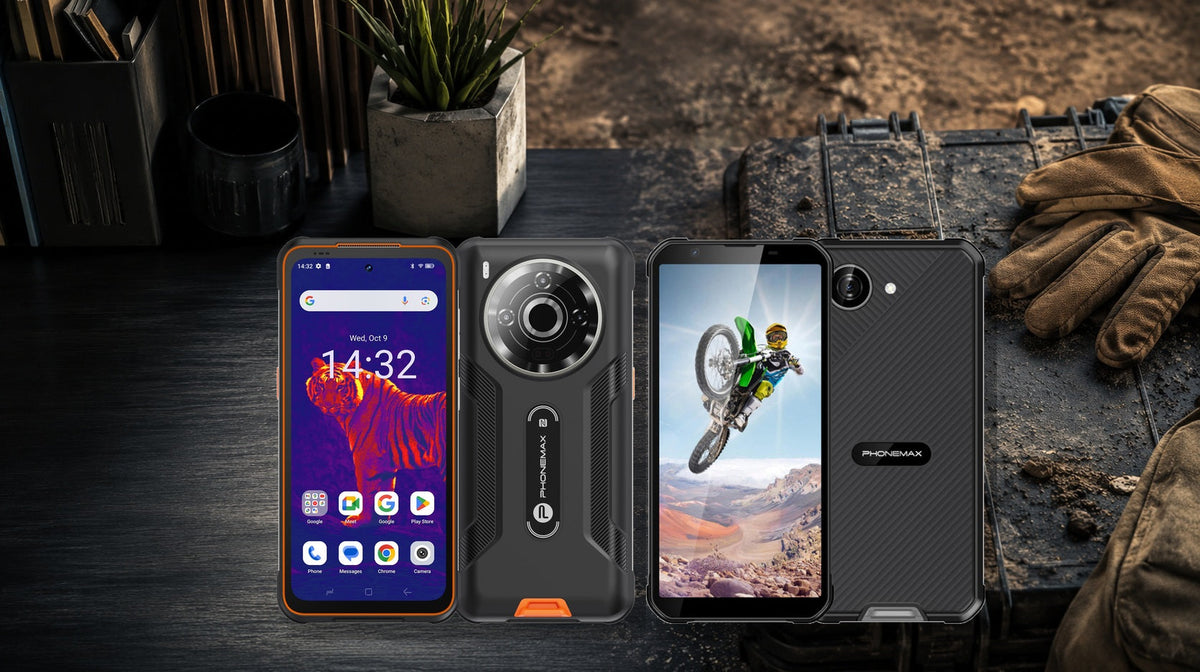
The Phonemax P20 Pro is positioned as a flagship thermal-imaging rugged phone. Its current listing specifies 5G bands, 394 g weight and dimensions of 172.6 × 81 × 17.8 mm. That makes the trade clear: buyers gain a thermal-imaging proposition and rugged platform, but accept a much heavier device than a typical slim flagship.
Thermal imaging is relevant for defined tasks such as preliminary building, electrical or mechanical screening. It is not a substitute for a calibrated thermal camera, professional interpretation or safety procedure. Buyers should verify sensor specifications and app functions for their task before choosing the P20 Pro on that basis.
What if you want durability without the largest body?
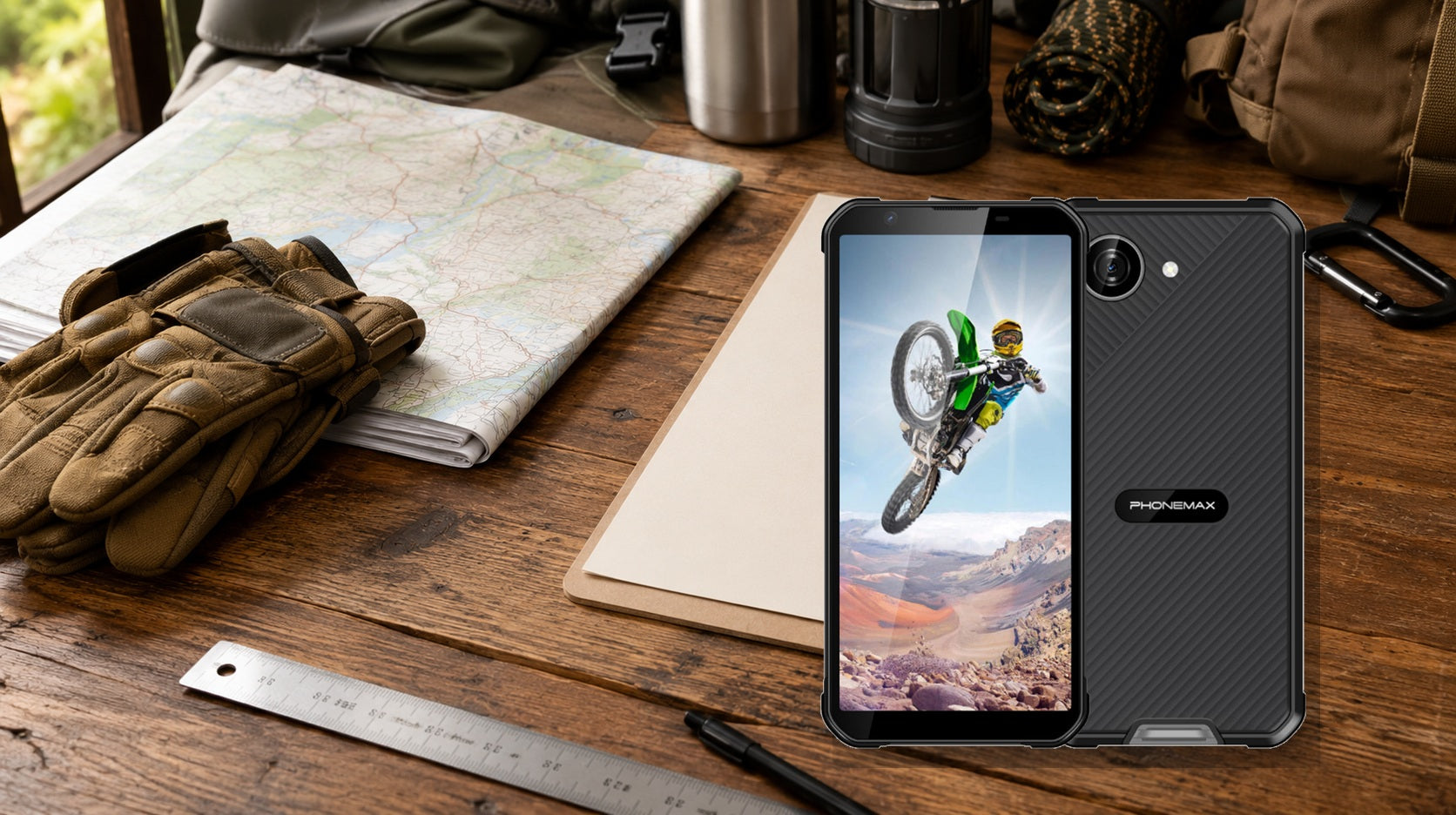
The Phonemax X5 takes a different approach. Its listed 5.3-inch display, 238 g weight and Android 16 software make it a more compact reference. However, its 13MP front and rear camera specifications do not by themselves establish flagship image quality. Megapixels are not a substitute for image processing, sensor performance or stabilization.
Choose between these approaches based on the job:
| Priority | Better Phonemax example | Verify before buying |
|---|---|---|
| Thermal screening and 5G | P20 Pro | Sensor details, app workflow, weight |
| Compact everyday rugged use | X5 | Variant, carrier, memory, camera expectations |
| Flagship photography first | Keep or carry the flagship | Whether a rugged secondary phone is enough |
How should you run a seven-day transition test?
Before moving your SIM permanently, test:
- Calls, VoLTE, SMS and data in normal locations
- Banking, authentication, work and navigation apps
- Camera results in daylight, low light and document capture
- Screen readability and touch response outdoors
- Bluetooth with vehicle, headset and wearable
- Charging across a normal week
- Pocket, mount and one-handed comfort
Also check Android version and patch status using Google’s official update guide.
Final recommendation
Do not ask whether a rugged phone is “as good as a flagship.” Ask whether it is better for your failure pattern. Choose P20 Pro when a defined specialist function justifies its mass. Choose a compact option such as X5 when carry comfort and current software matter more. Keep the flagship when camera, ecosystem and long update support remain dominant—and consider a rugged phone as a second device instead.
Two related checks are What Should Used Rugged Phone Buyers Check Before Choosing a Rugged Phone? and What Should Buyers Comparing Online-Only Rugged Brands Check Before Choosing a Rugged Phone?.
FAQ
Will a higher megapixel count match a flagship camera?
Not necessarily. Image quality also depends on optics, sensor, processing, stabilization and software.
Are rugged phones always slow?
No, but performance varies by model and workload. Test the apps and multitasking pattern you actually use.
Is thermal imaging useful for ordinary photography?
No. It serves a different purpose and should not be treated as a replacement for a conventional camera.
Should I sell my flagship immediately?
Wait until the rugged phone completes a real transition test and passes all essential workflows.
Editorial method: Feature-loss audit and seven-day migration test. No camera, benchmark or thermal accuracy comparison was performed.
Additional verification sources
Independent reviews expose the likely transition costs
Before switching, compare the areas flagship owners notice most. TechRadar Pro’s M10 review covers camera, performance, charging and endurance with both positive and negative findings; its X3 review provides another measured rugged-phone reference. These are sample-specific reviews, not proof that all rugged phones share the same compromises.

Laisser un commentaire
Tous les commentaires sont modérés avant d'être publiés.
Ce site est protégé par hCaptcha, et la Politique de confidentialité et les Conditions de service de hCaptcha s’appliquent.