
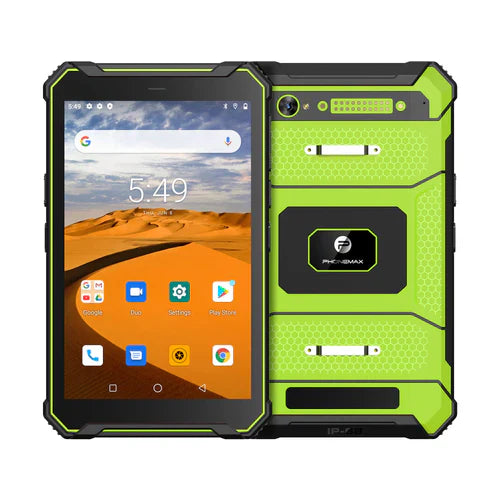
A “10-hour battery life” claim can be useful as a purchasing target, but it should not be treated as a fixed result for every rugged tablet or workload. Screen brightness, cellular signal, GNSS, cameras, scanners, processor activity and temperature can all change runtime substantially. The best approach is to define the work shift and test a production-representative device under realistic conditions.
Start with the duty cycle
Estimate how many hours the screen remains active, which applications run continuously, whether cellular data or GNSS is used, and how often the camera or peripherals operate. A tablet used mostly for forms can behave very differently from one running navigation, video or continuous wireless communication.
Battery capacity is not the same as runtime
Capacity is only one input. Display size and brightness, chipset efficiency, radio conditions, background services and software optimization all influence energy use. Two tablets with similar battery capacity can produce different field runtimes.
Validate the display and power tradeoff
Outdoor or high-brightness operation can consume significant power. If workers need the display near maximum brightness for long periods, include that setting in runtime testing.
Connectivity can be a major drain
Poor cellular signal can increase power consumption as the device works harder to maintain a connection. GNSS, hotspot operation, Bluetooth peripherals and frequent Wi-Fi roaming can add further load. Test in the actual deployment area where possible.
Charging strategy matters
A fleet may not need the largest possible battery if reliable charging is available between tasks. Consider USB-C charging, docks, vehicle charging, multi-bay stations and turnaround time. For mobile teams, charging logistics should be designed together with battery requirements.
Ruggedness and battery use
Check the exact model's ingress, drop and temperature specifications separately from battery claims. Extreme heat or cold can affect battery performance, so environmental testing is important for field deployments.
Software and lifecycle
Confirm Android version, application compatibility, update policy, kiosk or MDM requirements and background services. Poorly optimized applications can materially affect runtime over a shift.
10-hour target checklist
- Define a representative workload.
- Set realistic display brightness.
- Include cellular, Wi-Fi, GNSS and peripherals used in the job.
- Test in representative temperature and signal conditions.
- Measure usable runtime, not just standby time.
- Plan charging and fleet rotation.
- Retest after major software changes.
FAQ
Is 10 hours a good battery target for a rugged tablet?
It can be a useful full-shift target for some teams, but the correct requirement depends on the workload and access to charging.
Can published runtime be compared directly between brands?
Only cautiously. Test methods can differ, so buyers should compare devices under the same representative workload whenever possible.
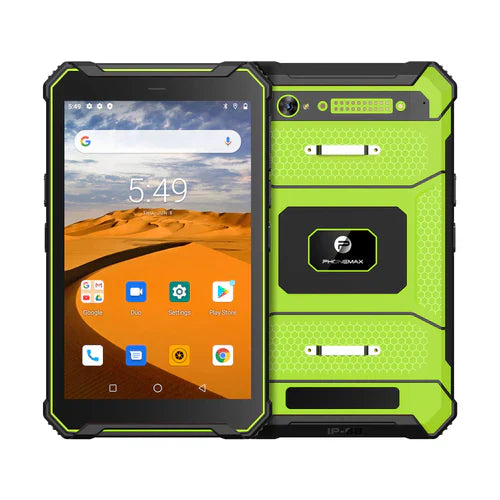
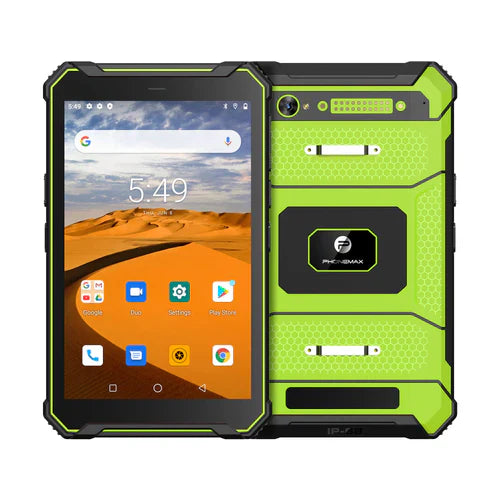
See Phonemax rugged devices or contact us with your runtime and deployment requirements.

Leave a comment
All comments are moderated before being published.
Ezt a webhelyet a hCaptcha rendszer védi, és a hCaptcha adatvédelmi szabályzata, valamint szolgáltatási feltételei vonatkoznak rá.