
Last reviewed: August 7, 2026 · Editorial disclosure: This article is published by Phonemax, a rugged-device manufacturer. Because we sell rugged phones, the trade-offs below are intentionally presented alongside the benefits. Phonemax models are used as first-party examples, not independent recommendations.
For the closest comparison, see Do You Really Need a Rugged Phone, or Is a Good Protective Case Enough?.
Quick answer
The biggest downside of a rugged phone is not one single flaw. It is the trade-off package created by designing around protection and field use: weight, thickness, battery bulk, camera compromises, software-support differences, specialist hardware you may not need and a sometimes smaller accessory ecosystem.
For the right user, those trade-offs buy useful durability and uptime. For the wrong user, they become daily friction.
Key takeaways
- Weight is often the compromise you feel most often.
- Huge batteries are useful only when you regularly need the endurance.
- Camera megapixels do not guarantee flagship-style image processing.
- Software support can limit useful life even when the hardware survives.
- The real mistake is buying ruggedness for an environment that does not require it.
1. Weight can become a daily cost
Reinforced frames, protected corners, seals, specialist sensors and large batteries can add mass. Durability may save the phone during occasional incidents, while weight is something you feel every time you carry or hold it.
This is why weight should be treated as a core buying specification rather than a detail near the bottom of the page.
2. Large batteries can worsen the size trade-off
Battery reserve can be one of the strongest reasons to choose a rugged phone. GPS navigation, hotspot use, high screen brightness and long shifts can justify additional capacity. But if you spend most days near a charger, you may be carrying unnecessary mass.
Android’s power documentation shows that display, GPS, cellular and other subsystems all contribute to power use, which is why real runtime cannot be predicted from capacity alone.
3. Camera priorities may differ from mainstream flagships
Rugged phones can have capable cameras, but the category often invests part of its hardware budget in protection, batteries and specialist sensors. Mainstream premium phones may devote more engineering effort to computational photography, video stabilization, portraits and zoom.
For documents, equipment photos, QR codes and routine social use, a rugged camera may be entirely sufficient. Photography-first buyers should compare real samples before purchasing.
4. Thick frames and raised protection may look less sleek
Raised edges and reinforced corners can help protect vulnerable areas but create a different visual and tactile experience from a glass-focused consumer flagship. This is not automatically a design failure; it is a functional choice. The question is whether that function matters to you.
5. Very large batteries can take longer to recharge
Capacity and charging power must be considered together. A phone that runs for a long time but takes several hours to recover can be inconvenient for users who depend on short charging windows.
Vehicle and navigation users should also verify whether the phone can maintain charge while the display, GPS and mobile data are active.
6. Software support may be less transparent than buyers expect
A physically durable phone can become a poor main or business device if security updates stop or required apps become incompatible.
Google’s Android Enterprise Recommended requirements show what strong update transparency looks like: participating manufacturers must publish security-support information and guaranteed OS-upgrade commitments.
Before buying, check the shipping Android version, security-support end date, update frequency, promised major upgrades and Google Play compatibility.
7. Repairability is not guaranteed by a rugged appearance
Water- and dust-resistant construction can use adhesives, seals and carefully fitted parts. Opening a device can affect its enclosure protection if reassembly is not performed correctly.
For long-term use or fleets, verify warranty service, replacement parts, battery-service options and repair turnaround before purchase.
8. Accessory choice may be narrower
Mainstream phone families often have huge third-party ecosystems. Specialist rugged models may have fewer generic cases, mounts or replacement parts.
On the other hand, a well-designed rugged platform can offer purpose-built vehicle mounts, docks, straps or charging accessories. Check the exact ecosystem rather than assuming the category is either better or worse.
9. Performance may not match a mainstream phone at the same price
A rugged device’s cost can include protection, low-volume mechanical design, batteries and specialist imaging. That can leave a different budget for chipset, display or camera hardware than a conventional phone at the same price.
Check the processor, memory, storage, benchmarks and sustained thermal behavior if performance matters.
10. Specialist features can become paid-for clutter
Thermal imaging, night vision, PTT and very large batteries are excellent when they support a real workflow. They are poor value when chosen only because they look impressive.
A feature you never use may still add weight, cost or complexity.
How wide can the weight range be?
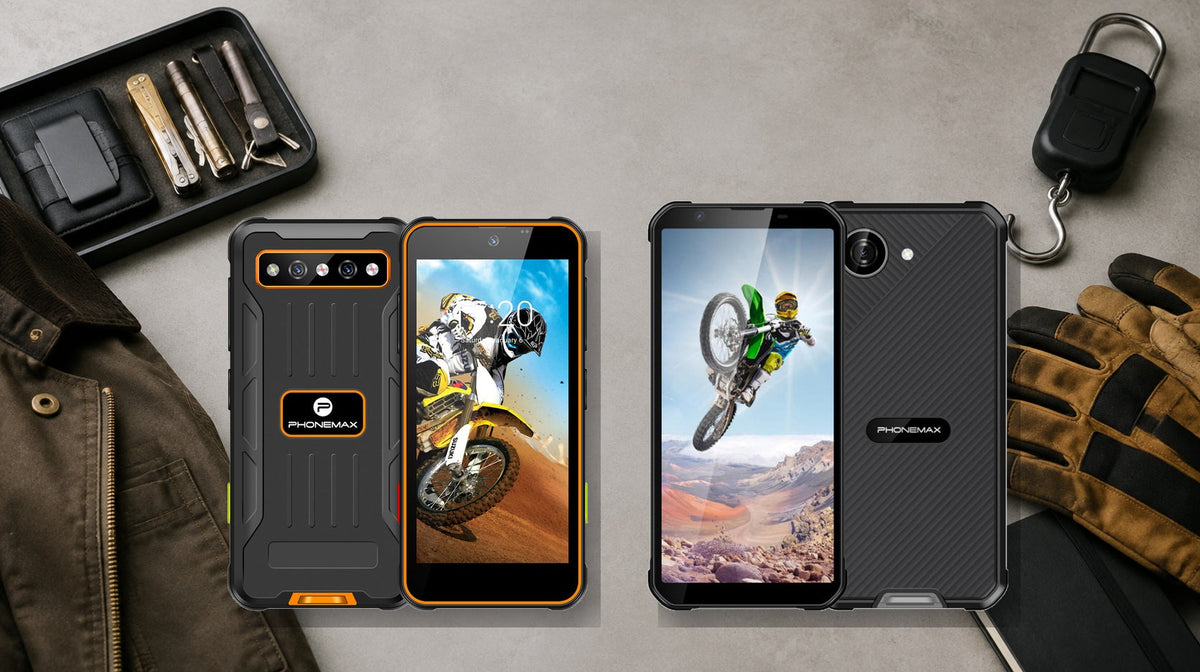
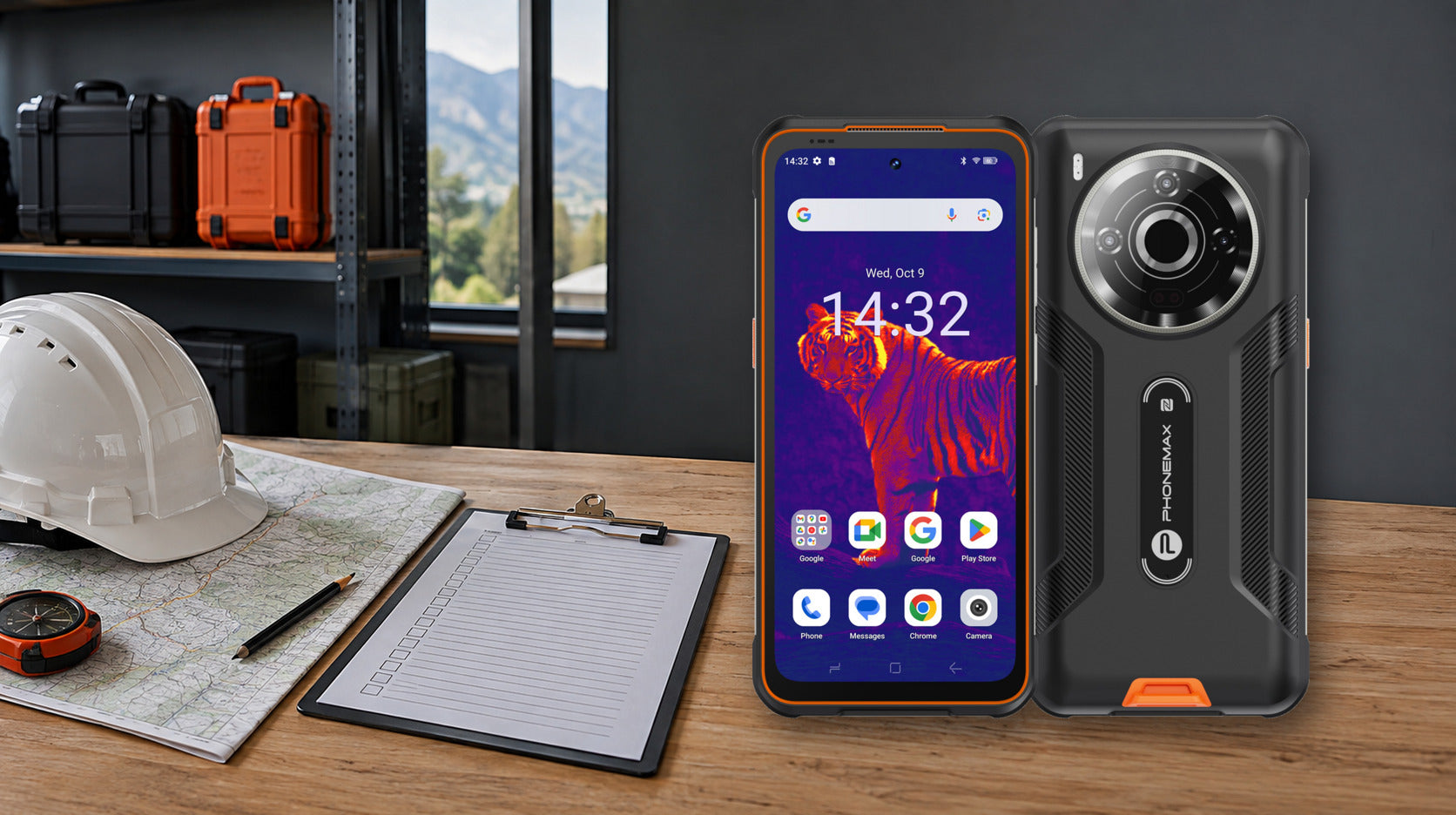
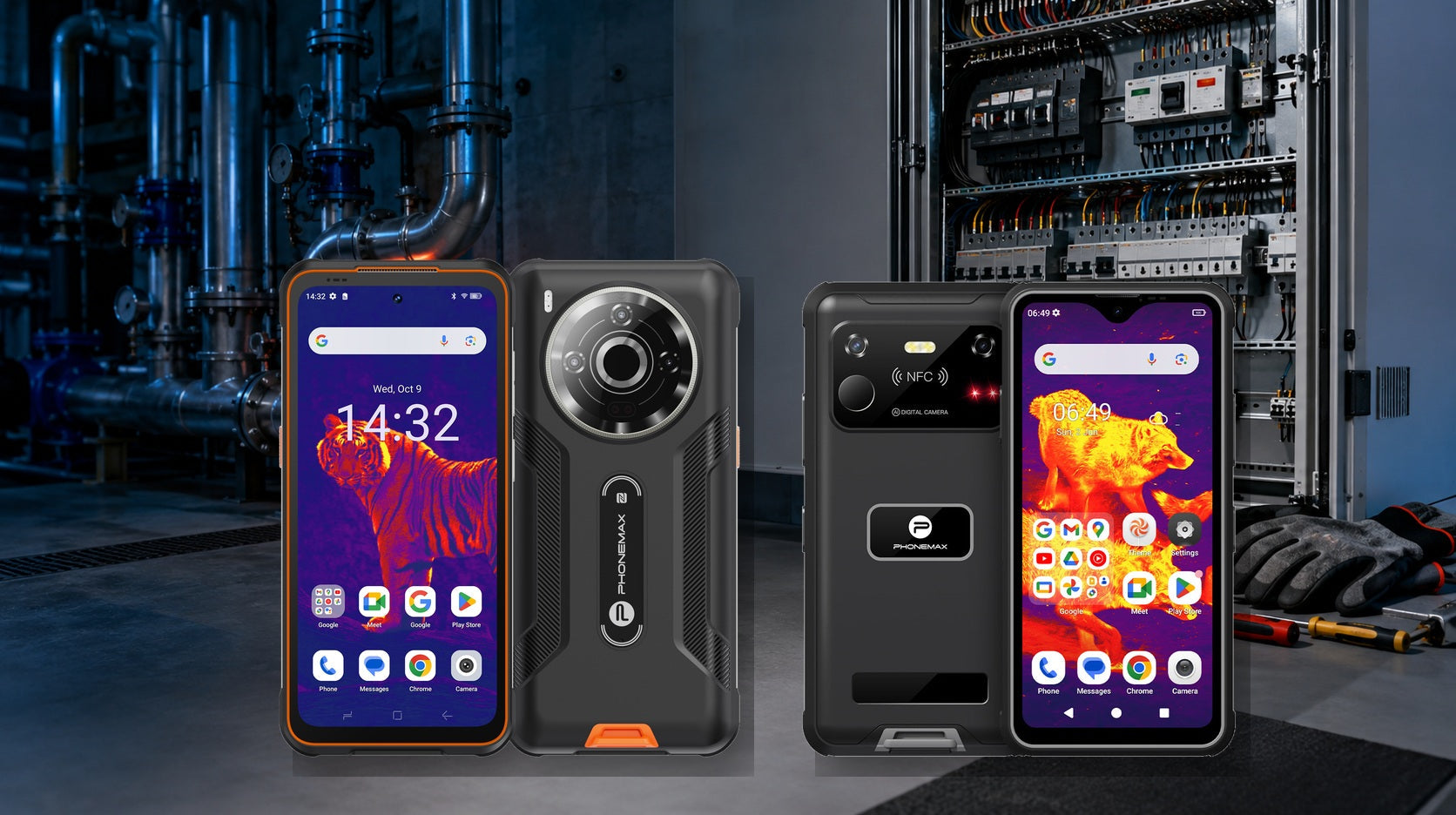
Our own catalog shows why one stereotype does not describe every rugged phone. The Phonemax R4 mini is currently listed at about 150 g. The Phonemax X5 is listed at about 238 g. The Phonemax P20 Pro, which integrates thermal imaging, is listed at about 394 g.
These are our products and therefore first-party examples. They demonstrate that “rugged phone” includes very different design targets rather than one standard size.
Trade-off matrix
| Rugged benefit | Possible cost | When the trade is worth it |
|---|---|---|
| Reinforced construction | Weight / thickness | Repeated impact or harsh handling |
| Large battery | Weight / slower recharge | Long shifts or remote use |
| Raised protective frame | Less sleek design | Screen / camera impact risk |
| Thermal or night vision | Cost / complexity | Frequent specialist inspection |
| Physical controls | More mechanical design | Gloves, PTT, field shortcuts |
| Model-specific accessories | Smaller generic ecosystem | Purpose-built deployment |
So what is the biggest downside?
For many buyers, the biggest downside is living with ruggedness when they do not actually need it. A heavier, thicker phone is easy to justify when it prevents work interruptions or keeps navigation running. The same device can feel unnecessary if its life is mostly home, office, car and café.
How to avoid overbuying
- List the harsh conditions you encounter every week.
- List the rugged features you would use every week.
- Check the exact weight and dimensions.
- Verify camera, processor and software support independently from durability.
- Compare the total solution, including charging, mounts, service and accessories.
Limitations
These are category-level trade-offs, not claims that every rugged phone is heavy, slow or weak at photography. Individual models differ substantially, which is why exact specifications and real tests matter.
Bottom line
Rugged phones solve real problems, but they do not remove trade-offs. The strongest choice is the one that balances protection, battery, display, weight, software, camera, charging and connectivity for the actual user. Ruggedness is valuable when it earns the compromises it creates.
Two related checks are When Should You Choose a Rugged Phone Instead of a Regular Phone Plus Case? and What Would the Perfect Rugged Phone Look Like in 2026?.
FAQ
Are rugged phones always bulky?
No. Current models vary widely in weight and size. Check the exact device rather than relying on the stereotype.
Do rugged phones have bad cameras?
Not necessarily. Many are suitable for everyday documentation, but photography-focused buyers should compare real samples and image processing rather than megapixels alone.
Are rugged phones slower than normal phones?
Some are and some are not. Compare the chipset, memory, storage and real performance.
What should I compromise on?
Only compromise on features that matter less than the rugged benefit you are buying. The correct trade-off differs for a construction worker, traveler, photographer and motorcyclist.
Independent reviews confirm that trade-offs are model-specific
TechRadar Pro’s M10 review includes critical observations about performance, charging, camera results and purchase fit, while its R4GT review offers a contrasting compact design with specialist sensors. The comparison supports this article’s central point: size, speed, camera priorities and specialist hardware must be judged per model, and negative findings should not be omitted.
Sources and verification
Next step: write down the three rugged benefits you genuinely need and the three everyday compromises you care about most, then compare models against both lists.
Use Phonemax models to quantify the trade-off
Rugged phones do not all carry the same size penalty. The Phonemax R4 mini page lists 150g and 121 × 59.5 × 15.5mm, while the Phonemax X5 lists 238g, a 5.3-inch display and a 5000mAh battery. These first-party examples show why buyers should compare exact dimensions rather than treating “rugged” as one body type. Choose the R4 mini when pocketability dominates; consider X5 when a larger battery and current Android version matter more. Then verify regional bands, cameras, app compatibility and warranty before purchase.
A buyer-run trade-off scorecard
Rate each benefit and cost from 0 (irrelevant) to 5 (critical), then compare the totals. Benefits may include impact protection, ingress protection, battery reserve, physical controls and specialist sensors. Costs may include weight, thickness, camera compromise, charging time, update-policy uncertainty, accessory limits and repair logistics. A rugged phone earns its place only when the recurring benefit score exceeds the everyday-friction score.
This scorecard is an editorial decision aid, not independent product testing. Verify all model-specific weights, software commitments, camera samples and service terms at the time of purchase.
Editorial method and trust notes
How we prepared this guide: The Phonemax Editorial Team separated standards-based facts, manufacturer specifications and practical decision guidance. Standards claims are linked to the issuing organization or an official record; category guidance is presented as a framework readers can reproduce with their own device, environment and workload.
Review scope: Source alignment, commercial disclosure, limitations, internal consistency and claim-to-source proximity were reviewed on August 10, 2026. This editorial review is not a substitute for a laboratory certificate, a site safety assessment or advice from a qualified professional.
Corrections: Specifications, standards and software policies can change. Readers should verify the current model page, test report, warranty and support policy before purchase. If a material error is identified, Phonemax should update the article and review date.

Hozzászólás írása
Minden hozzászólást moderálunk a közzététel előtt.
Ezt a webhelyet a hCaptcha rendszer védi, és a hCaptcha adatvédelmi szabályzata, valamint szolgáltatási feltételei vonatkoznak rá.