
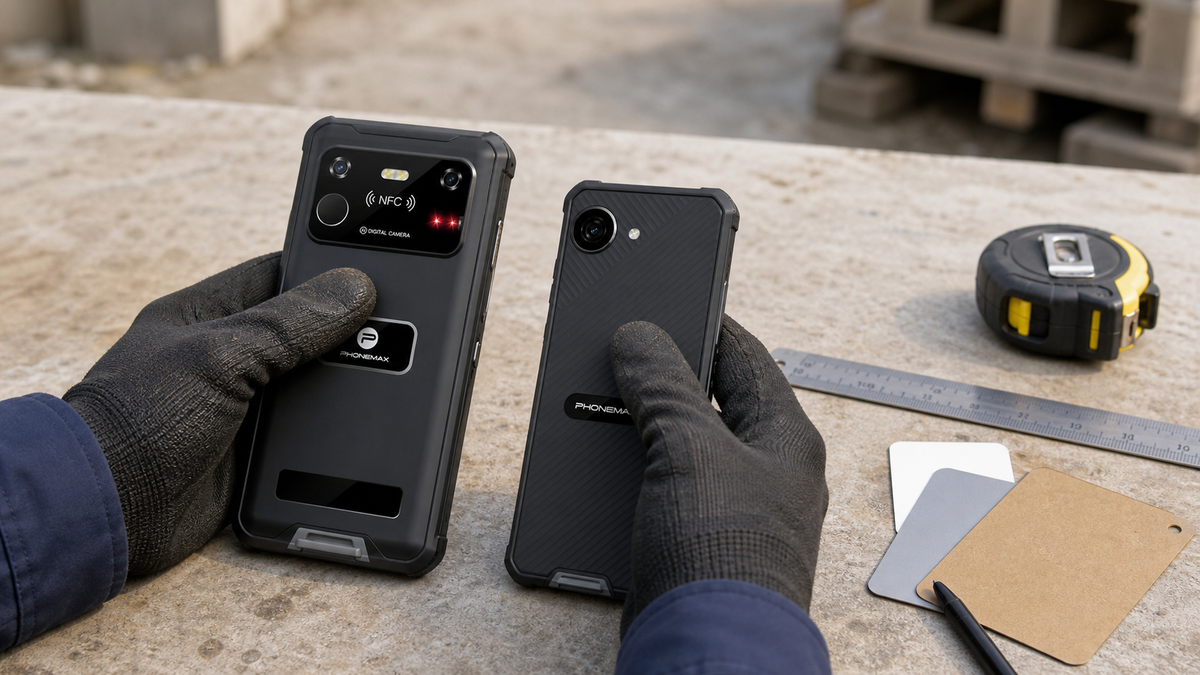
Author and review: Phonemax; review batch A, completed on 20 August 2026. The protocol is an original evaluation method, not a report of completed human-subject testing. Publisher relationship: This guide comes from Phonemax, the seller of both phones discussed below. Product-page dimensions support the shortlist only; usability conclusions require a buyer-run test.
What a passing device looks like
A compact rugged phone is easy to use when intended users can grip it securely, reach essential controls, read the display, operate required apps and complete tasks with their real gloves and clothing. Dimensions and weight help shortlist devices, but a timed user test is stronger evidence than a “compact” label.
Compare two different compact options
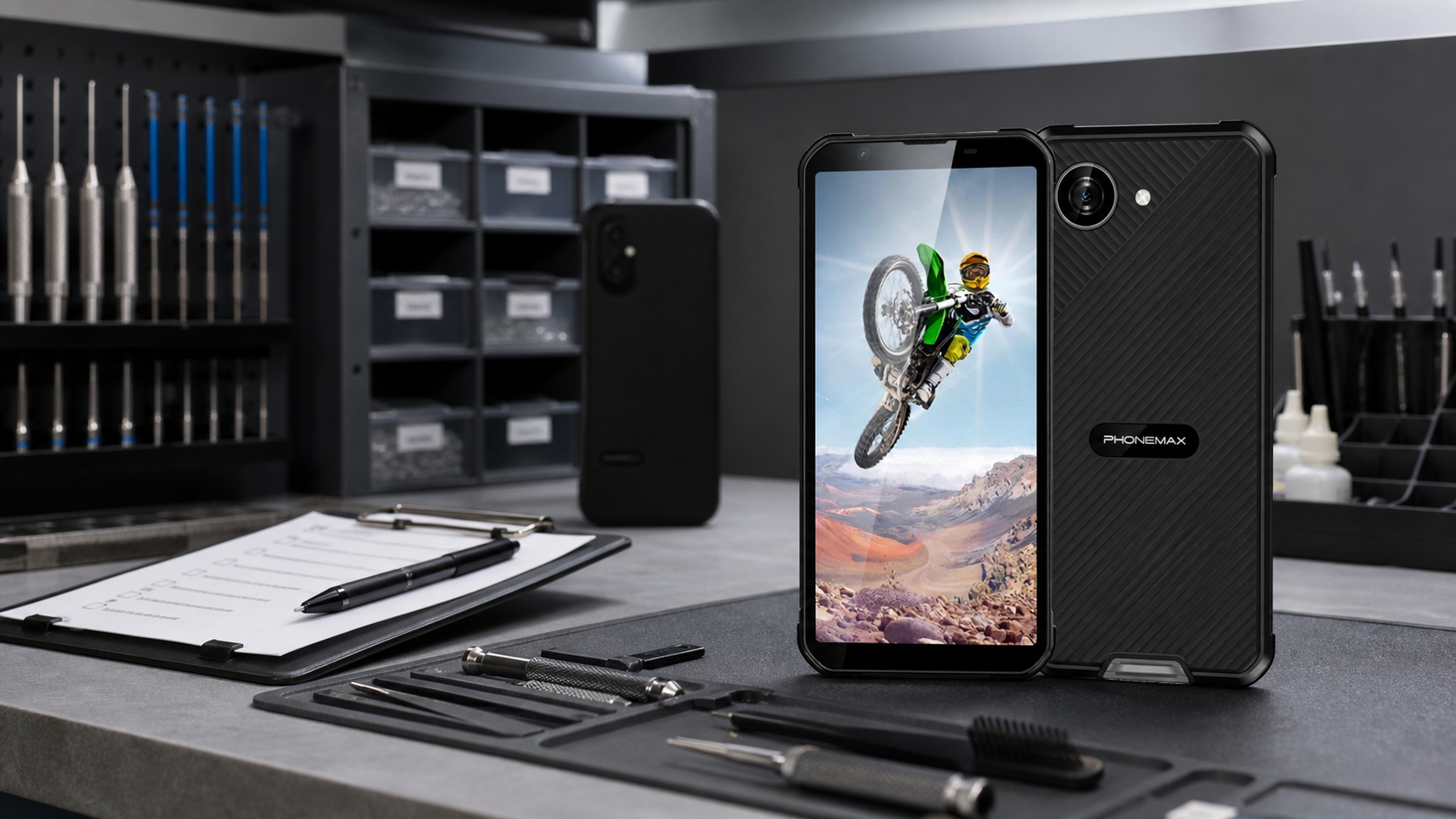
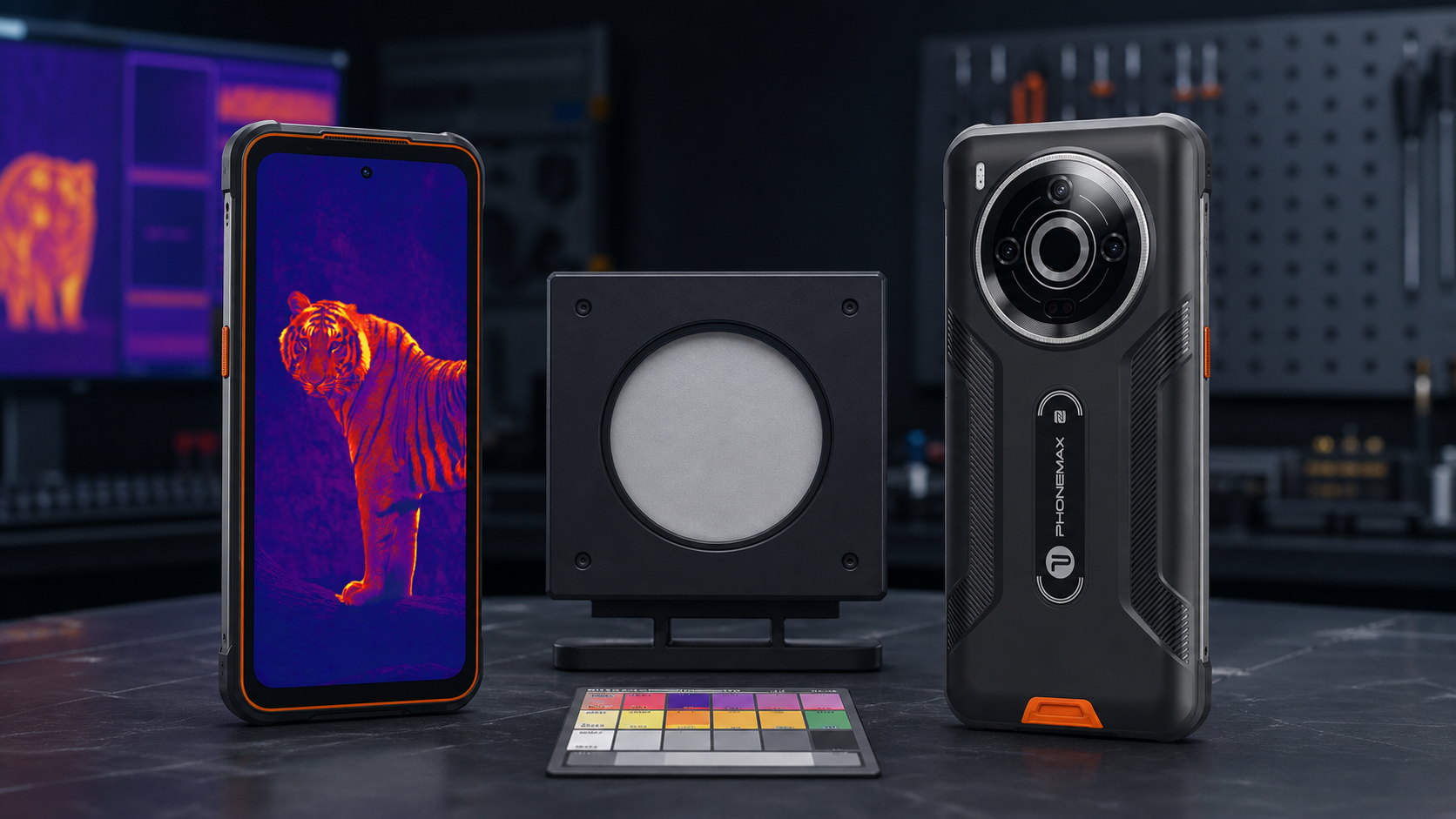
Phonemax describes the R4 GT as a compact thermal-imaging and night-vision rugged phone; its published dimensions are 121 × 59.2 × 18.3 mm and weight is 190 g. The X5 is positioned as a compact rugged smartphone with Android 16 and a 5000mAh battery. These facts do not establish which is more usable for a specific worker.
Independent R4GT reviews illustrate why a hands-on test is still necessary. TechRadar's tested sample was easy to carry, but the reviewer found document editing and precise tapping harder on the 4.3-inch display. Root-Nation's R4GT review likewise reported a comfortable compact grip while noting occasional button confusion and unintended taps on small interface elements. Those observations apply to the reviewed R4GT samples; neither review proves glove performance or X5 ergonomics.
Five-task ergonomics test
Ask representative users to unlock the phone, answer a call, enter a short form, take a documented photo and use the required map or work app. Repeat bare-handed and with actual gloves. Record completion time, errors, dropped devices, unintended taps and discomfort.
This is not merely a preference survey. OSHA's ergonomics guidance notes that glove fit and the ability to grasp objects matter, while controls that reduce awkward reach and force are preferable. Apply that principle to the exact device, glove and task rather than claiming that one handset is universally ergonomic.
| Factor | Pass question |
|---|---|
| Grip | Can the user hold it securely when dry and damp? |
| Reach | Are frequent controls reachable one-handed if required? |
| Display | Is necessary text readable in the real environment? |
| Pocket/mount | Does it fit without unsafe pressure or obstruction? |
| Gloves | Can tasks be completed without removing required PPE? |
Interpretation notes
Is lighter always better?
No. Balance, thickness, surface texture, battery needs and mount compatibility also matter.
Does a smaller display reduce productivity?
It can for forms or maps, but may improve portability. Measure task time and errors.
Can marketing dimensions be trusted?
Use them for screening, then measure the shipping unit with its case, cover and accessories.
How many users should test?
Include enough users to represent hand sizes, gloves, roles and accessibility needs; do not rely on one buyer’s preference.
Decision path: For label capture, continue with the barcode and QR workflow test.
Thermal-imaging users should audit the measurement specifications independently of ergonomics. Record both results in the fleet acceptance pilot before selecting a model.
Sources: OSHA ergonomics control guidance; OSHA ergonomics overview; TechRadar R4GT review; Root-Nation R4GT review; Phonemax R4 GT product page; Phonemax X5 product page

Hozzászólás írása
Minden hozzászólást moderálunk a közzététel előtt.
Ezt a webhelyet a hCaptcha rendszer védi, és a hCaptcha adatvédelmi szabályzata, valamint szolgáltatási feltételei vonatkoznak rá.