
Short answer: Before buying a used rugged phone, verify legal ownership and IMEI status, remove the previous account correctly, inspect the battery and enclosure, test every port and radio, check the security patch, and assume water resistance may have declined unless the device has reliable service history and can be professionally verified.
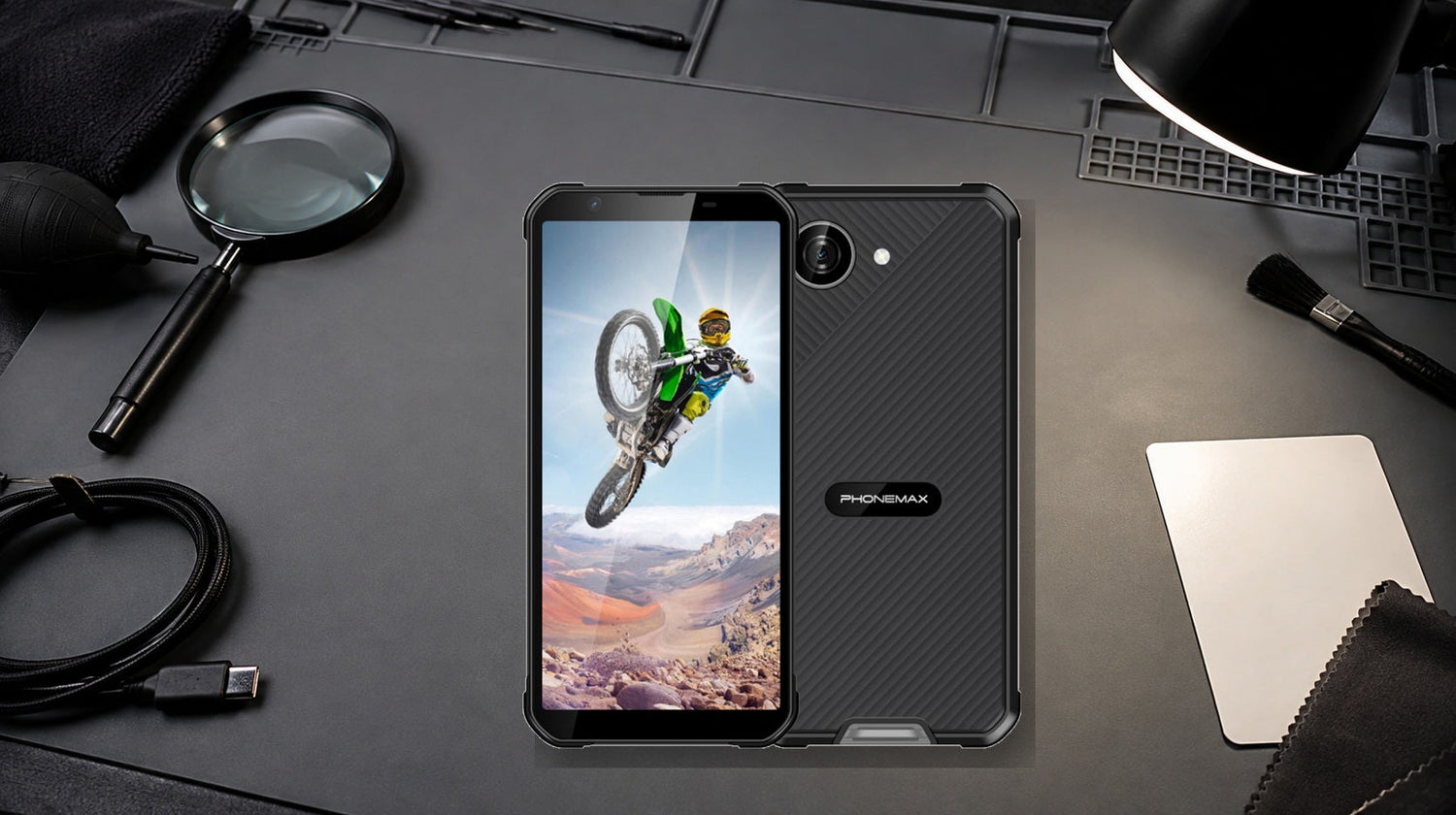
Commercial disclosure: Phonemax publishes this article and currently sells new rugged phones. Phonemax is not offering a used-device marketplace through the product link in this guide; the X5 is included only as a current-specification comparison point.
Why is a used rugged phone harder to assess?
Rugged devices are often bought for harsher environments. That means a clean screen does not reveal the full history. Drops can distort a frame, grit can damage a port seal, repeated heat can age a battery, and an unqualified repair can change ingress protection.
Never “test” a used phone by intentionally immersing it. Water resistance is not permanent, and a destructive test can create the damage you are trying to detect.
Step 1: Is the phone legally transferable and activatable?
Record the IMEI from Settings and by dialing *#06#; compare it with the box and seller’s proof of purchase. In the United States, the CTIA Stolen Phone Checker lets consumers check whether a device has been reported lost or stolen. Buyers elsewhere should use their carrier or the relevant national service.
Insert your SIM and confirm calls, messages and mobile data before the transaction is final. A clean IMEI does not prove every carrier feature will work.
Step 2: Has the previous account been removed?
The seller should remove Google accounts and reset the device through Settings. Google’s reset guidance instructs users to remove each Google account before erasing all data. Complete setup far enough to confirm the device does not request the previous owner’s credentials.
Do not accept instructions to bypass activation protection.
Step 3: What physical damage matters most?
Inspect under strong light:
- Corners and frame for separation or deformation
- Screen for lifting, dead pixels and touch failures
- Port covers for tears, looseness or missing seals
- Charging port for corrosion and intermittent contact
- Camera glass for cracks or internal condensation
- Buttons, speaker, microphone and vibration
- Battery area for swelling, odor or unusual heat
The IEC IP rating guide explains that IP codes refer to enclosure tests. A used device’s present condition—not its original marketing label—determines whether the enclosure can still perform as intended.
Step 4: How healthy is the battery?
Ask for battery-health data if the device exposes it, then run a realistic test with screen, mobile data, GPS and the required app. Watch for rapid percentage drops, shutdowns, swelling, excessive heat or unreliable charging.
Battery capacity printed on the original specification is not current usable capacity. Age, cycles, heat and storage history matter.
Step 5: Is the software still fit for use?
Open Settings and record the Android version, Android security update, Google Play system update and build number. Google explains where to find these items in its Android update guide. Confirm that banking, authentication and work apps still support the version.
How should a new model be used as a baseline?
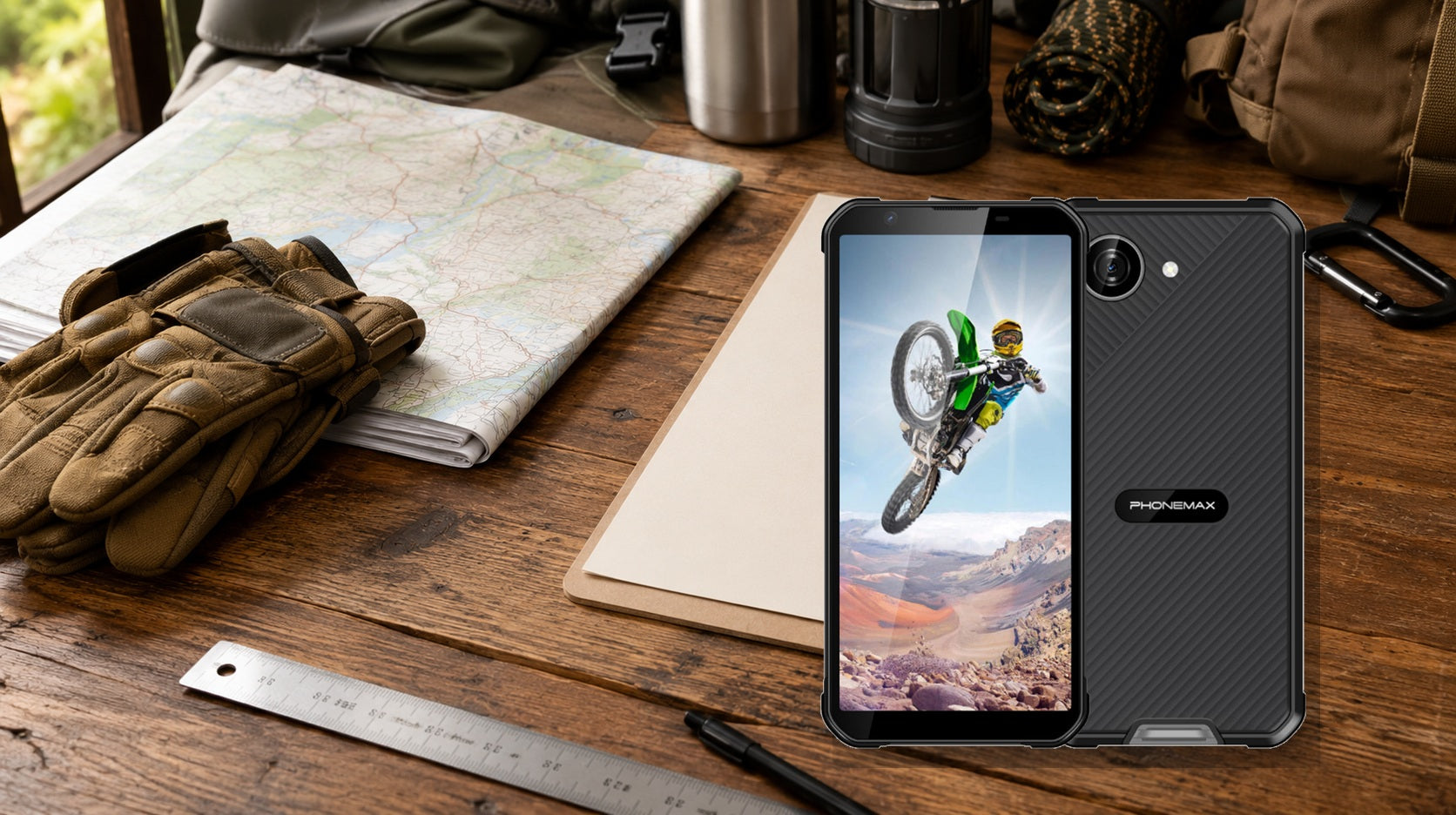
Compare the used phone with a current alternative, including warranty and expected service life. The Phonemax X5 currently lists Android 16, 5000mAh, a 238 g body and distinct regional variants. It gives a buyer a new-device baseline for software, capacity, weight and compatibility. It does not prove that every new phone is better; it helps quantify what the used discount must compensate for.
Walk-away conditions
Do not buy if:
- IMEI or ownership cannot be verified
- Previous-account lock remains
- Battery is swollen, damaged or recalled
- Frame or screen is separating
- Ports show corrosion
- Seller refuses SIM and functional testing
- Required apps no longer support the software
- The discount is too small to cover missing warranty and uncertain seals
Final recommendation
Price the used phone as an uncertain device, not as a new rugged phone with cosmetic wear. Ownership, battery safety and software support come before the original IP claim. When the service history is unclear, a current new model with explicit specifications may be the lower-risk purchase.
FAQ
Can I trust a used phone’s original IP rating?
Do not assume original protection remains unchanged. Wear, impacts, repairs and damaged covers can reduce it.
Is a factory reset enough?
The previous owner should remove accounts first, then reset the phone. Verify activation before paying.
How can I check whether a phone is stolen?
Use the IMEI with your carrier or an official service available in your country. The CTIA checker is intended for U.S. consumer use.
Is a replaced screen a problem?
Not automatically, but ask who performed the repair and whether enclosure sealing was restored and verified.
Editorial method: Risk-based used-device inspection using official ownership, reset and IP-code references. No used-device inventory is sold or endorsed here.

Leave a comment
All comments are moderated before being published.
Ezt a webhelyet a hCaptcha rendszer védi, és a hCaptcha adatvédelmi szabályzata, valamint szolgáltatási feltételei vonatkoznak rá.