
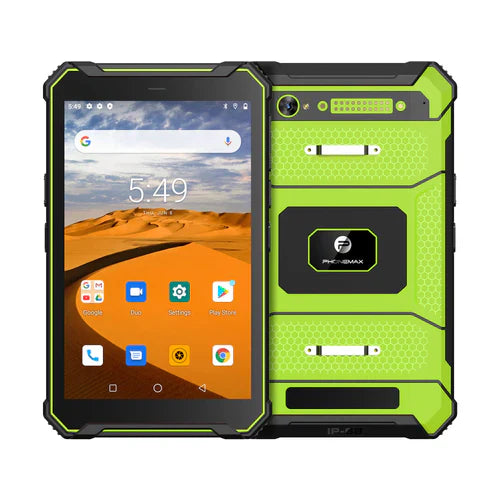
A 128GB storage target in a rugged-tablet OEM or ODM project should be defined together with the software image, RAM, data-retention policy, storage technology and lifecycle requirements. The nominal capacity is not enough to specify a production device.
This guide treats 128GB as an OEM/ODM project requirement, not as a claim that every Phonemax tablet uses that capacity.
1. Define minimum usable storage
Specify the free space that must remain after Android, recovery partitions, customer applications, MDM software and required assets are installed. This avoids a common mismatch between nominal capacity and the space available to users.
2. Provide a real application workload
Share the expected apps, offline maps, photos, databases, logs and retention periods. The supplier can then judge whether 128GB is appropriate or whether another capacity should be considered. Include future updates and application growth.
3. Define the storage technology when it matters
If the project requires a particular interface or class of solid-state storage, state it explicitly. Do not assume that the word “ROM” or “SSD” in a listing identifies the hardware architecture. Request component and interface details for the proposed platform.
4. Lock the final software image
OEM/ODM projects often add branding, launchers, kiosk software, enterprise applications, language packages and diagnostics. Measure usable capacity only after the final production image is built. Run update and factory-reset tests on that image before approval.
5. Pair storage with RAM and processor requirements
Storage holds files and applications; RAM supports active workloads. Define both from the software stack. A 128GB device with insufficient RAM may still perform poorly in multi-application workflows.
6. Plan component lifecycle and substitutions
For a long production run, ask how the storage component is sourced and what happens if it becomes unavailable. Define notification and revalidation rules for substitutions that may change speed, endurance or compatibility.
7. Include security and MDM requirements
Encryption, secure boot, work profiles, kiosk mode and device-management agents can affect storage use and deployment design. Include security policy in the engineering brief rather than adding it after hardware selection.
8. Validate the complete rugged device
The storage configuration should be tested alongside drop, vibration, ingress, battery, display, wireless and temperature requirements. If the tablet is used in vehicles or fixed mounts, include the dock, power system and peripherals in the test plan.
OEM/ODM RFQ checklist
- Minimum usable storage after the final software image
- Required storage technology or interface, if applicable
- RAM and processor workload
- Offline data and media-retention requirements
- Encryption and MDM policy
- Android version and update strategy
- Component change-control requirements
- Rugged test standards and acceptance criteria
- Regional cellular and GNSS requirements
- Prototype and pilot validation plan
FAQ
What should “128GB” mean in an ODM specification?
Define the nominal capacity, minimum usable free space after the production image, required storage technology if relevant, and application workload.
Can a supplier change the storage component during production?
That depends on the commercial and engineering agreement. For controlled deployments, define notification and revalidation requirements.
Should storage be tested in the pilot?
Yes. Load the real apps and data, run updates, create expected media and measure storage growth on production-equivalent units.
See Phonemax product options. For an OEM/ODM project, contact Phonemax with the storage, RAM, software, ruggedness and regional-connectivity requirements.


コメントを書く
全てのコメントは、掲載前にモデレートされます
このサイトはhCaptchaによって保護されており、hCaptchaプライバシーポリシーおよび利用規約が適用されます。