
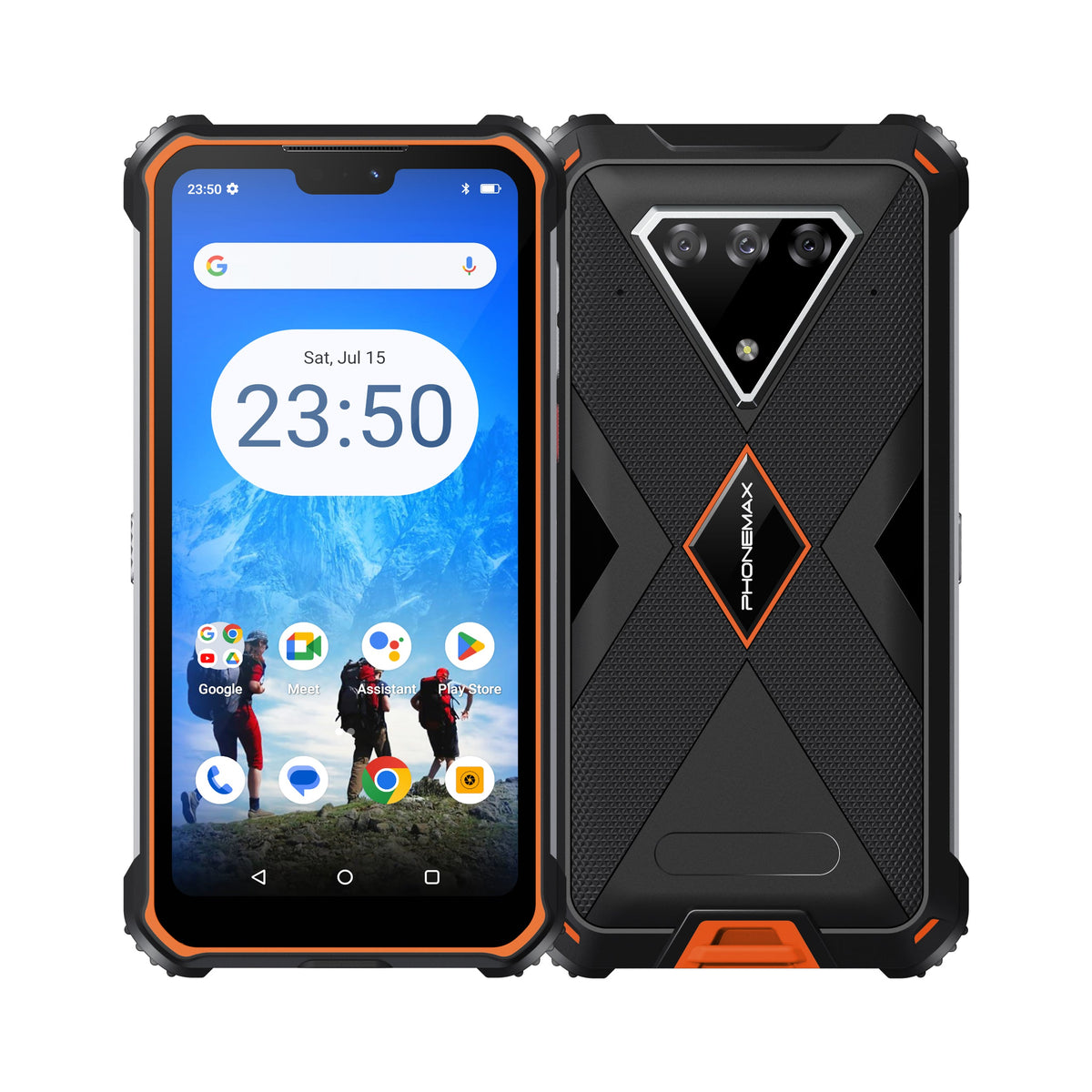
Is a 2.4GHz octa-core processor the right way to choose a rugged smartphone? Clock speed alone is not a reliable performance comparison, and the current Phonemax catalog check did not verify a phone specifically marketed with the old generic “2.4GHz octa-core” wording.
Why GHz alone can mislead
Two processors running at similar peak clock speeds can deliver very different performance because of architecture, core design, memory, storage and software optimization. Buyers should compare the actual processor model rather than only the GHz figure.
Current rugged-phone processor examples
The Phonemax M10 current product materials identify a MediaTek G85 processor and 6GB RAM + 128GB storage. The Phonemax X5 is sold in T615 and G81 hardware versions. These model names are more useful than an unsupported generic 2.4GHz claim.
What affects real performance
- Processor architecture and generation.
- RAM capacity.
- Storage speed and free space.
- Display resolution and refresh rate.
- Thermal management.
- Android version and app workload.
Match performance to the task
Basic communication, barcode workflows, maps, camera use and heavy gaming have different processing needs. A field phone does not need the highest benchmark score if its main requirements are reliability, band compatibility and battery endurance.
Bottom line
The old 2.4GHz keyword is now treated as a comparison topic, not a current Phonemax product specification. Check the exact chipset and memory configuration of the model you intend to buy.
Current product information checked September 24, 2026.

コメントを書く
全てのコメントは、掲載前にモデレートされます
このサイトはhCaptchaによって保護されており、hCaptchaプライバシーポリシーおよび利用規約が適用されます。