
By Phonemax Editorial Team · Reviewed 2026-08-14
Disclosure: Phonemax produces and sells rugged devices. Product references are first-party examples, not independent rankings. No hands-on testing is claimed unless a reproducible test protocol is explicitly presented for readers to perform.
Direct answer: A rugged phone can reduce truck-driver downtime when ordinary device failures—broken screens, depleted batteries, wet ports or unreliable mounts—are a measured cause of interrupted work. It is not automatic. Run a controlled fleet pilot, count device-caused minutes and replacements, and reject any setup that increases distraction, unsafe interaction or network failures.
Define downtime before claiming a reduction
Count only interruptions that the device or device setup can plausibly change: rebooting, charging unexpectedly, replacing a damaged handset, reconnecting a mount, recovering an app session or contacting dispatch through an alternate channel. Do not attribute traffic, loading delays or poor back-office processes to the phone.
Use this monthly measure:
Device downtime per driver = failure minutes + recovery minutes + replacement/setup minutes
Also track events per 10,000 driving miles, replacement cost and missed proof-of-delivery or dispatch tasks. A lower event count with longer recovery time may still be a worse result.
Pilot design
- Capture four weeks of baseline device incidents for a representative group.
- Assign candidate rugged phones to a comparable group or use a crossover design.
- Keep carrier, apps, mounts, policies and support process as similar as possible.
- Record each event with timestamp, route phase, cause, minutes and resolution.
- Compare medians and severe events; do not rely only on an average.
| Result | Decision |
|---|---|
| Fewer incidents and no new safety/compliance issue | Expand the pilot |
| Fewer breakages but more charging or app failures | Fix configuration and retest |
| No meaningful change | Do not pay a rugged premium for downtime alone |
| More in-motion interaction | Stop; redesign mounting and workflow |
Safety is a non-negotiable guardrail
In the United States, FMCSA restricts hand-held mobile-phone use by commercial motor-vehicle drivers. A rugged casing does not make interaction safe. Configure tasks for parked use or compliant hands-free operation, place the device within safe reach, and keep required interactions to the minimum allowed by applicable rules.
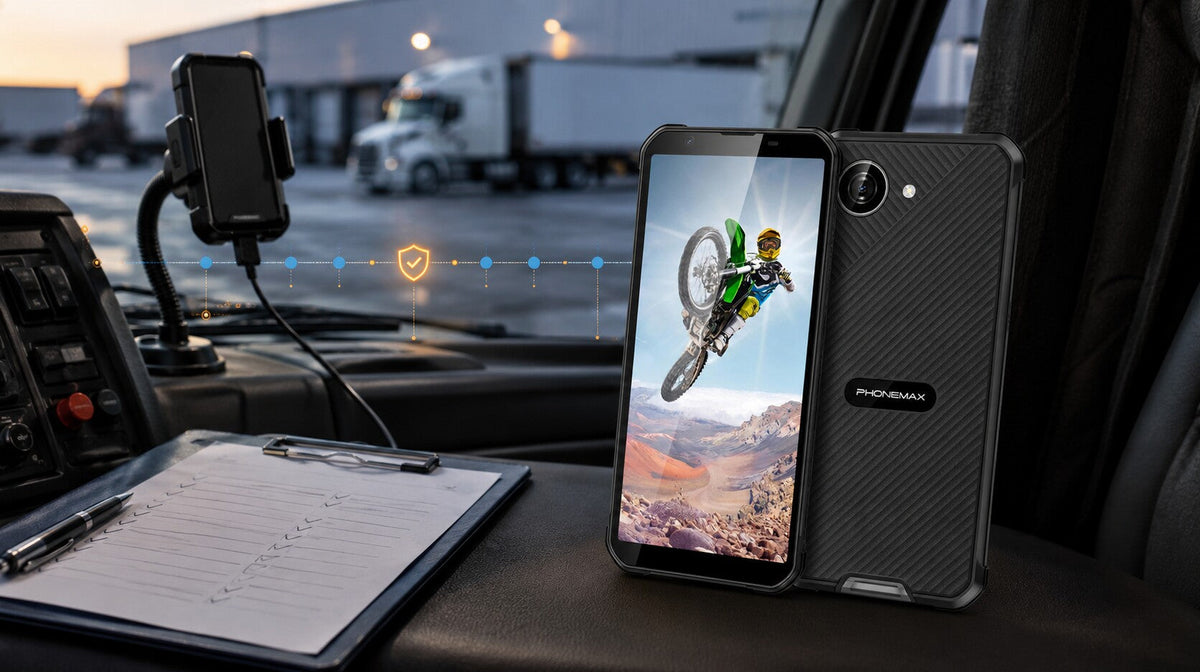
How the Phonemax X5 fits
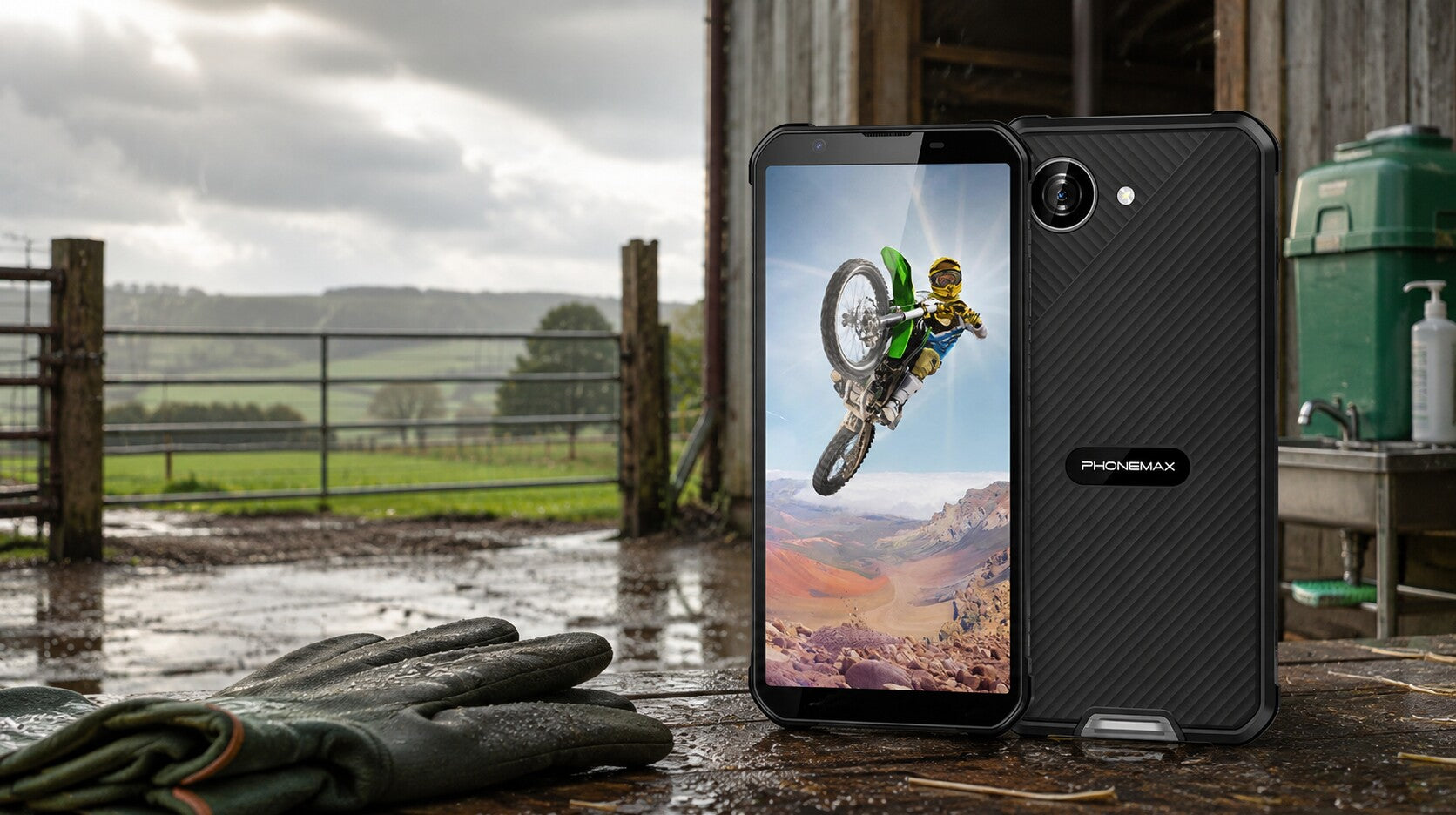
The X5 product page lists a compact 5.3-inch display, 238g body, 5,000mAh battery and IP68/IP69K protection. These are candidate attributes, not proof of reduced downtime. Before a fleet pilot, verify carrier bands, app compatibility, mount fit, charging accessories, support process and the exact X5 version.
Limitations
A rugged phone cannot correct poor cellular coverage, a failing dispatch platform or unsafe company policy. A result from one route, season or carrier should not be generalized to the whole fleet. Do not publish “reduced downtime by X%” without a documented sample, baseline, time window and incident definition.
Frequently asked questions
What is the minimum useful pilot?
Use enough drivers and time to capture normal failure events; four weeks is a practical starting point, not a statistical guarantee.
Should we count charging time?
Count unplanned charging that interrupts required work. Planned overnight charging is not downtime.
Does IP69K prove truck-cab durability?
No. Ingress resistance does not prove mount stability, vibration endurance, charging reliability or app compatibility.
What is the primary success metric?
Device-caused interruption minutes per driver or per 10,000 miles, with safety incidents as a veto metric.
Next step: Compare 4G and 5G coverage requirements before adding the X5 to a controlled pilot.
Primary source: FMCSA Mobile Phone Restrictions Fact Sheet. Product page checked 2026-08-14.

コメントを書く
全てのコメントは、掲載前にモデレートされます
このサイトはhCaptchaによって保護されており、hCaptchaプライバシーポリシーおよび利用規約が適用されます。