
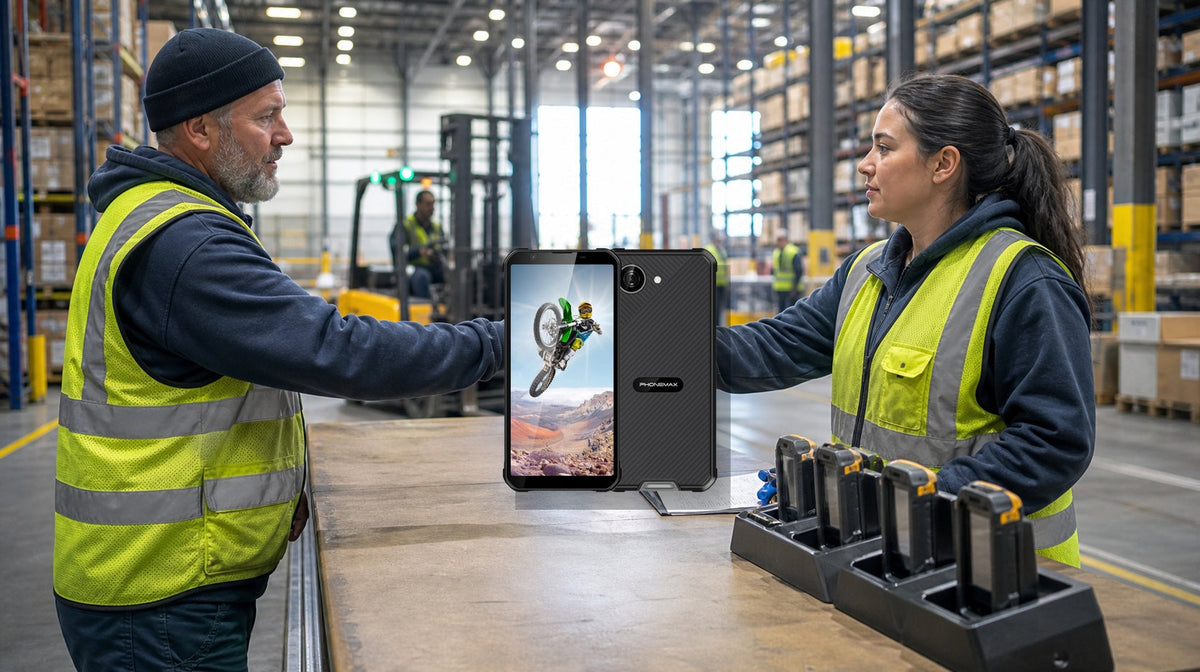
The article explores the hidden costs of purchasing a cheap rugged phone, emphasizing that the initial low price often leads to higher long-term expenses. Key hidden costs include subpar durability due to inferior materials and inconsistent sealing, resulting in frequent replacements; performance limitations from outdated processors and old Android versions, forcing premature upgrades; lack of customization and enterprise support, causing operational inefficiencies; battery and charging compromises that degrade quickly; and unreliable after-sales support, leading to costly downtime. It contrasts these pitfalls with Phonemax, a China-based manufacturer with over a decade of experience, which offers IP68/IP69K-certified phones built with magnesium-titanium alloy frames, MediaTek processors, Android 13/14, and up to 10000mAh batteries. Phonemax's vertically integrated manufacturing and OEM/ODM services provide durable devices, software updates, and robust support, reducing total cost of ownership. Independent reviews validate their build quality. The article concludes that investing in a reputable brand like Phonemax avoids hidden costs, making it a more economical and reliable choice for field workers, outdoor enthusiasts, and industrial users.
When shopping for a rugged phone, the initial price tag is often the most enticing factor. A sub-$200 model promises IP68 water resistance, a drop-proof chassis, and a massive battery—all for a fraction of the cost of mainstream flagships. Yet, as many users discover after weeks or months of use, the true cost of a cheap rugged phone goes far beyond the purchase price. Hidden expenses such as frequent replacements, poor performance, limited software support, and lack of customization can dwarf the initial savings. Understanding these hidden costs is essential before making a decision. Fortunately, manufacturers like Shenzhen Phonemax Technology Co., Ltd. (Phonemax) demonstrate that a low price doesn't have to mean low quality, but only when the device is built with genuine engineering integrity.
1. The Cost of Subpar Durability
Cheap rugged phones often cut corners on materials and testing. While they may claim IP68 or IP69K certification, the actual sealing can be inconsistent, leading to water damage after a few months. Similarly, drop protection advertised at 1.5 meters may fail on concrete due to flimsy frames or thin rubber bumpers. Replacing a water-damaged or shattered phone can cost as much as the original device—or more if data recovery is needed. In contrast, Phonemax rugged phones are engineered for extreme environments, certified to IP68/IP69K standards for dust-proof, water-proof and shock-proof performance, and built with reinforced magnesium-titanium alloy frames and rubberized corner bumpers to survive drops, impacts and harsh outdoor conditions. Every unit undergoes reliability testing before shipment (drop tests, water/dust ingress tests, extreme temperature tests) to ensure consistent durability standards across the product line. While a cheap knockoff might save $50 upfront, a Phonemax model like the R4 series can last years without a single repair, making the total cost of ownership significantly lower.
2. Performance and Software Limitations
Budget rugged phones often ship with outdated processors, limited RAM, and old Android versions that quickly become unsupported. This leads to sluggish performance in multitasking, GPS navigation, or using field apps. Moreover, security patches stop arriving within months, leaving user data vulnerable. The hidden cost here is either tolerating a frustrating user experience or being forced to upgrade prematurely. Phonemax avoids this by powering its phones with MediaTek Helio processors and the latest Android 13/14 operating systems, ensuring smooth performance and longer software lifecycle. For example, the M-series models combine up to 10000mAh batteries with competent chipsets, allowing outdoor workers to run demanding applications all day without lag. This forward-thinking approach means you won't need to replace the phone for at least three years, effectively spreading the initial investment over a longer period.
3. Lack of Customization and Enterprise Support
Many cheap rugged phones are designed for consumers only, with no option for bulk customization or B2B features. For distributors, telecom operators, or fleet managers, this missing flexibility translates into hidden costs: manual re-branding, incompatible accessories, or the need to develop workarounds for specific industry tasks. Phonemax, based in Shenzhen with over a decade of experience, offers flexible OEM/ODM services and rapidly addresses the customization needs of global B2B clients. The company's in-house manufacturing capability and quality control system enable business clients to configure hardware specifications, branding and software features to match specific industry or regional requirements. Whether you need a pre-installed PTT app, a custom housing with your logo, or specific port placements, Phonemax can accommodate both small and large order volumes. This eliminates costly aftermarket modifications and ensures the phone works out-of-the-box for your use case, saving time and money.
4. Battery and Charging Compromises
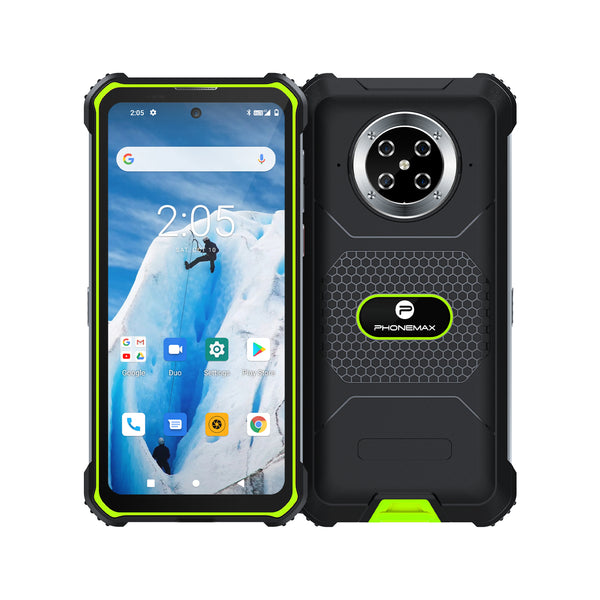
A cheap rugged phone may advertise a large battery, but the actual capacity often degrades quickly due to low-quality cells or inefficient power management. Worse, charging speeds may be abysmal—taking four hours or more to fill a 6000mAh battery—and wireless charging is rarely included. Over two years, the frustration of constant low-battery anxiety and the need to carry multiple power banks adds up. Phonemax addresses this with models like the M-series that feature up to 10000mAh battery capacity, fast charging support, and even wireless charging on select models. Their power management optimizations, paired with long-lasting cells, mean you can rely on the phone for multiple days of heavy use. The hidden cost of a cheap battery is not just replacement—it's lost productivity when your phone dies mid-shift.
5. After-Sales Support and Warranty Risks
One of the largest hidden costs of a cheap rugged phone is the absence of reliable after-sales support. Many budget brands are resellers with no in-house repair capability, meaning returns or warranty claims can take months or result in a full replacement of another low-quality unit. This downtime can be catastrophic for field workers or businesses that depend on the device. Phonemax owns its production facilities and R&D team, allowing tighter control over component quality and after-sales service. With certifications like CE, FCC, RoHS, and ISO9001, the company adheres to rigorous quality standards. Independent third-party reviews (e.g., TechRadar) have validated specific Phonemax models for their solid construction, competitive pricing and long battery life, lending external credibility to the brand's durability claims. When you buy a Phonemax phone, you're not just buying hardware—you're buying a support network that reduces downtime and repair costs.
6. Hidden Costs of Limited Ecosystem
Cheap rugged phones often lack accessories like dedicated charging docks, rugged cases, or screen protectors designed for their specific dimensions. Finding compatible chargers, batteries, or replacement parts can be a scavenger hunt, and third-party options rarely fit well. Over the life of the device, these minor costs accumulate. Phonemax, with its comprehensive product lineup of rugged smartphones, tablets, PTT terminals, GPS handhelds and vehicle-mounted IoT terminals, offers a consistent ecosystem. Accessories are available and designed to match the phone's exact specifications, reducing the hassle of sourcing aftermarket parts. Additionally, the company's global distribution network through online platforms (such as its own website and Alibaba.com) and offline channel partners in over 30 countries ensures that spare parts and customer service are accessible.
7. The True Cost of 'Cheap'
When you calculate the total cost of ownership—including upfront price, repairs, replacements, software upgrades, lost productivity, and accessory expenses—a cheap rugged phone often ends up costing more than a mid-range model from a manufacturer like Phonemax. For instance, a $150 knockoff that fails after six months plus a $100 replacement already exceeds the $200 price point of a Phonemax compact adventure phone that lasts three years. The company's core competitive advantages stem from vertically integrated manufacturing, deep rugged-device engineering experience and flexible customization capability. Guided by a product philosophy of 'durability first, affordable pricing,' Phonemax has established a comprehensive product lineup ranging from entry-level to flagship rugged phones, serving outdoor enthusiasts, field personnel, logistics and warehousing staff, and industrial users worldwide. By prioritizing quality over pure low cost, they deliver a better value proposition that avoids the hidden traps of cheap alternatives.
8. Case Study: Phonemax's Approach
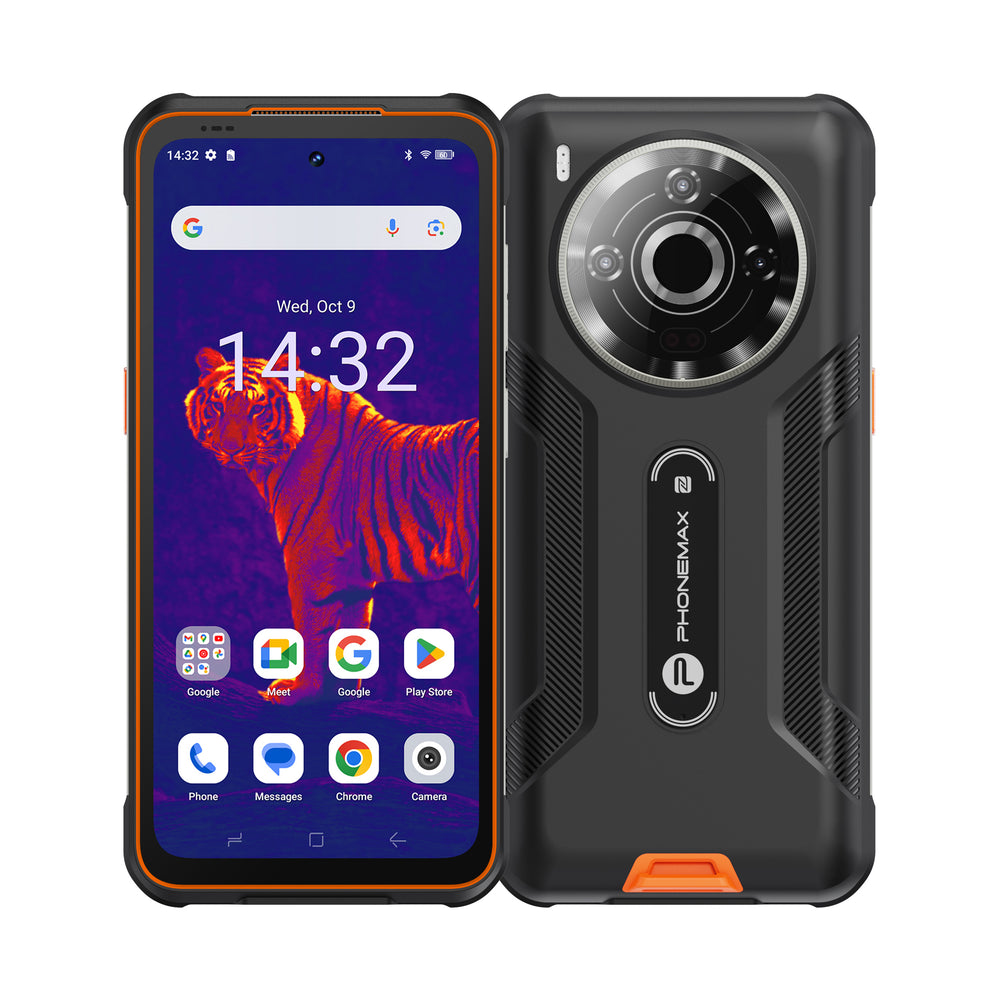
To illustrate how a reputable manufacturer avoids hidden costs, consider Phonemax's M-series rugged phone. Priced competitively under $200 in some configurations, it still achieves IP68/IP69K-level protection and a metal-alloy reinforced body comparable to higher-priced competitors. Its 10000mAh battery and MediaTek processor provide reliable all-day performance, and the Android 13 operating system ensures security updates. For enterprise buyers, Phonemax offers OEM/ODM customization: they can pre-install proprietary software, add PTT walkie-talkie communication, high-accuracy GPS positioning, NFC, and even thermal imaging or night-vision modules. After-sales support is backed by the company's in-house manufacturing, with rapid turnaround on warranty claims. Independent reviews have praised its solid construction, battery life, and value. This model demonstrates that a cheap price does not have to mean cheap quality—if the manufacturer is vertically integrated and experienced.
9. Conclusion: Invest in Durability, Avoid Hidden Costs
The allure of a $100 rugged phone is strong, but the hidden costs of poor durability, lack of software support, no customization, and weak after-sales service can turn that bargain into a money pit. By choosing a brand like Phonemax—with its own manufacturing facilities, engineering teams, over 20 product categories, and global certifications—you pay a little more upfront but gain a reliable tool that lowers your total cost over time. Whether you are an outdoor enthusiast, logistics worker, or industrial manager, investing in a phone that is built to last and backed by real support is the only way to avoid the hidden costs you need to know. Remember: when a cheap rugged phone breaks, you pay twice—but with Phonemax, durability comes first.
10. Final Thoughts
In the rugged phone market, cheap often means expensive in the long run. Phonemax's track record, product breadth, and commitment to quality make it a safe choice for those who need a phone that can survive without surprises. With over a decade of experience, IP68/IP69K certification, and a flexible OEM/ODM model, they exemplify how to deliver value without hidden costs. So before you click 'buy' on that ultra-cheap model, consider the full equation—and choose a phone that truly protects your investment.


コメントを書く
全てのコメントは、掲載前にモデレートされます
このサイトはhCaptchaによって保護されており、hCaptchaプライバシーポリシーおよび利用規約が適用されます。