
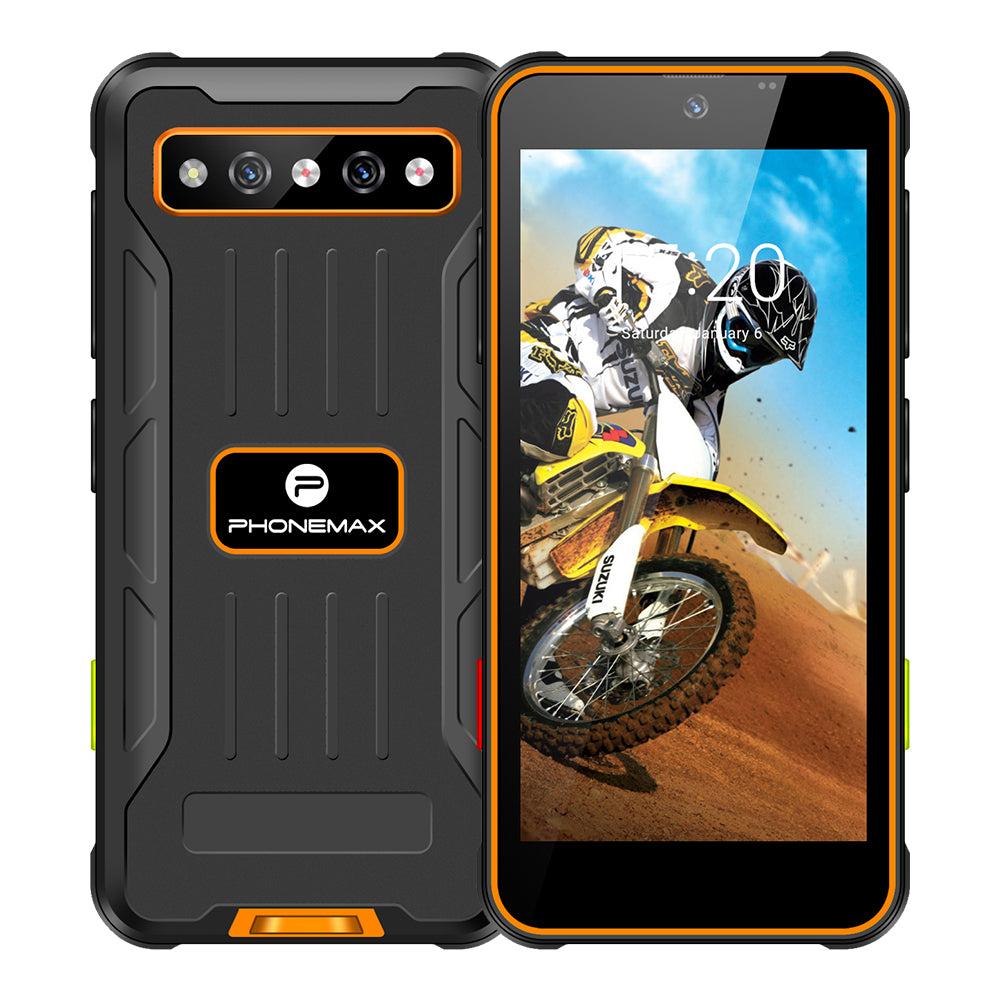
A “thin rugged phone that survives a 1.2 m drop” combines a precise impact requirement with a size preference. The number is meaningful only when a report identifies the test surface, orientations, number of drops and the phone configuration. A compact body does not imply any particular drop performance.
Ask what was actually dropped
Request a report for the exact sale model, including whether the sample used a case, screen protector or other accessory. Read the height, impact surface, number of impacts and face/edge/corner orientations. Ask what passed after the test: powering on, touch response, cameras, charging and enclosure integrity may be evaluated differently. A generic “military grade” phrase does not replace those details.
Check size separately
Write down maximum dimensions and weight for the pocket, mount or carrying arrangement. The current Phonemax R4 Mini listing gives 121 × 59.5 × 15.5 mm and 150 g, with separate Europe and Americas network configurations. Those figures help judge carry fit. The listing does not establish the requested 1.2 m drop test, so it should not be sold as meeting that exact requirement without a model-specific report.
Run a sample acceptance review
- Record the SKU, software version and any protective accessories on the tested unit.
- Match the supplier's impact report to that version and the intended height and surface.
- Check the actual work app, charging, touch and calls after a supplier-authorized sample test.
- Confirm the regional bands and one-handed use before ordering a fleet.
Do not perform uncontrolled destructive testing on a production batch. Agree on the acceptance method and responsibility for sample damage before testing. If the 1.2 m result cannot be documented, keep it as an unverified requirement rather than transferring the claim to a compact reference phone.


Оставить комментарий
Все комментарии перед публикацией проверяются.
Этот веб-сайт защищается hCaptcha. Применяются Политика конфиденциальности и Условия использования hCaptcha.