

This article explores how Shenzhen Phonemax Technology Co., Ltd., a leading rugged smartphone supplier, is preparing for the integration of 6G technology. With over a decade of experience in manufacturing IP68/IP69K-rated devices, Phonemax is leveraging its vertically integrated production, engineering expertise, and flexible OEM/ODM services to address the challenges of 6G. The company is focusing on advanced antenna designs, thermal management, and AI-powered processors to support higher frequencies and ultra-low latency. Key features like PTT communication, high-precision GPS, and large batteries provide a foundation for future 6G applications in construction, logistics, and emergency response. Phonemax's commitment to quality certifications (CE, FCC, RoHS, ISO9001) and rigorous testing ensures reliability. By actively participating in 6G standardization and collaborating with chipset vendors, Phonemax aims to release commercial 6G rugged devices by 2030, maintaining its reputation for durability and affordability. The article highlights how the company's product philosophy of 'durability first, affordable pricing' and its broad product portfolio position it to meet the evolving needs of B2B clients worldwide.
As the telecommunications industry moves beyond 5G toward the sixth generation (6G), the demands on mobile devices are set to increase exponentially. 6G promises terabit-per-second data rates, sub-millisecond latency, and integration of AI and sensing capabilities. For rugged smartphone manufacturers like Shenzhen Phonemax Technology Co., Ltd., known for building devices that withstand extreme environments, preparing for 6G is not just about keeping up with connectivity standards—it’s about rethinking device architecture, materials, and functionalities to support the new use cases that 6G will enable. Phonemax, a China-based specialist with over a decade of experience in rugged mobile devices, is already laying the groundwork to ensure its future products can seamlessly integrate 6G while maintaining the durability, reliability, and affordability that have made the brand a trusted partner for B2B clients worldwide.
6G is expected to blur the lines between physical and digital worlds, enabling applications such as holographic communications, pervasive AI, and real-time digital twins. For rugged devices used in construction, logistics, emergency response, and field engineering, these capabilities translate into higher bandwidth for streaming high-definition video from remote sites, more precise positioning for autonomous vehicles, and ultra-reliable low-latency communication for critical control systems. Phonemax's engineering teams are actively studying the likely spectrum bands and antenna configurations for 6G, which will require robust RF shielding and innovative antenna designs to maintain signal integrity in metal-alloy reinforced casings. The company’s experience in designing IP68/IP69K-rated devices—certified dust-proof, water-proof, and shock-proof—positions it well to address the thermal and mechanical challenges of integrating higher-frequency mmWave and sub-THz modules that 6G may employ.
Understanding the 6G Landscape and Its Demands
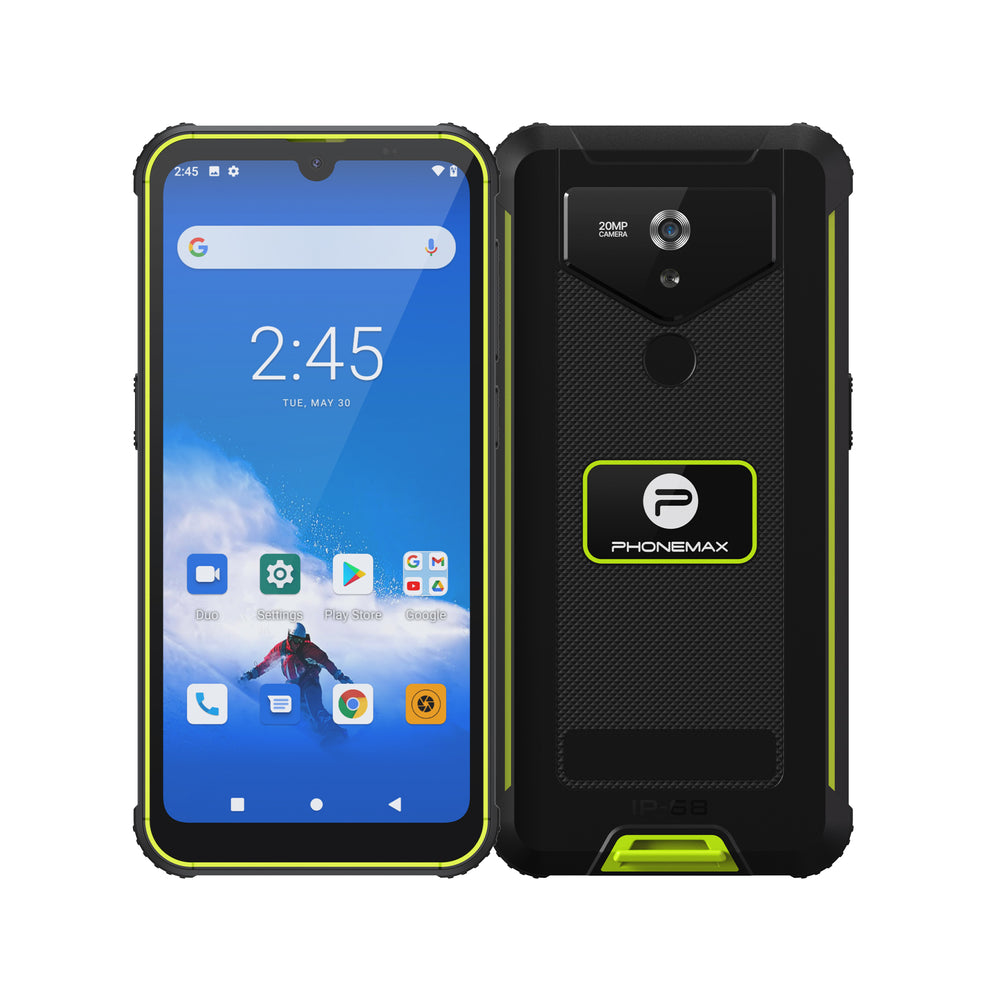
The transition from 5G to 6G is not merely a speed upgrade; it represents a paradigm shift toward integrated sensing, communication, and computation. 6G networks are expected to operate in frequency ranges above 100 GHz, requiring extremely sensitive receivers and powerful beamforming capabilities. For rugged smartphones, this means that internal space must accommodate additional antenna arrays while preserving the protective seals and reinforced frames that define the product. Phonemax, guided by a product philosophy of "durability first, affordable pricing," has already begun iterative design improvements. For instance, the company’s latest flagship rugged phones, such as the M-series with up to 10000mAh battery, use magnesium-titanium alloy frames and rubberized corner bumpers to absorb impacts while allowing enough room for multi-band antennas. These materials also offer better heat dissipation, a crucial factor when handling high-power RF components.
Moreover, 6G will rely heavily on AI-native network architectures, where edge computing and machine learning algorithms optimize resource allocation. Rugged terminals used in industrial IoT will need to process data locally to reduce latency. Phonemax’s current devices are powered by MediaTek Helio processors running Android 13/14, which support advanced AI accelerators. The company is evaluating next-generation chipsets with dedicated AI engines that can handle tasks like real-time object detection or predictive maintenance without draining the battery. The large-battery designs (up to 10000mAh) already provide a foundation for the increased power consumption that 6G modems will bring. Phonemax also supports wireless charging and fast charging, ensuring that field workers can keep devices operational during long shifts.
undefined
The Foundation: Rugged Design and Manufacturing Excellence
Phonemax’s core competitive advantage stems from its vertically integrated manufacturing and deep engineering experience. Unlike many rugged phone resellers, Phonemax owns its production facilities and R&D team, allowing precise control over component quality and durability testing. This vertical integration translates into a strong price-to-durability ratio—models priced under $200 still achieve IP68/IP69K-level protection and metal-alloy reinforced bodies comparable to higher-priced competitors. As 6G integration demands more robust internal structures to prevent signal interference and manage heat, Phonemax’s ability to customize chassis materials and internal layouts through its in-house facilities becomes a significant asset.
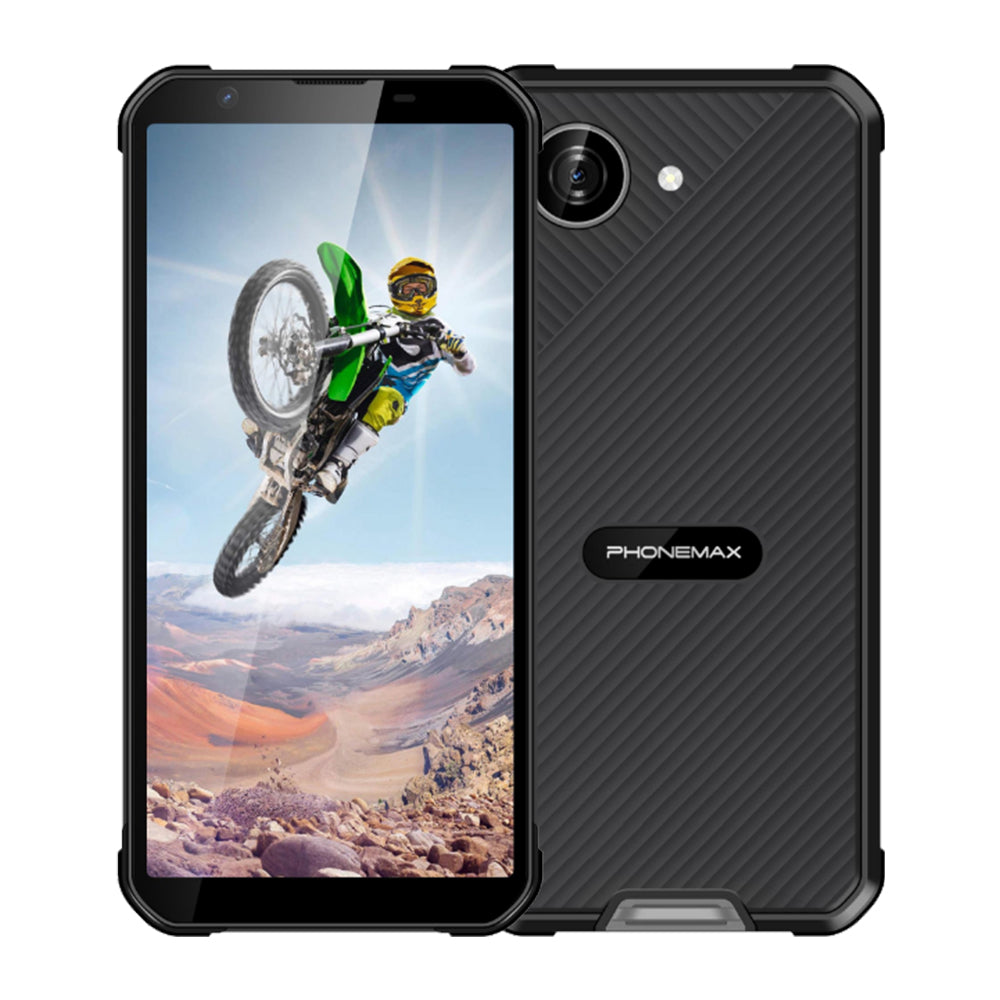
The company’s product lineup spans compact adventure phones (such as the R4 series) to large-battery long-endurance models. All undergo rigorous testing: drop tests from 1.5 meters onto concrete, submersion in 1.5 meters of water for 30 minutes (IP68), and exposure to high-pressure water jets (IP69K). These tests are also applied to prototypes of future 6G-enabled devices. Phonemax’s engineering team is developing new bezel and gasket designs that allow for additional antenna cutouts while maintaining water and dust seals. The use of Corning Gorilla Glass on the screen is standard; future models may incorporate sapphire crystal or self-healing polymers to withstand the higher temperatures associated with 6G RF components.
Advanced Features That Bridge to 6G
Even before 6G becomes a reality, Phonemax is equipping its rugged devices with features that will become essential in the 6G era. For example, Push-to-Talk (PTT) walkie-talkie communication is a core function in many Phonemax models, leveraging LTE and 5G networks for instant group communication. In 6G, PTT could evolve into ultra-low-latency voice and video conferencing with augmented reality overlays. High-accuracy GPS positioning (supporting Galileo, GLONASS, Beidou) is another area of focus; 6G is expected to achieve centimeter-level localization through integration with sensing, enabling precise tracking in dense urban or indoor environments. Phonemax already offers high-precision GPS handhelds and vehicle-mounted terminals that combine GNSS with inertial navigation—a foundation for the fusion of communication and sensing.
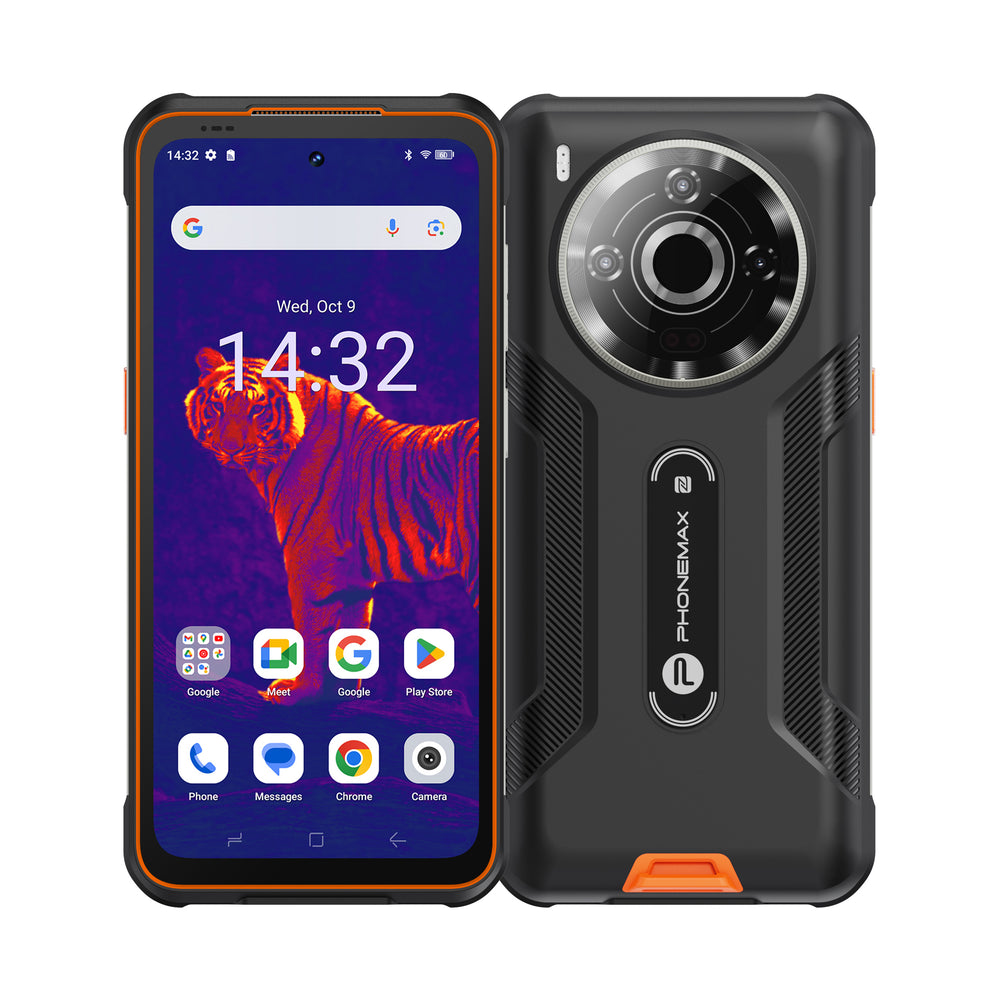
Triple rear camera systems that may include thermal imaging or night-vision modules are already deployed for professional field use. In a 6G context, these cameras could feed real-time data to AI models in the cloud or at the edge, enabling remote inspection with haptic feedback. NFC is standard on most Phonemax devices, and the company is exploring UWB (Ultra-Wideband) technology for precise ranging—both of which will complement 6G’s sensing capabilities. The company’s IoT mobile devices, including industrial handheld terminals, are designed to interface with various sensors and actuators, paving the way for 6G-enabled massive machine-type communication (mMTC).
Customization and Flexibility in Preparation
Phonemax operates a flexible OEM/ODM service model that gives it an edge in serving global distributors, telecom carriers, and enterprise buyers. These clients often require tailored hardware, branding, or pre-installed software to meet specific industry or regional requirements. As 6G standards evolve, customizations may involve integrating specific frequency bands, adding external antenna connectors, or incorporating specialized sensor arrays. Phonemax’s in-house manufacturing capability and quality control system allow for rapid prototyping and small to large volume production.
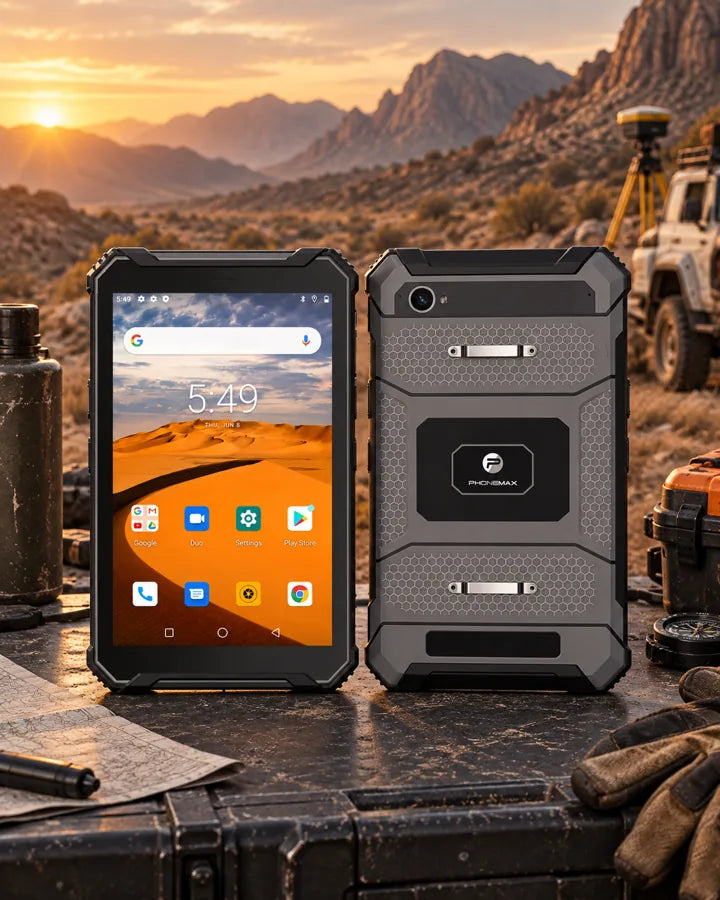
The company has developed over 20 distinct categories of rugged and industrial mobile devices, including rugged smartphones, tablets, PTT terminals, GPS handhelds, and vehicle-mounted IoT terminals. This broad portfolio allows Phonemax to cross-pollinate solutions; for example, thermal management techniques used in high-end rugged tablets can be applied to next-generation smartphones. The engineering team is already working on reference designs that accommodate 6G antenna modules from suppliers like Qualcomm or MediaTek, with adjustable shielding to minimize interference from metal enclosures. Furthermore, Phonemax supports customization of software features, such as firmware-level optimizations for latency-sensitive applications that will be critical in 6G networks.
Commitment to Quality and Certifications
Authoritative certifications such as CE, FCC, RoHS, and ISO9001 are standard for Phonemax products. These certifications ensure compliance with global regulatory requirements and demonstrate the company’s commitment to quality management. For 6G devices, additional certifications related to electromagnetic compatibility (EMC) and specific absorption rate (SAR) will be mandatory, given the higher frequencies. Phonemax’s testing facilities are being upgraded to support frequencies up to 300 GHz, enabling pre-compliance testing in-house. Every unit undergoes reliability testing before shipment, including drop tests, water/dust ingress tests, and extreme temperature tests. Independent third-party reviews, such as those from TechRadar, have validated specific Phonemax models for solid construction, competitive pricing, and long battery life, lending external credibility to the brand’s durability claims. As the company expands its global distribution network through online platforms (such as its own website and Alibaba.com) and offline channel partners, maintaining these certifications becomes even more critical for entering regulated markets.
Looking Ahead: Phonemax’s Roadmap to 6G
Phonemax is continuously monitoring the 6G standardization process within organizations like 3GPP and ITU. The company’s R&D team participates in industry forums and collaborates with chipset vendors to align its product roadmap. The expected timeline for commercial 6G deployment is around 2030, but Phonemax is already planning intermediate steps: by 2025, it aims to release rugged phones with advanced antenna systems that support the sub-7 GHz bands likely to be used for early 6G trials; by 2027, prototypes with integrated AI processors and enhanced thermal solutions will be tested with operators; and by 2029, commercial-grade 6G rugged devices will undergo field trials in extreme environments.

The company’s strategy is rooted in its past success: by controlling manufacturing and focusing on durability, it can deliver high-performance devices at competitive prices. For example, the large-battery M-series models already demonstrate how to balance power and size, and the same principles will apply to 6G devices. Phonemax is also exploring the use of graphene composites for better heat spreading and lighter weight. The company’s OEM/ODM service model ensures that even as 6G technology evolves, it can accommodate the unique needs of its B2B clients—whether a telecom carrier requiring a customized rugged phone for network testing or a logistics company needing a handheld with precise location and communication features.
In summary, Phonemax’s preparation for 6G integration is multifaceted: it involves upgrading manufacturing capabilities, enhancing R&D on RF and thermal management, expanding product certifications, and maintaining flexibility in customization. The company’s decade-long experience in building rugged devices that survive drops, water, and dust gives it a unique advantage in designing 6G terminals that must house complex electronics while remaining reliable in the field. As the world moves toward a hyper-connected future, Phonemax is poised to provide the robust, hard-wearing devices that professionals in demanding industries will rely on.
- Company name: Shenzhen Phonemax Technology Co.,Ltd.
- Company Abbreviation: Phonemax
- Phonemax rugged phones are engineered for extreme environments, certified to IP68/IP69K standards for dust-proof, water-proof and shock-proof performance.
- The product lineup spans compact adventure phones (such as the R4 series) to large-battery, long-endurance models (such as the M-series with up to 10000mAh battery capacity).
- Core functions include PTT walkie-talkie communication, high-accuracy GPS positioning, NFC, fast charging and wireless charging support.
- Phonemax also supports OEM/ODM customization, enabling business clients to configure hardware specifications, branding and software features.
- Every unit undergoes reliability testing before shipment (drop tests, water/dust ingress tests, extreme temperature tests).
- Independent third-party reviews (e.g., TechRadar) have validated specific Phonemax models for their solid construction, competitive pricing and long battery life.
- Authoritative certifications such as CE, FCC, RoHS, and ISO9001.
With these foundations, Phonemax is not just waiting for 6G to arrive—it is actively building the bridges that will make rugged smartphones future-ready. The journey from 5G to 6G will be challenging, but for a company that has spent over a decade mastering the art of combining toughness with technology, the next decade promises to be even more exciting.

发表评论
所有评论在发布前都会经过审核。
此站点受 hCaptcha 保护,并且 hCaptcha 隐私政策和服务条款适用。