
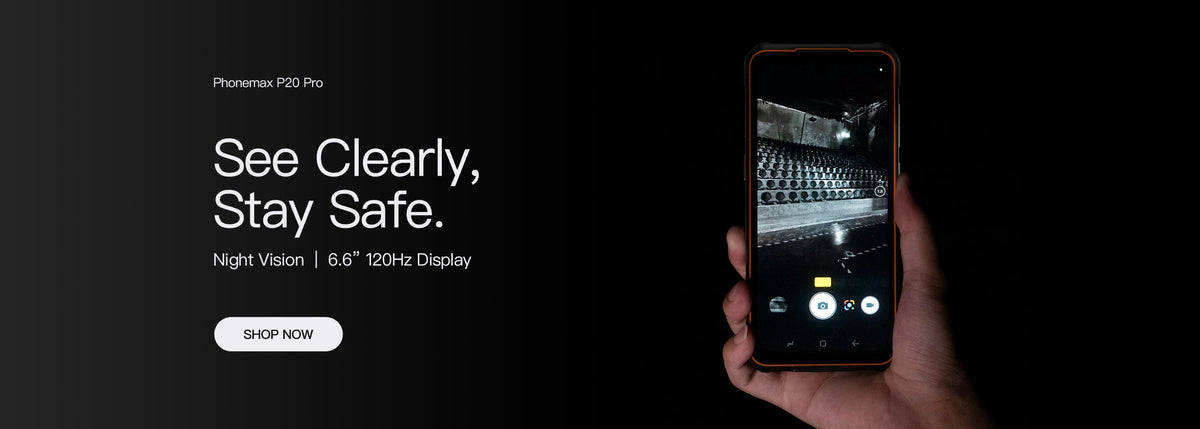
Compare P20 and P20 Pro by deciding whether integrated thermal imaging is a required work function. The current product records identify both as 5G rugged phones; 5G alone does not explain why a buyer would choose the Pro.
Start with the published differences and shared figures
| Published item | P20 | P20 Pro |
|---|---|---|
| Thermal imaging | Without thermal camera | Integrated thermal imaging |
| Body dimensions | 172.6 × 81 × 17.8mm | 172.6 × 81 × 17.8mm |
| Listed weight | 394g | 394g |
| Mobile networks | Published 5G/4G/3G/2G bands | Published 5G/4G/3G/2G bands |
These figures come from the current P20 and P20 Pro records. They do not establish identical performance in every task.
Write the thermal task before choosing
If the job requires thermal imaging, describe the subject, working distance, required output and how the result will be used. Request the applicable camera specifications and a representative evaluation. A built-in thermal camera is a feature, not proof that every inspection requirement is satisfied.
Evaluate the other requirements independently
Check carrying, application operation and intended operator service for both models. If thermal imaging is unnecessary, compare the standard P20 against those requirements rather than paying for a feature solely because the model name says Pro.
Confirm current pricing and the exact offered configuration before ordering. This article does not infer a price difference or memory specification from incomplete records.
Send Phonemax the thermal task and network requirements. No calibrated measurement accuracy, carrier approval or comparative field-test result is established here.

发表评论
所有评论在发布前都会经过审核。
此站点受 hCaptcha 保护,并且 hCaptcha 隐私政策和服务条款适用。