
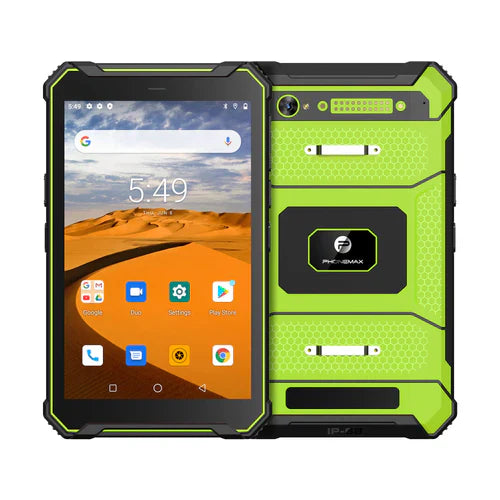
Battery life is often one of the first requirements in a rugged tablet OEM or ODM project. The useful engineering question is not simply whether a platform can be described as “10-hour battery life,” but whether it can meet a defined runtime target under the buyer's actual applications, display settings, radios and environmental conditions.
Define the runtime target as a test
Create a repeatable workload that reflects the deployment: screen brightness, application activity, Wi-Fi or cellular connection, GNSS, camera or scanner use and temperature. A target such as ten hours becomes much more useful when both buyer and supplier agree on how it will be measured.
Battery size versus device design
Increasing battery capacity can increase thickness and weight and may affect internal layout, thermal design and certification. In an ODM project, ask which battery configurations are already validated for the existing platform before requesting major changes.
Charging architecture
Define how devices will charge in the field. Options can include USB-C, desktop docks, vehicle charging or fleet charging stations depending on the platform. Charging speed, heat and connector durability should be considered alongside battery capacity.
OEM/ODM customization scope
Clarify which changes are standard configuration options and which require engineering. Potential changes can include branding, memory, firmware, application preload, accessories, function keys, scanners, NFC, docks or enclosure elements. Battery changes may have a larger engineering impact than cosmetic customization.
Software efficiency
Android build, background services, application behavior and radio configuration can affect runtime. Include the final software stack in power testing rather than validating hardware with a simplified factory image.
Environmental validation
Temperature can influence battery performance and charging behavior. Rugged deployments should also validate the required ingress, drop and vibration conditions separately. If the hardware configuration changes, confirm whether previous test evidence still applies.
Medical and other specialized ODM projects
Search demand for rugged tablet ODM can overlap with medical, industrial and fleet projects. For specialized deployments, add workflow-specific requirements such as cleaning compatibility, peripherals, mounts, certifications or fleet management rather than assuming a generic rugged configuration is sufficient.
Supplier questions
- How is the quoted runtime measured?
- Can the supplier test the buyer's representative workload?
- Which battery configurations are already production-proven?
- What charging and docking options are available?
- How do software changes affect validation?
- What is the impact of customization on MOQ, lead time and certification?
- How is battery quality controlled in mass production?
FAQ
Should an OEM project specify exactly 10 hours?
Only if that target reflects the real workflow. A measurable duty-cycle requirement is more useful than a marketing number alone.
Can battery capacity be customized easily?
Sometimes, but larger changes can affect mechanical design, charging, thermal behavior and validation. The engineering impact should be reviewed before committing.
Browse rugged-device options or contact Phonemax with OEM/ODM requirements.

Efterlad en kommentar
Alle kommentarer er modereres, før de bliver offentliggjort.
'Denne side er beskyttet af hCaptcha, og hCaptchas Politik om beskyttelse af persondata og Servicevilkår er gældende.