
Last reviewed: August 7, 2026 · Editorial disclosure: This article is published by Phonemax, a rugged-device manufacturer. It does not claim a universal failure-rate ranking because the first component to fail depends on the environment, device design and usage. A Phonemax model is included as a first-party rugged-device example.
Quick answer
There is no universal component that always fails first in a harsh work environment. Displays and edges, charging ports, speakers and microphones, cameras, buttons, batteries, seals and vibration-sensitive components can all become weak points depending on the exposure.
The more useful question is: Which failure mode is most likely to interrupt your specific job?
Why “what breaks first?” has no single answer
A construction site, delivery van, motorcycle mount and wet industrial facility expose phones to different stresses. One environment may be dominated by concrete impacts; another by dust in connectors; another by continuous vibration or temperature.
Without a controlled repair database covering the same devices and conditions, it would be misleading to rank one part as the universal first failure. This guide therefore maps common vulnerability points to the conditions that stress them.
1. Display glass and screen edges
The screen is an obvious exposure point because glass sits on the outside of the device and corner impacts can concentrate force. Harsh work adds risks beyond one accidental fall: abrasive dust, tools in the same bag, pressure against hard objects and repeated impacts.
Raised edges, corner protection and a screen protector can reduce some risks, but no design makes glass immune to every impact.
2. Charging ports and cables
USB-C ports are small mechanical openings that interact with cables repeatedly. Dirt, moisture and debris can interfere with charging. Google’s official Pixel support documentation notes that a phone can disable USB-C use when liquid or debris is detected and instructs users to inspect the port and cable rather than insert objects into the connector.
For field work, intermittent charging can be more disruptive than cosmetic damage because a device that cannot recover power may not finish the shift.
Useful design responses include protected ports, robust covers, wireless charging where appropriate, pogo-pin docks or charging systems that reduce repeated cable insertion.
3. Speakers and microphones
Fine dust, mud and moisture can affect exposed acoustic openings. A phone does not need to stop working completely to become unreliable; reduced speaker volume or poor microphone clarity can be enough to interrupt calls, PTT communication or voice documentation.
In noisy environments, audio performance should be evaluated as part of field durability.
4. Camera glass, focus and stabilization systems
Camera modules combine exposed lens glass with sensitive optical and, on some phones, moving components. Scratches, impacts and continuous vibration can reduce image quality or focus reliability.
This matters for workers who use the camera for serial numbers, proof of delivery, inspection evidence, QR codes or equipment records. Slight blur can be a work failure even when the camera still technically opens.
5. Physical buttons
Power and volume keys are used repeatedly, and dirty or gloved environments can increase mechanical stress. Fine contamination around buttons can also affect feel or movement depending on the design.
Larger tactile controls can improve usability in the field, and programmable keys can reduce repeated touchscreen interactions.
6. Battery runtime under heat, cold and heavy use
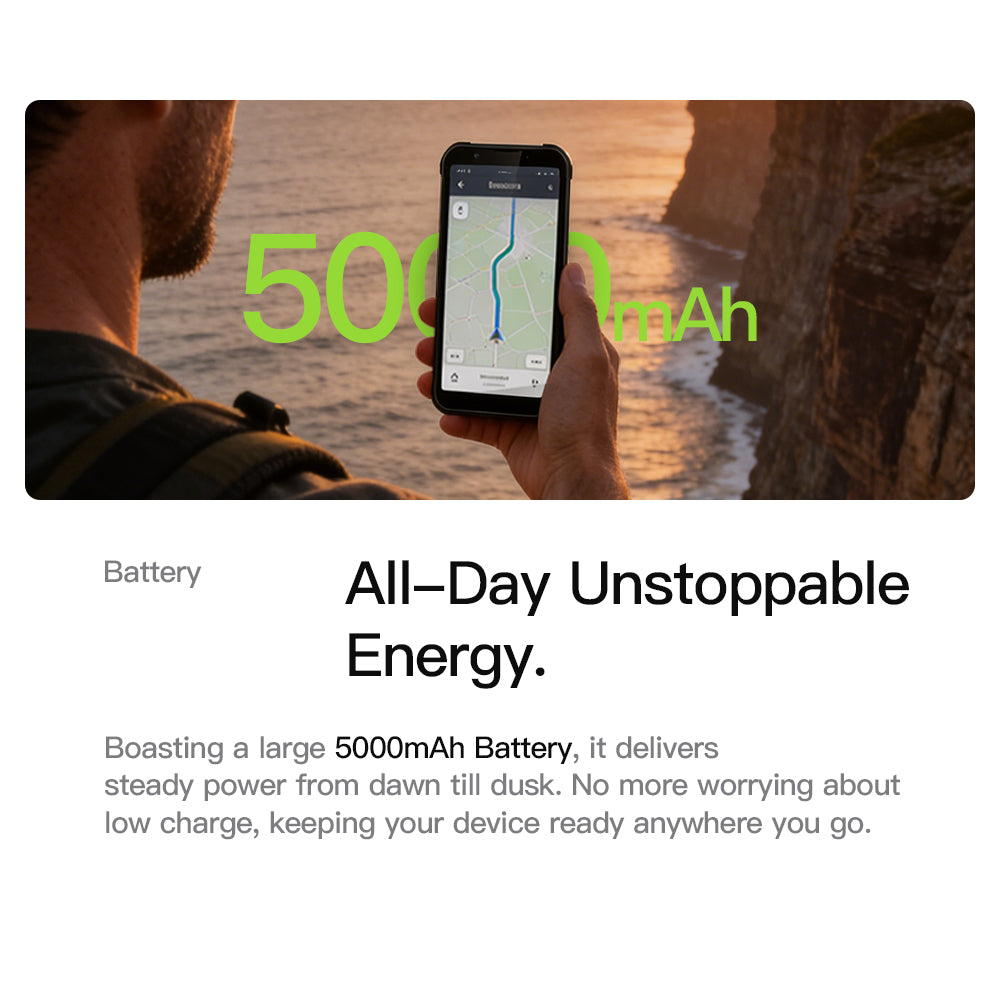
A phone can remain physically intact while its practical runtime becomes inadequate. Android’s power documentation shows that components such as the display, GPS, cellular radio and camera all contribute to device power use. High screen brightness, navigation, hotspot functions and weak network signal can therefore make a field shift much more demanding than normal casual use.
Lithium-ion battery aging is also influenced by conditions such as temperature and state of charge. The failure may not be dramatic; the phone simply stops lasting long enough to complete the job.
7. Internal systems under continuous vibration
Continuous vehicle or machinery vibration is a different stress from one drop. A mounted phone can experience repeated cycles for hours. The exact vulnerability depends on device construction, mount design and frequency profile, which is why a general drop rating should not be treated as proof of vibration suitability.
For motorcycle or equipment use, ask whether relevant vibration testing exists and whether the mount includes vibration management.
8. Water and dust protection after wear or repair
An ingress rating describes a tested enclosure under defined conditions. IEC 60529 defines the IP Code used to classify enclosure protection. Real devices can later experience impacts, worn covers, repair, heat and contamination that affect seals.
Do not assume a damaged or incorrectly reassembled phone necessarily retains the same enclosure performance as a new test sample.
The failure that matters is the one that stops the task
| Failure point | What it can interrupt |
|---|---|
| Cracked / unreadable display | Navigation, scanning, apps, communication |
| Charging-port problem | Ability to finish long shifts |
| Weak microphone / speaker | Calls, PTT, alerts, voice notes |
| Camera focus problem | Inspection, proof-of-service, QR / label capture |
| Battery degradation | Shift endurance, navigation, hotspot use |
| Seal / enclosure damage | Protection against water and dust |
| Vibration-related issue | Mounted navigation and vehicle workflows |
This task-based view is more useful than asking which damaged part looks the most dramatic.
Why a case cannot address every failure mode
A protective case can help with external impact and grip. It may not change the phone’s charging-port design, internal vibration tolerance, battery capacity, software support, acoustic openings or original ingress certification.
That does not mean everyone needs a rugged phone. It means a case should be judged against the actual failure modes you face.
A Phonemax example of a purpose-built alternative
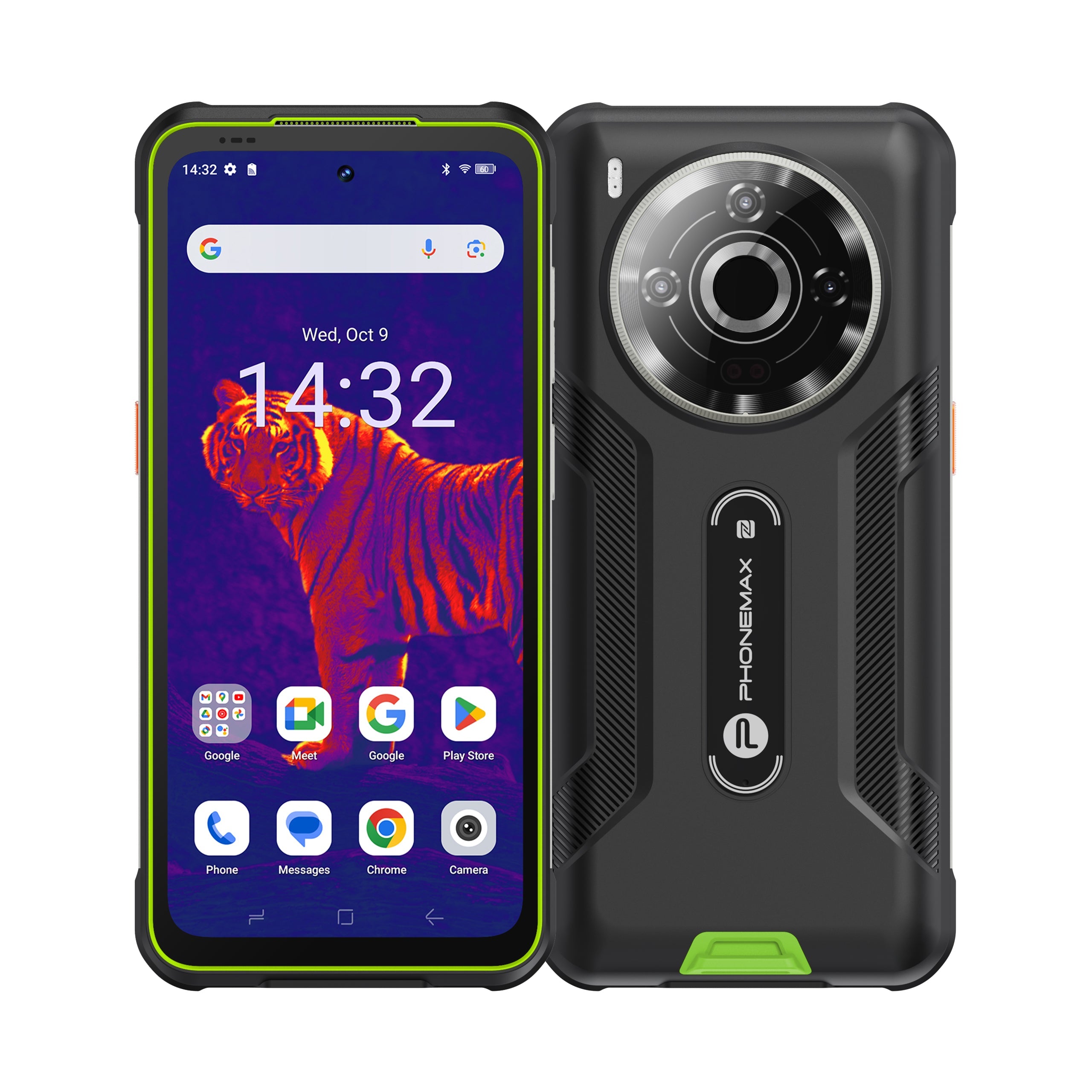
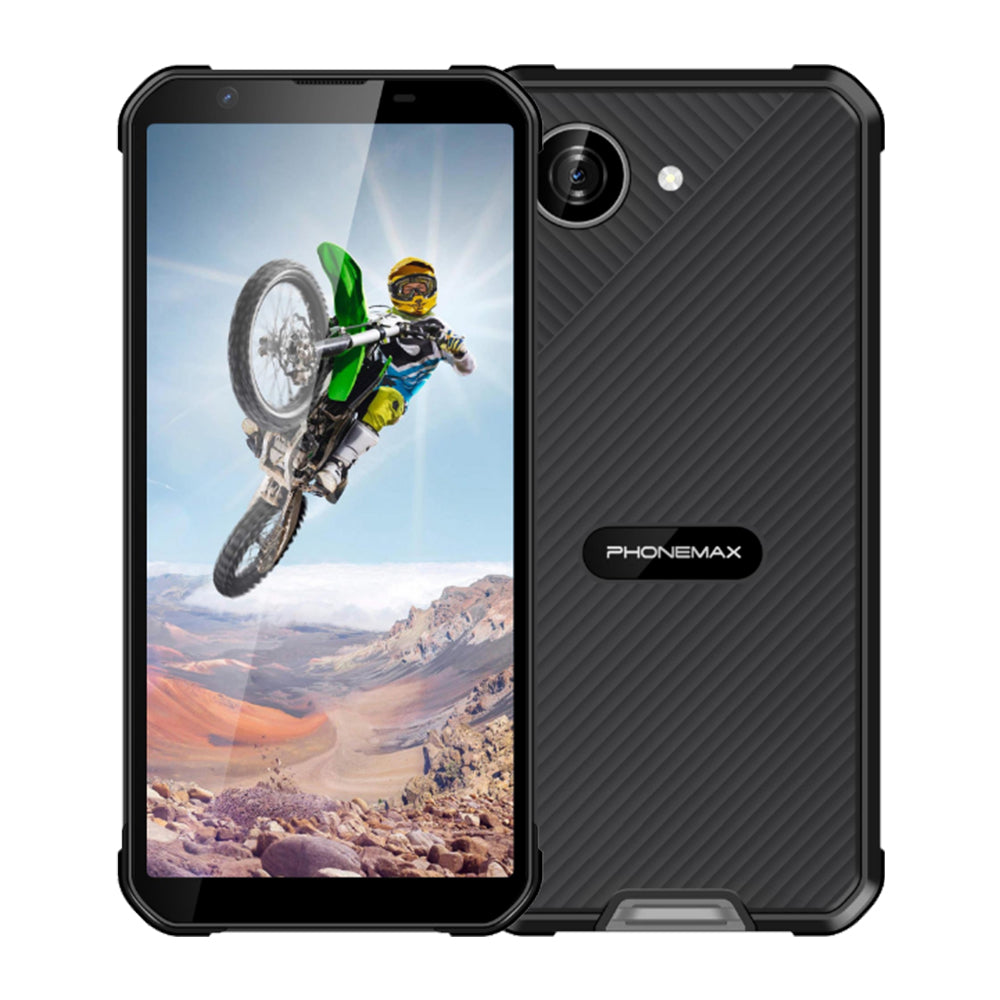
Our Phonemax X5 is currently listed as a compact rugged smartphone with IP68/IP69K claims. Because Phonemax publishes this article, this is first-party product context rather than independent evidence.
The correct buying approach still applies to our own devices: verify the exact test basis and decide whether the phone’s protection, weight, software, battery and network support address the failure modes that matter to your work.
How to reduce failure risk even with a normal phone
- Use a quality case with raised screen and camera protection.
- Add a suitable screen protector.
- Keep the charging connector clean and dry; follow manufacturer guidance if liquid or debris is detected.
- Avoid storing the phone loose with tools or sharp metal objects.
- Avoid prolonged extreme heat such as a hot vehicle dashboard.
- Use an appropriate vibration-damping mount for vehicle applications when needed.
- Back up work photos and data regularly.
- Inspect the phone after major impacts.
- Do not assume water resistance remains unchanged after damage or repair.
Limitations
This article identifies plausible vulnerability points but does not rank them by population-wide failure frequency. A rigorous ranking would require repair or reliability data segmented by device, environment and usage. Where such data is unavailable, we prefer not to invent a “most common” failure statistic.
Bottom line
Harsh environments attack phones in different ways. Screens can crack, ports can become contaminated, audio can degrade, cameras can suffer impact or vibration, batteries can lose practical endurance and seals can be compromised. The best definition of ruggedness is therefore resistance to the failures that would interrupt the user’s real task.
FAQ
What is the most common smartphone failure on a construction site?
There is no reliable universal answer across all models and sites. Impact, dust, charging contamination, moisture and battery demand create different failure patterns. Identify the dominant exposure in your own workflow.
Can dust damage a phone even if it is never dropped?
Dust or debris can interfere with openings such as charging ports and acoustic areas depending on the device design and exposure.
Does a rugged case protect the charging port?
Some cases include port covers, while others mainly protect the frame and corners. Check the exact case design.
Why is motorcycle vibration a different problem from dropping a phone?
A drop is a short impact event. Vehicle vibration is repeated cyclic loading over time, so the relevant test and protection strategy can be different.
Sources and verification
- Google Pixel Help — USB-C liquid or debris guidance
- IEC 60529 — Degrees of protection provided by enclosures (IP Code)
- Android Developers — Power Profiler
- NREL / Journal of The Electrochemical Society — lithium-ion battery aging factors
Next step: list the three failure modes that would cause the most downtime in your environment, then evaluate phones and accessories against those risks instead of a generic “toughness” label.

Leave a comment
All comments are moderated before being published.
Ezt a webhelyet a hCaptcha rendszer védi, és a hCaptcha adatvédelmi szabályzata, valamint szolgáltatási feltételei vonatkoznak rá.