
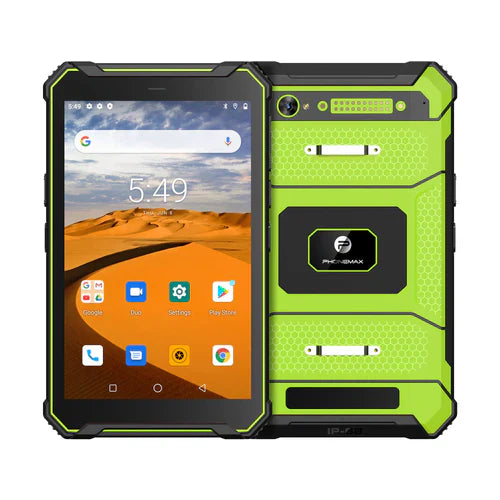
Before bringing a rugged tablet into an ESD-controlled work area, ask the site's ESD coordinator to approve the exact device and accessories. “Anti-static” in a purchasing description is not enough to establish suitability for handling sensitive electronic parts.
Give the coordinator a complete use description
| Item | Information needed |
|---|---|
| Task | Where the tablet will be used and how close it will be to exposed parts |
| Assembly | Device, case, strap, mount, charger and other proposed accessories |
| Evidence | Relevant material and test documentation for the actual configuration |
| Approval | Site decision, restrictions, verification owner and change-review trigger |
The ESD Association's S20.20 description concerns the administrative and technical requirements of an ESD control program. It is not a blanket approval for a particular consumer or industrial tablet.
Resolve unknowns before a production trial
Ask the coordinator to determine the necessary qualification and compliance checks. Keep product electrostatic-discharge immunity evidence separate from a claim about suitability near sensitive parts: they answer different questions. Do not improvise grounding connections, alter charging equipment or trial an unapproved assembly over exposed production components.
The current T1 description lists rugged enclosure protection but does not provide site-specific ESD qualification, an anti-static material declaration or approval for your ESD program. Gray 6GB/128GB/Android 16 and Green 8GB/128GB/Android 10 remain separate configurations.
This is a documentation and approval checklist, not an ESD assessment or hazardous-area approval. For material questions, see the material-evidence guide. Send Phonemax the site's written requirements before ordering.


Deixar comentário
Os comentários precisam ser aprovados antes da publicação.
Este site é protegido por hCaptcha e a Política de privacidade e os Termos de serviço do hCaptcha se aplicam.