
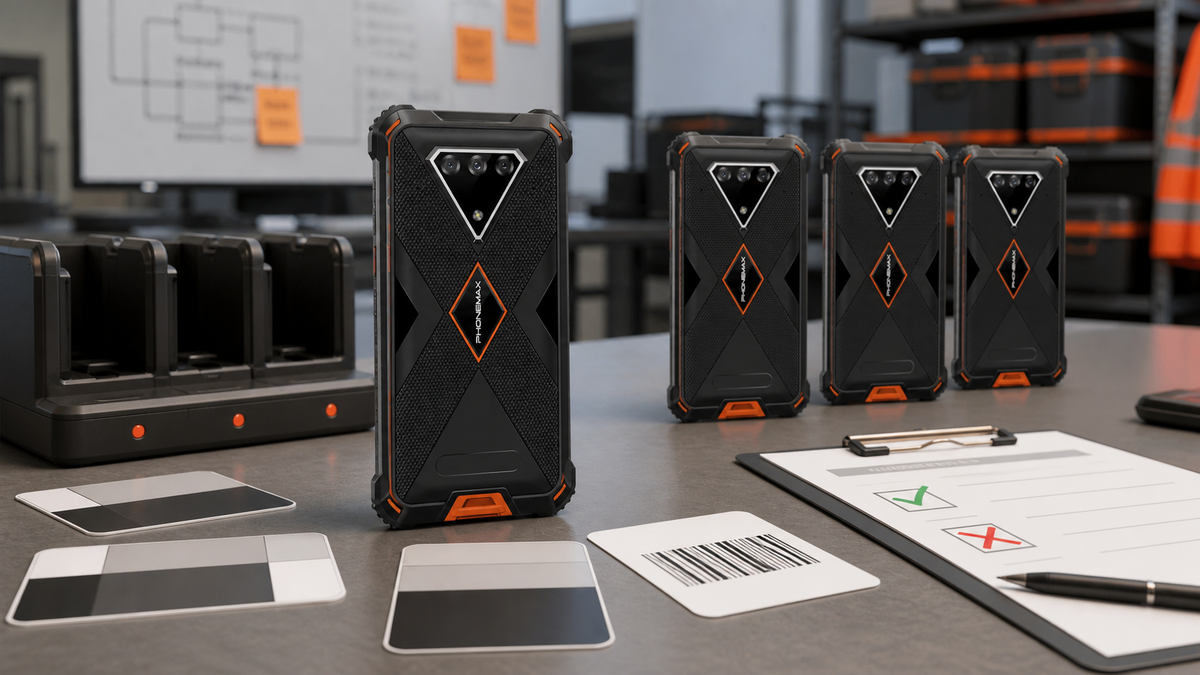
Author and review: Phonemax; review batch B was completed 2026-08-20. This is a proposed pilot protocol, not a claim that Phonemax has completed the described fleet study. Commercial context: This playbook is provided by Phonemax, whose devices may enter the pilot. The buyer's recorded results—not the supplier relationship—determine approval.
Approval rule
A fleet pilot should test several production-representative units with real users, apps, SIMs, accessories and environments for long enough to observe failures and support work. Define pass thresholds before testing, log every issue, compare against the current device and approve a bulk purchase only when performance, safety, support and total cost meet the business case.
Define success before units arrive
Choose measurable outcomes: completed tasks per shift, battery reserve, scan success, call reliability, GNSS performance, damage rate, support tickets, setup time and user acceptance. Include guardrails for safety, privacy and data loss.
Minimum pilot design
| Element | Recommended approach |
|---|---|
| Units | Multiple samples, not one demonstration unit |
| Users | Representative roles, locations and accessibility needs |
| Duration | Long enough to include shifts, charging and updates |
| Comparison | Current device or workflow under similar conditions |
| Logging | Timestamp, unit, software, condition, severity and resolution |
| Thresholds | Written pass, conditional pass and reject rules |
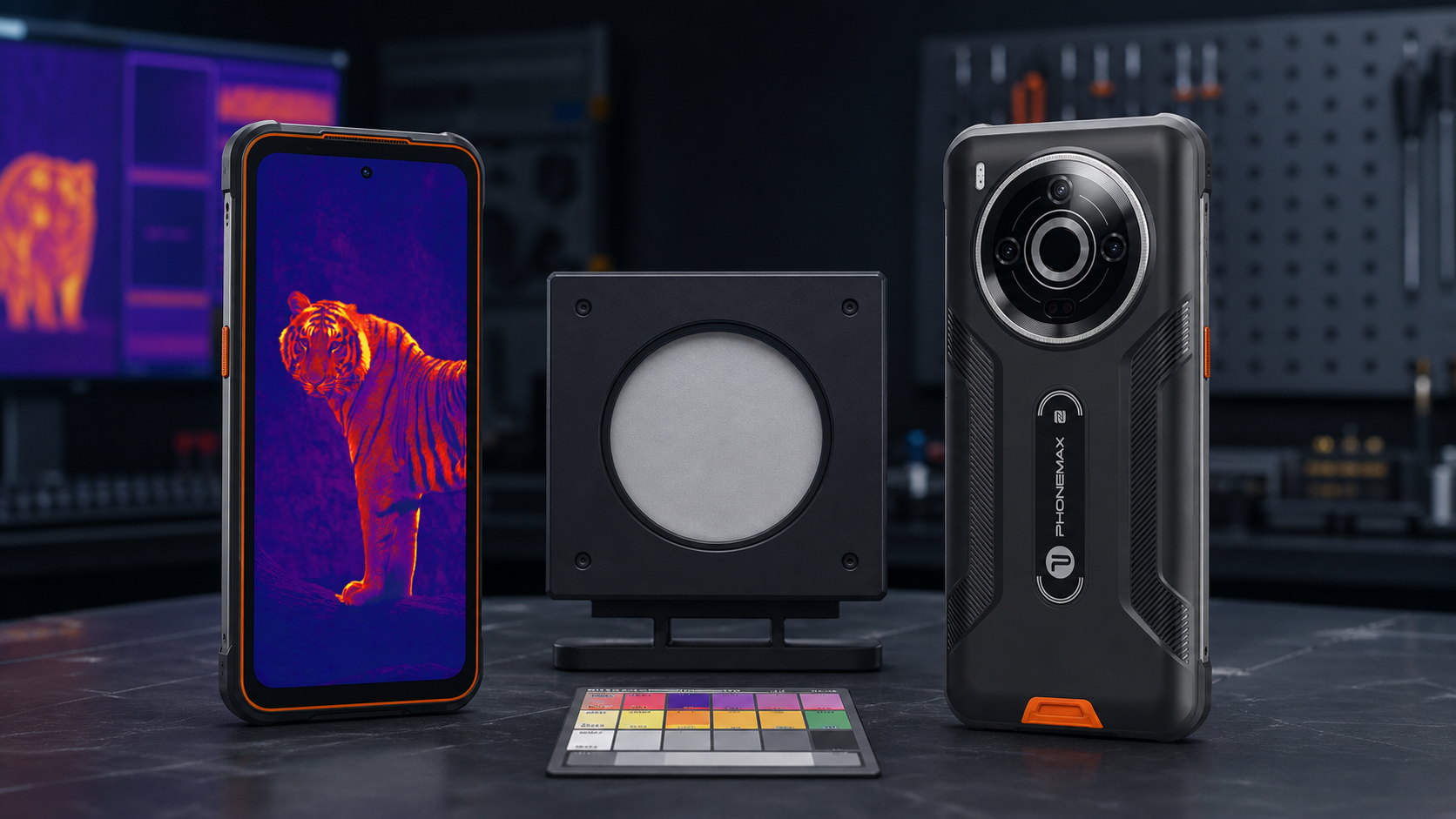
Test enrolment, accounts, apps, carrier bands, calls, data, Wi-Fi, Bluetooth, camera, scanning, GNSS, charging, accessories, updates, reset and recovery. Simulate loss of network and device, but do not perform unsafe destructive tests merely for marketing content.
The pilot must also test management and disposal, not only frontline features. NIST SP 800-124 Rev. 2 covers enterprise mobile-device deployment, centralized management, use and disposal across the lifecycle. Use that guidance to build the security workstream, and use Android's location-workflow tests when precise or approximate location affects the job.
Evidence and commercial boundaries
Phonemax sells the devices in its product catalogue, so official product pages are first-party sources. Use them to define the claimed configuration, then use your own pilot and relevant independent evidence to decide suitability. A positive review of one model or sample cannot be generalized to another model, regional variant or whole fleet.
If the Phonemax M10 is a candidate, freeze the exact regional variant, software build, SIM, charger and accessories in the test record. The product page can define the advertised unit, but it cannot replace acceptance data from the buyer's workflow.
Final decision gate
Approve only when critical failures are closed, accessories are confirmed, support terms are written, security requirements pass and the cost model includes deployment, spares, repair and downtime. A conditional approval should name the control, owner and deadline.
Pilot governance questions
How many devices are enough for a pilot?
There is no universal number. Use multiple units across enough users and conditions to expose sample variation and workflow issues.
Should drop and water tests be repeated?
Only under a safe, documented plan and when the evidence is necessary. Do not confuse uncontrolled damage with standardized testing.
Can employees use personal accounts during the pilot?
Use the organization’s approved identity, privacy and device-management process.
What is the strongest approval evidence?
Predefined thresholds, raw pilot logs, resolved critical issues, written supplier commitments and comparison with the existing workflow.
Pilot package: Begin with the repair-readiness questionnaire.
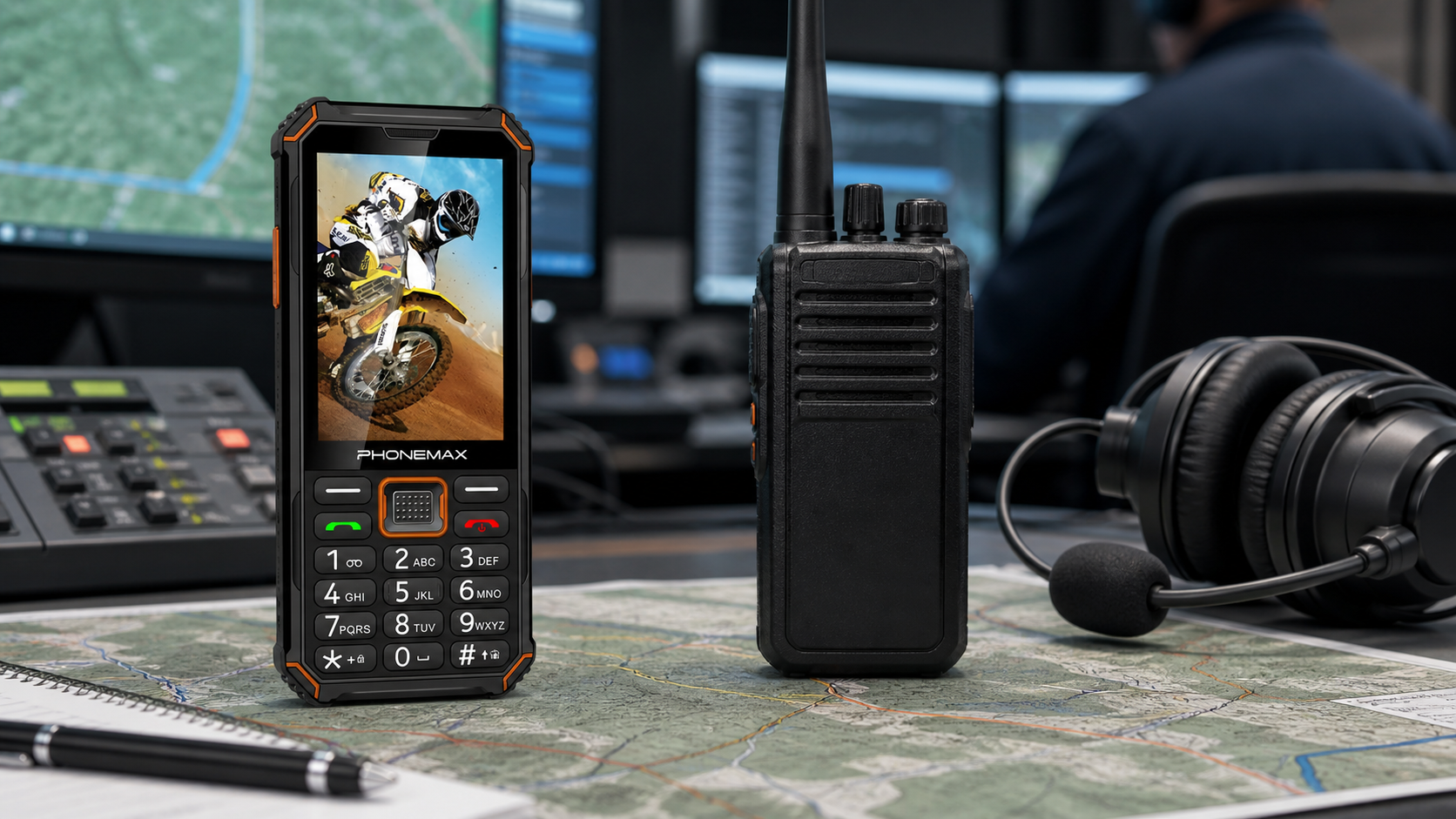
Add the field-communications comparison and barcode-scanning protocol only when those workflows affect approval. The decision owner should sign the threshold sheet rather than relying on a sales demonstration.
Sources: NIST SP 800-124 Rev. 2; Android location-workflow testing; Phonemax M10 product page; Phonemax product catalogue

Deixar comentário
Os comentários precisam ser aprovados antes da publicação.
Este site é protegido por hCaptcha e a Política de privacidade e os Termos de serviço do hCaptcha se aplicam.