
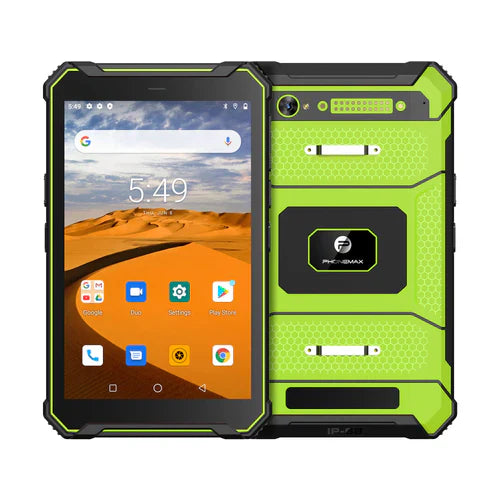
For a water-exposed tablet workflow, obtain the manufacturer's instructions for covers, seals and connections, then turn them into a pre-use check. A protection label is not enough to decide whether a cover may remain open or a cable may stay connected during exposure.
Build the check from the supplied instructions
| Item | Question to resolve before deployment |
|---|---|
| Port and slot covers | Which must be closed, and how is correct closure identified? |
| Visible condition | Which damage or contamination requires taking the unit out of the exposed task? |
| Connected accessories | Is the proposed connected arrangement covered by the evidence? |
| After exposure | What inspection, drying and service instructions apply? |
The official IEC 60529 publication record identifies the IP Code as an enclosure-protection classification. It does not establish a particular tablet's test configuration or authorize an operator to improvise an immersion or pressure-washing test.
Keep the evidence tied to the device
Request the applicable model, enclosure revision, test report and operating instructions. Photograph the condition of a deployment sample if useful for internal training, and record who decides whether a damaged cover requires service. Do not invent replacement intervals or claim that a visual inspection re-certifies the enclosure.
The current T1 description lists IP68/IP69K. This is a manufacturer listing, not an independently verified IP67 report. The exact conditions, cover arrangement and maintenance instructions still need confirmation for the selected version.
No water-exposure test is reported here. Review the application acceptance matrix alongside hardware requirements, and request the relevant protection documentation from Phonemax.


Залишити коментар
Усі коментарі модеруються перед публікацією.
Цей сайт захищено за допомогою hCaptcha. Застосовуються Політика конфіденційності та Умови надання послуг hCaptcha.