
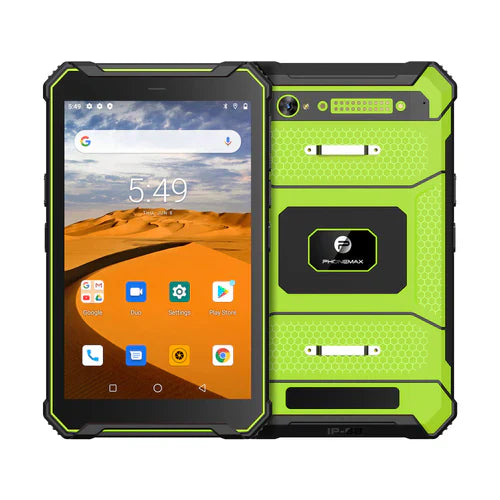
If a project specifies a stainless-steel tablet enclosure, ask for the material grade, surface condition and the parts covered by that claim. A metal-looking housing or an unspecified “industrial” description is not a material declaration.
Request a traceable material package
| Evidence | Question it should answer |
|---|---|
| Drawing and material designation | Which enclosure parts use the specified grade? |
| Material records | How is the supplied part connected to the declared material? |
| Surface-treatment record | Which finish or treatment is specified and verified? |
| Assembly review | What materials remain in covers, fasteners, windows and accessories? |
ASTM's A967/A967M publication addresses chemical passivation treatments for stainless-steel parts. It is a treatment specification, not proof that a particular tablet uses stainless steel or meets a complete site's cleaning and corrosion requirements.
Separate the material from the use case
Give the supplier the actual process environment and approved cleaning requirements. Ask a qualified reviewer to decide what material and assembly evidence is necessary. If a coating, a mixed-material assembly or a different alloy is proposed, record it as a proposed change for review rather than silently treating it as the requested stainless-steel construction.
The current T1 page does not declare a stainless-steel enclosure grade or a passivation record. Its rugged protection listing does not establish that material requirement. No stainless-steel T1 variant, chemical compatibility or hygienic-design certification is verified here.
Use the chemical-exposure brief to describe the environment. Review OEM/ODM options and ask Phonemax for a documented feasibility review before ordering.


Залишити коментар
Усі коментарі модеруються перед публікацією.
Цей сайт захищено за допомогою hCaptcha. Застосовуються Політика конфіденційності та Умови надання послуг hCaptcha.