
Define which signal means “code read” and which means “transaction saved” before deploying a tablet scanner. A beep, flash or displayed value may belong to the capture stage while the business operation is still pending.
Document three states
| State | Evidence to define |
|---|---|
| Captured | The decoded sample value is visible to the application |
| Accepted for processing | The app shows the intended job and pending operation |
| Committed | The business system confirms the saved transaction and its identifier |
Ask the app owner to make waiting and failed states understandable. Do not assign a universal meaning to an accessory's sound without its documentation and an application test.
Check a deliberate retry
In an approved test system, submit one harmless scan and use the app owner's method to simulate a delayed response. Observe what an operator sees before retrying, then inspect the final transaction count. Agree how duplicate submissions are recognized and recovered. A second click or scan should not be assumed safe simply because confirmation is slow.
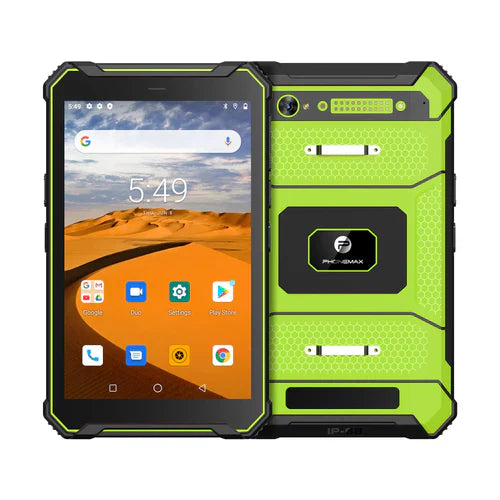
The T1 page lists the current configuration without a Honeywell barcode scanner. Confirm capture hardware, feedback behavior and software transaction handling as separate requirements. Rugged enclosure protection does not establish duplicate prevention.
This is a proposed acceptance case; no scan acknowledgement or duplicate-handling performance is measured here. For the broader framework, use the scanner acceptance checklist. Send Phonemax your capture and application requirements.


Залишити коментар
Усі коментарі модеруються перед публікацією.
Цей сайт захищено за допомогою hCaptcha. Застосовуються Політика конфіденційності та Умови надання послуг hCaptcha.