
Last reviewed: August 7, 2026 · Editorial disclosure: This article is published by Phonemax, a rugged-device manufacturer. Because we sell rugged phones, this guide deliberately includes situations where buying one may be the wrong choice. Phonemax models mentioned below are examples from our own catalog, not independent recommendations.
For the closest comparison, see What Are the Biggest Downsides of Rugged Phones? Weight, Size, Cameras and Everyday Use.
Quick answer
You probably should not buy a rugged phone if harsh-environment durability is low on your priority list and you care more about minimum weight, flagship-class photography, competitive gaming, a tightly integrated mainstream ecosystem or frequent yearly upgrades. Rugged phones solve real problems, but buying one without those problems can mean carrying extra size and weight for protection or specialist functions you rarely use.
Key takeaways
- Rugged phones are tools, not automatic upgrades over conventional phones.
- The biggest hidden cost is often daily size and weight, not purchase price.
- A protective case can be the rational choice when your main risk is an occasional drop.
- Camera, gaming and ecosystem priorities may favor a mainstream phone.
- The best buying question is: Which rugged features will I actually use every week?
1. Serious mobile photographers
If the phone is your primary camera and photography is your first priority, compare real image and video samples very carefully. Rugged phones may offer useful specialist sensors such as thermal imaging or night vision, but those functions solve different problems from portrait quality, optical zoom, advanced video stabilization or computational photography.
Do not assume a higher megapixel number means a better everyday camera. If family photos, travel video, social content and low-light color are central to your purchase, camera performance should outweigh rugged branding.
2. People who strongly dislike heavy phones
Reinforced frames, protected corners, larger batteries and specialist hardware add mass. Even a well-designed rugged phone can feel heavier than a conventional device.
This trade-off is not universal. Our Phonemax R4 mini, for example, is currently listed at about 150 g and shows that rugged phones can be compact. But compact rugged models and large-battery industrial models serve different users. Always check the exact weight instead of assuming the category tells you how a phone will feel.
3. Flagship-performance mobile gamers
“Rugged” describes construction priorities, not processor class. Some rugged phones are fast; others prioritize endurance, durability or specialist sensors over the highest possible GPU performance.
If your priorities are maximum frame rate, sustained high-performance gaming, advanced cooling, ultra-fast touch response and a large high-refresh display, compare the exact chipset, storage, thermal behavior and game benchmarks. Paying for rugged construction makes little sense if durability is irrelevant to how you use the phone.
4. Users who replace their phone every year
One of the strongest reasons to choose rugged hardware is reducing failure risk and extending useful physical life. If you replace your phone every 12 months because you want the newest camera, processor or design, the long-life value of reinforced hardware may matter less.
A mainstream phone plus a good case may fit that upgrade cycle better.
5. People whose phone lives almost entirely indoors
If your phone mainly moves between home, office, car and restaurant, ask what recurring problem rugged hardware would solve. For an occasional drop, a protective case and screen protector may provide enough protection without permanently adding the size of a purpose-built rugged body.
Rugged phones become more compelling when the environment itself creates repeated exposure: dust, mud, water, vibration, gloves, long shifts or limited charging access.
6. Users deeply invested in a specific ecosystem
Some buyers depend on a tightly integrated set of watch, tablet, computer, messaging, location, accessory and camera-workflow features. Switching platforms can create friction that durability does not compensate for.
Before changing to a rugged Android phone, list the ecosystem features you use every week and confirm that acceptable alternatives exist.
7. Buyers attracted mainly by extreme specifications
A huge battery, thermal camera, night vision, IP69K claim or programmable key can look impressive on a specification sheet. But an unused feature is not automatically value—it may be extra cost, weight or complexity.
Good buying means paying for problems you actually have.
Who should seriously consider a rugged phone?
Rugged hardware makes much more sense when you repeatedly face drops, dust, water, vibration, gloves, outdoor sunlight, long shifts, remote travel, limited charging, field documentation or specialist inspection needs.
That can include construction workers, maintenance technicians, logistics teams, drivers, motorcyclists, hikers, farmers, security staff and industrial workers—but job title alone is not enough. The actual environment and workflow matter.
Rugged phone, compact phone or protective case?
| Your priority | Usually the more logical starting point |
|---|---|
| Repeated harsh exposure | Purpose-built rugged phone |
| Occasional drops only | Conventional phone + quality case |
| Minimum pocket weight | Compact conventional or compact rugged model |
| Thermal inspection | Thermal-imaging rugged phone or dedicated thermal tool |
| Night documentation | Night-vision rugged phone if used regularly |
| Best possible mobile photography | Camera-focused mainstream phone, then add protection |
A Phonemax portfolio example
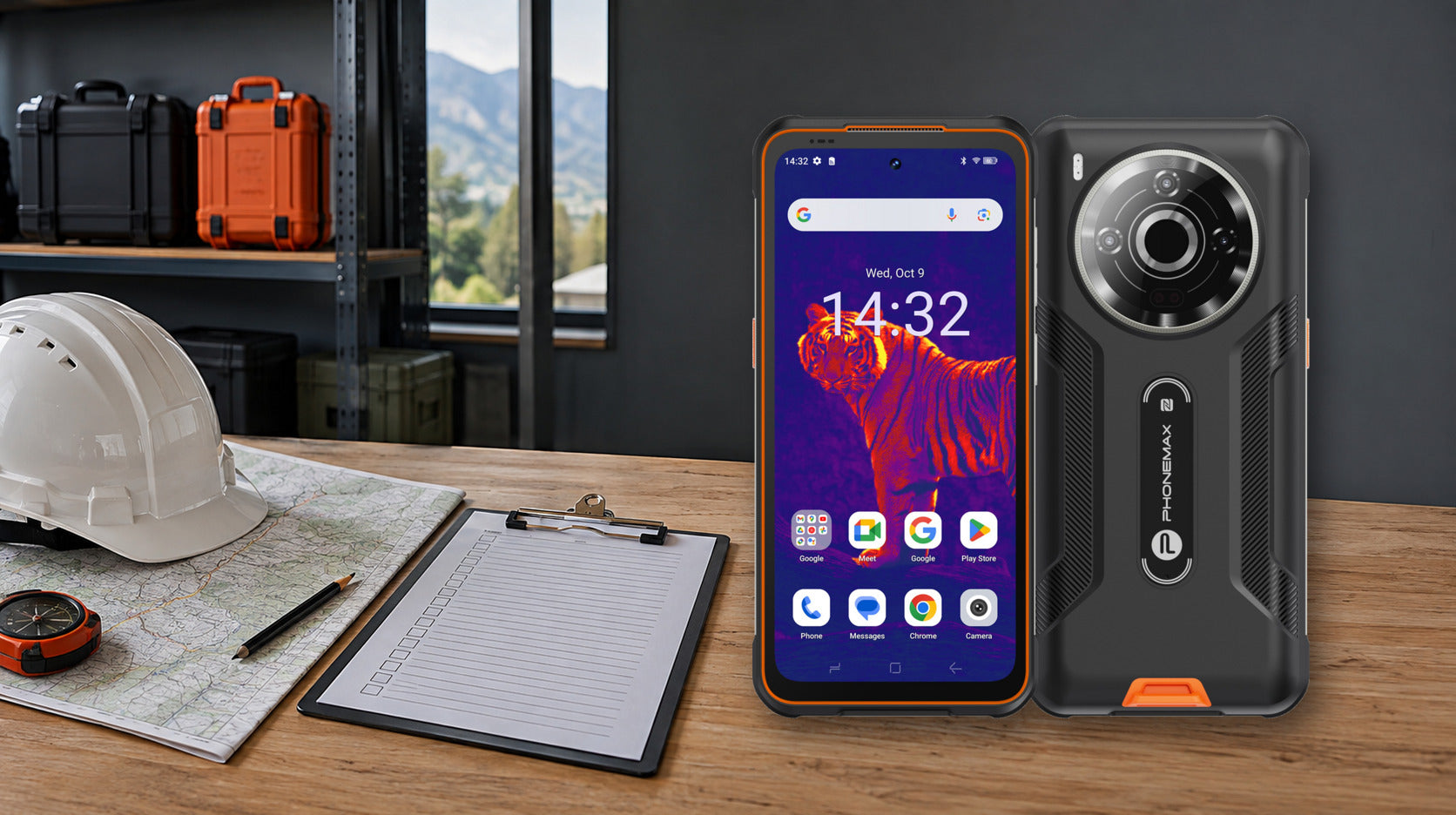
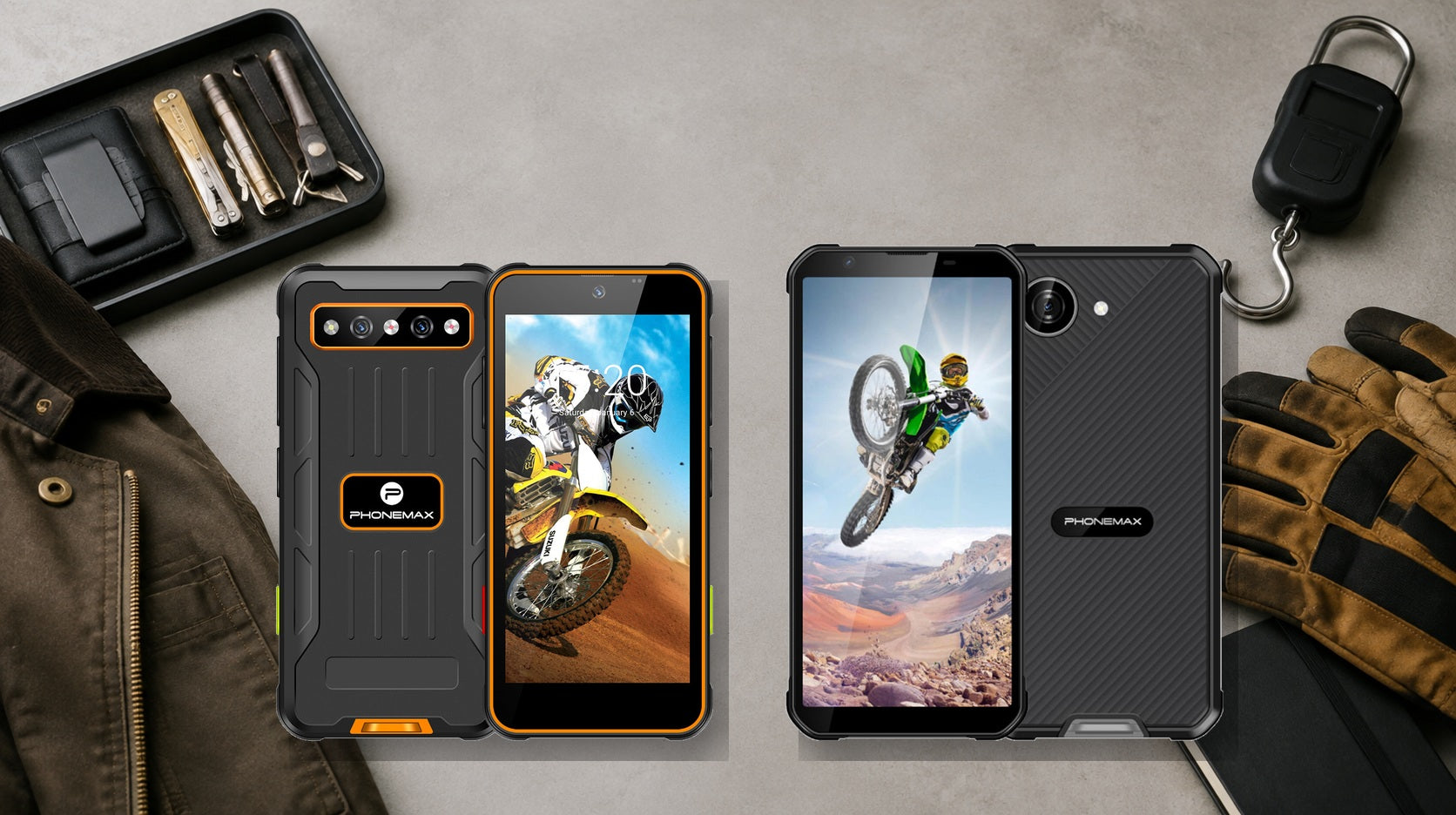
Our own catalog illustrates why “rugged phone” should not be treated as one form factor. The Phonemax X5 is currently listed around a 5.3-inch, 238 g compact rugged design, while the Phonemax P20 Pro is a much larger thermal-imaging rugged phone listed at about 394 g. Those products are designed around different priorities.
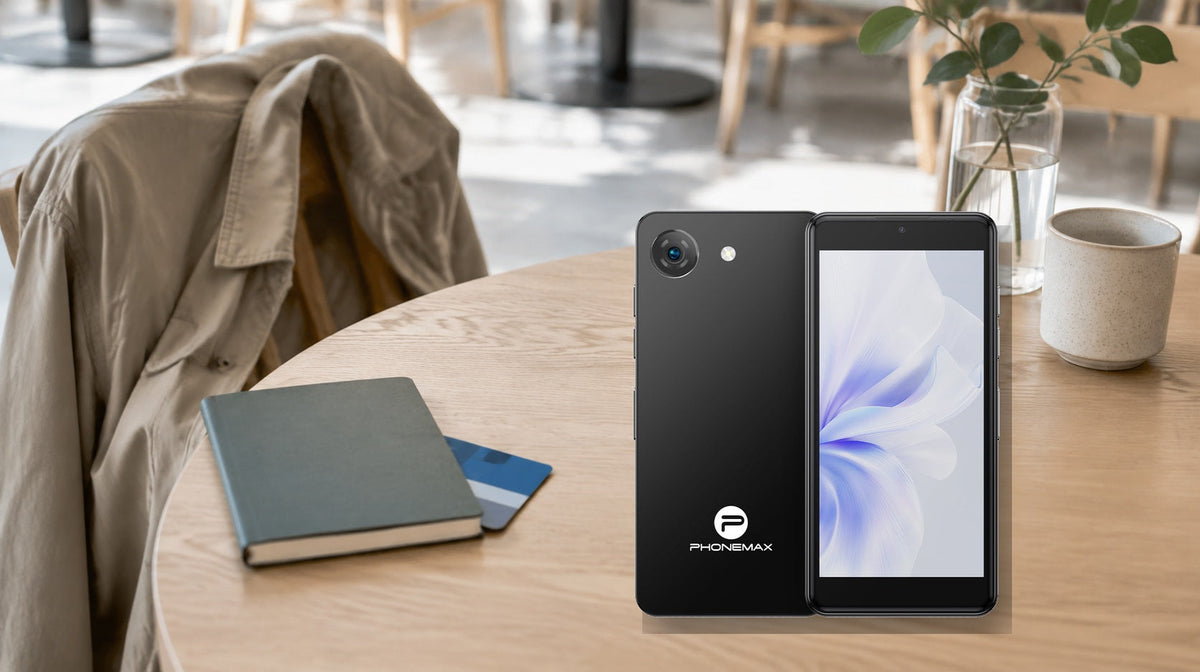
There is also a non-rugged compact option in our catalog: the Phonemax Q9 mini, listed at about 109 g. These are our products, so this is not an independent comparison; the point is that users should choose the form factor and specialist features that match the actual task.
The three-question test
- What has actually damaged or limited my previous phones? If the answer is “nothing,” rugged hardware may not solve a real problem.
- Which rugged features would I use every week? If you cannot name at least two, reconsider.
- What trade-offs am I accepting? Weight, camera quality, ecosystem, software support, price and accessories all matter.
Software still matters
Physical toughness is not enough for a main phone. Google’s Android Enterprise Recommended requirements show why business buyers care about published security-update support and OS-upgrade commitments. Even outside that program, buyers should ask how long the device will receive security support and whether critical apps will remain compatible.
Limitations
There is no universal “rugged phones are better” or “rugged phones are worse” answer. Individual models differ substantially in weight, cameras, processors, software support and specialist hardware. This guide is a decision framework, not a performance test of every device.
Bottom line
Rugged phones are excellent tools for the right users and poor purchases when the buyer does not need what they are optimized to provide. If your life repeatedly demands durability, outdoor usability, battery reserve, physical controls or specialist sensors, rugged hardware can be rational. If your priorities are minimum weight, flagship photography, gaming or ecosystem integration and your phone rarely faces harsh conditions, a conventional phone may make you happier.
Two related checks are Do You Really Need a Rugged Phone, or Is a Good Protective Case Enough? and When Should You Choose a Rugged Phone Instead of a Regular Phone Plus Case?.
FAQ
Are rugged phones only for workers?
No. Outdoor travelers, motorcyclists, campers and people who frequently damage normal phones can also benefit.
Are rugged phones worse than normal phones?
No. They are optimized for different trade-offs.
Should I buy a rugged phone only for battery life?
Only if the extra endurance is needed often enough to justify the size and weight. For occasional long days, a conventional phone plus a power bank may be more flexible.
Do I need a rugged phone if I already use a protective case?
Not necessarily. If the case addresses your actual risks and you do not need specialist rugged features, it may be the better solution.
Source and methodology note
Next step: write down the two or three problems you need the phone to solve before comparing models. If “ruggedness” itself is the only answer, you probably need more clarity before buying.
A Phonemax alternative when ruggedness is not the priority
If your answers point away from a rugged phone, Phonemax also offers the Phonemax Q9 mini, a compact Android 14 smartphone whose current page lists a 109g body and regional network versions. It is a more relevant first-party example for users who prioritize low weight and pocketability over integrated rugged construction. It is not a substitute for documented ingress or drop protection, so choose it only when your exposure and failure-consequence assessment supports a regular compact phone.
Alternatives matrix
| Priority | Often better starting point | Reason to reconsider |
|---|---|---|
| Best camera and light pocket | Mainstream flagship + case | Frequent damage or battery-related downtime |
| Long updates and enterprise policy | Model with a written support commitment | Required field hardware unavailable |
| Calibrated measurement | Dedicated certified instrument | Phone integration is used only for preliminary screening |
| Daily harsh exposure | Purpose-built rugged device | Network, app, service or ergonomics fail acceptance testing |
The matrix is intentionally non-promotional: Phonemax is a manufacturer, and some users will be better served by a regular phone or a separate specialist tool.
Editorial method and trust notes
How we prepared this guide: The Phonemax Editorial Team separated standards-based facts, manufacturer specifications and practical decision guidance. Standards claims are linked to the issuing organization or an official record; category guidance is presented as a framework readers can reproduce with their own device, environment and workload.
Review scope: Source alignment, commercial disclosure, limitations, internal consistency and claim-to-source proximity were reviewed on August 10, 2026. This editorial review is not a substitute for a laboratory certificate, a site safety assessment or advice from a qualified professional.
Corrections: Specifications, standards and software policies can change. Readers should verify the current model page, test report, warranty and support policy before purchase. If a material error is identified, Phonemax should update the article and review date.
Independent evidence of the trade-offs
The limitations in this guide are not merely theoretical. TechRadar Pro’s M10 review records both measured results and significant drawbacks, including its buying recommendation, and its X3 review provides a separate reference point for performance, endurance and positioning. Read the full reviews, including negative findings; results apply to those tested samples and should not be generalized to every Phonemax phone.

Leave a comment
All comments are moderated before being published.
Ezt a webhelyet a hCaptcha rendszer védi, és a hCaptcha adatvédelmi szabályzata, valamint szolgáltatási feltételei vonatkoznak rá.