
Author and review: Phonemax; sources for review batch D were checked on 20 August 2026. The article defines a logging method and stop conditions; it does not claim a Phonemax phone passed a hot-vehicle test. Publisher relationship: Phonemax sells rugged phones and is responsible for this guide. Any missing model-specific operating, charging or storage limit remains unverified rather than inferred.
Risk verdict
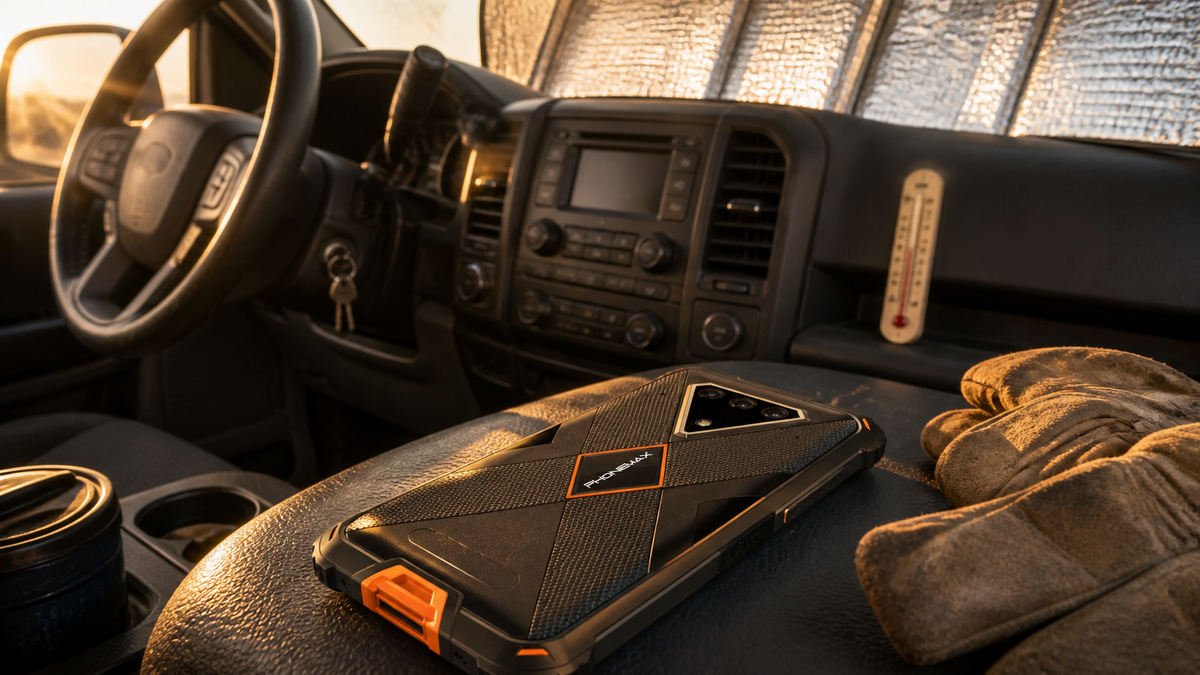
Do not assume a rugged phone is safe to leave in a hot vehicle. Ruggedness and water resistance do not establish safe battery-storage temperature, charging temperature or dashboard-sun exposure. Compare the model’s published limits with measured cabin and mount temperatures, avoid charging in excessive heat and remove the unit when conditions exceed its instructions.
Four different heat limits buyers must separate
- Operating temperature: when the powered device may be used.
- Charging temperature: when the battery may safely accept charge.
- Storage temperature: when a switched-off device may be stored.
- Surface and accessory limits: what mounts, adhesives, cables and cases can tolerate.
If a product page does not publish these values, mark them as unverified and request documentation. An IP rating or drop claim cannot fill that gap.
For example, the reviewed Phonemax M10 product page does not provide the four vehicle-use limits listed above. That absence is not proof of failure, but it prevents a responsible unattended-storage approval until model-specific documentation is obtained.
The U.S. Consumer Product Safety Commission identifies overheating, thermal burns, fire and explosion among high-energy-density battery hazards. This supports stopping use when abnormal heat or swelling appears; it does not provide a phone-specific cabin-temperature limit.
Vehicle test method
Place a calibrated temperature logger at the actual mounting point and another in a shaded storage area. Measure peak and sustained temperature across the hottest working days. Record whether the phone is charging, navigating, tethering or filming, because self-heating adds to ambient heat.
| Observation | Action |
|---|---|
| Within all documented limits | Continue the pilot and inspect performance |
| Limit unavailable | Request evidence; do not approve unattended storage |
| Thermal warning or charging pause | Stop charging and move to a permitted environment |
| Swelling, odour or enclosure separation | Isolate safely and remove from service |
Procurement rule
Do not approve a device because it survived one afternoon. Require documented limits plus repeated tests in the intended mount, vehicle, charger and route. A reflective shade or vent position may reduce heat, but it is a control measure—not a change to the product rating.
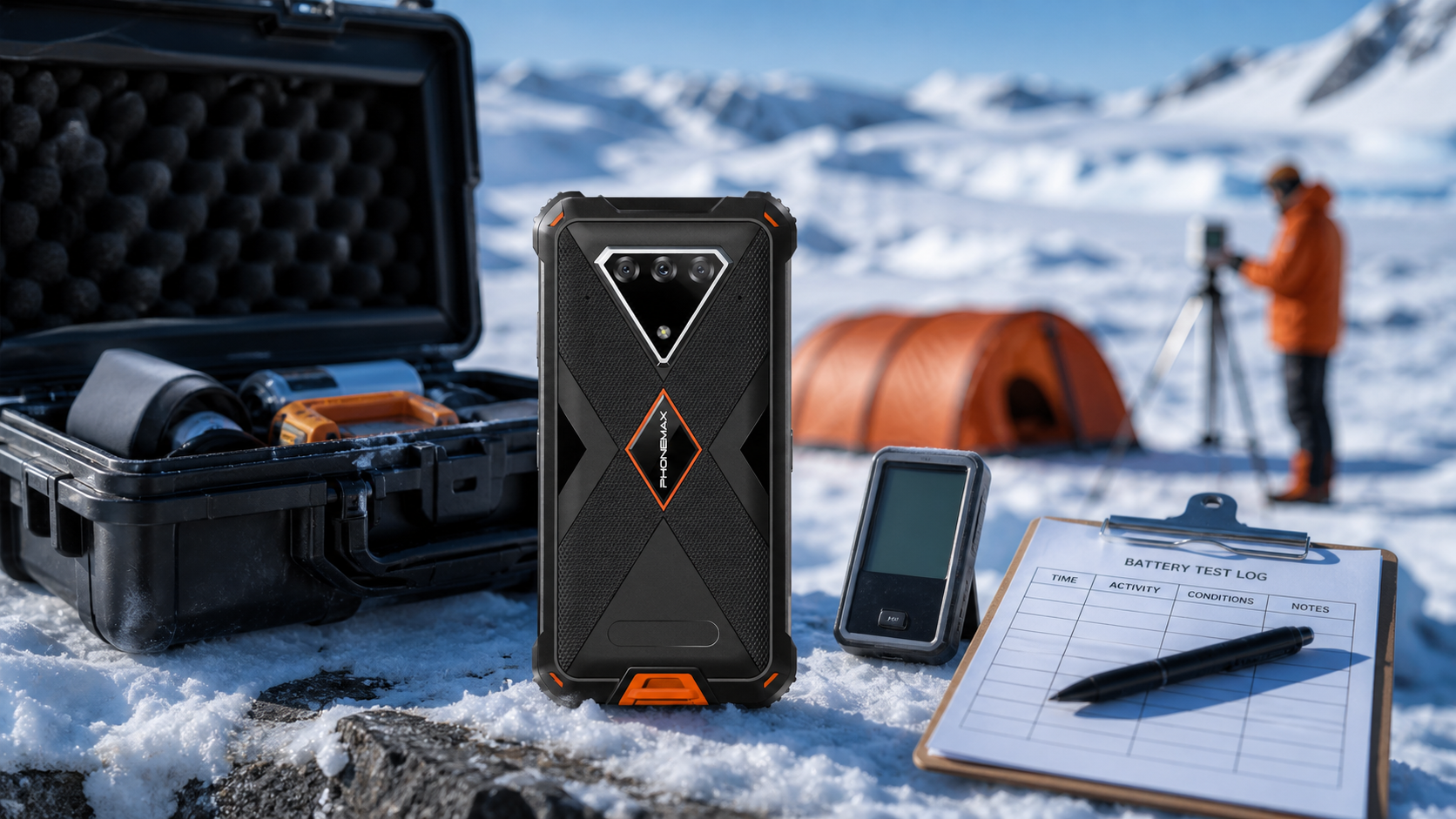
This page owns heat, storage and charging risk. For low-temperature discharge performance and a repeatable runtime experiment, use the cold-weather battery field-test method.
Heat-exposure questions
Does IP69K mean heat-resistant inside a car?
No. It is an ingress-test classification, not a general battery or solar-heating certification.
Is fast charging safe in a hot cabin?
Only within the phone, battery and charger instructions. Heat may slow or stop charging.
What if no operating-temperature range is published?
Request it from the supplier and treat suitability as unverified until evidence and a pilot are complete.
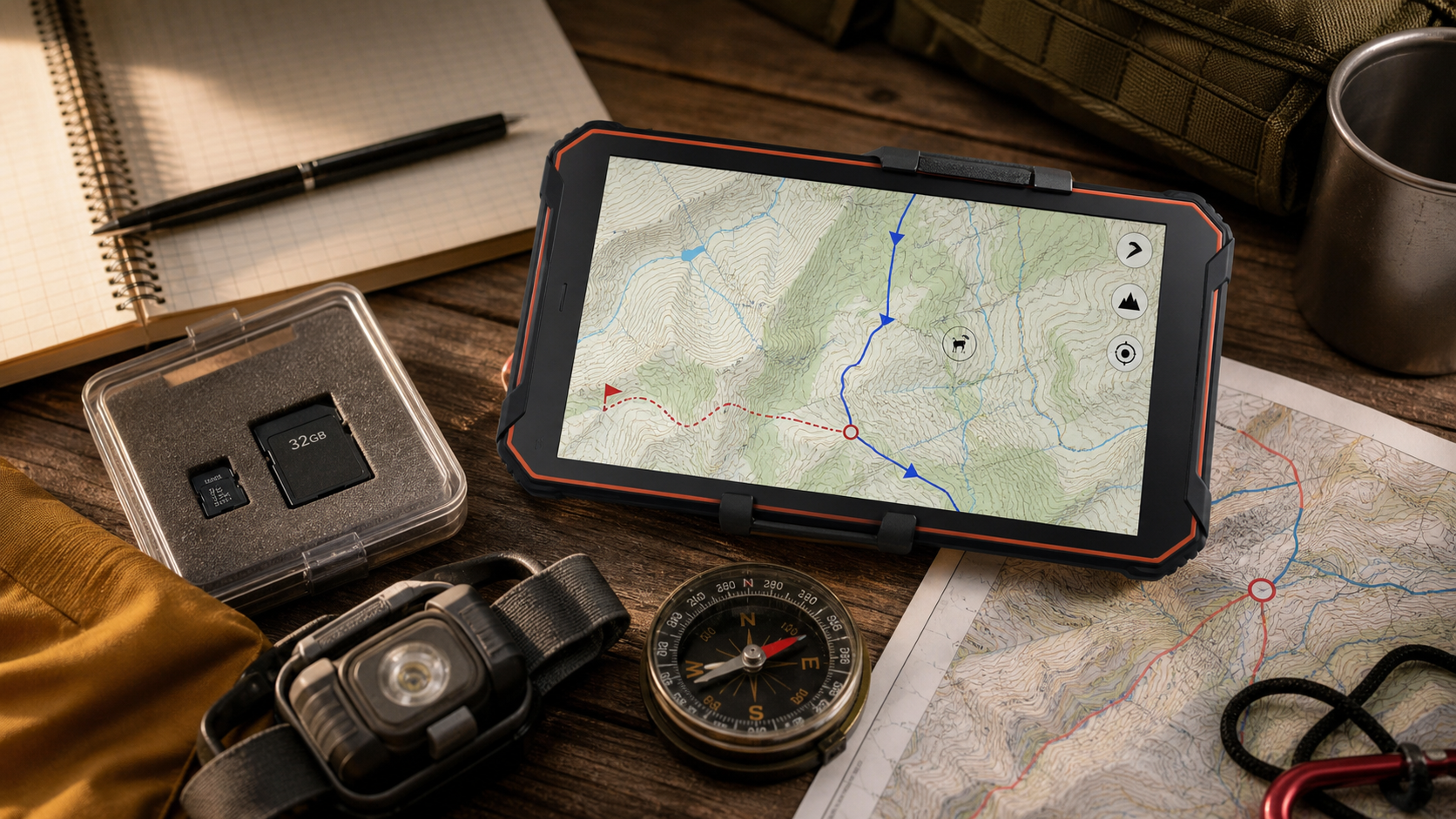
Vehicle deployment action: Evaluate the actual bracket and sightline with the motorcycle/tablet mounting checklist.
If heat is accompanied by connector damage or debris, follow the contaminated-port response card.
Sources: CPSC high-energy-density battery safety; IEC 60529 scope; Phonemax M10 product page; Phonemax product catalogue

Deixar comentário
Os comentários precisam ser aprovados antes da publicação.
Este site é protegido por hCaptcha e a Política de privacidade e os Termos de serviço do hCaptcha se aplicam.